- Education Trends
The 2025–26 School Year in Review, From Your Point of View
Spirited discussions, light bulb moments, and the occasional hot take: Here’s what got you—our educator community—buzzing this year. - Administration & Leadership
Leadership Lessons They Don’t Teach You in Grad School
Coursework provides a vital and necessary foundation, but it can’t offer the experience that comes with the actual job.153Your content has been saved!
Go to My Saved Content. - Assessment
Giving Students Feedback That Helps Them Grow
New teachers in particular may benefit from trying this four-part framework for guiding students to improve their writing.214Your content has been saved!
Go to My Saved Content. - Teaching Strategies
Focusing Attention With a Student-Led Recall Activity
By providing every student with an opportunity to actively remember yesterday’s lesson, teachers can set the stage for today’s success.Your content has been saved!
Go to My Saved Content. - Teacher Wellness
Simple Nervous System Regulation Practices for Teachers
These micro-routines for adults are grounded in neuroscience and generally take only one to two minutes each.188Your content has been saved!
Go to My Saved Content. - Administration & Leadership
Using Staff Surveys to Make Your Meetings Better
Getting teachers’ input on upcoming decisions before you meet saves time and energy—leaving everyone happier. - Learning Environments
How to Incorporate the Outdoors Into Elementary Math Learning
Exploring concepts such as observation and measurement in the fresh air can give students a new and playful perspective on math. - Literacy
The Benefits of Teaching Students to Use Books for Research
Having high school students spend time reading books shows what research can be like without digital distractions—and many prefer it.620Your content has been saved!
Go to My Saved Content. - School Culture
The IKEA Effect: You Built It, You’re Invested in It
People become more invested when they help shape the systems around them, and teachers and school leaders can use that to create a strong school culture. - Student Engagement
Increasing Students’ Opportunities to Respond Boosts Thinking and Engagement
Students will participate more if you give them frequent, low-stakes chances to interact with content all throughout a lesson.







Popular
- Research
Why Writing by Hand Beats Typing (in 6 Charts)
Typing may be faster, but the research shows that handwriting engages our brains in richer, more meaningful ways. - Brain-Based Learning
What to Do When Students See Schoolwork as Too Challenging
Students often don’t measure academic difficulty objectively—they measure it emotionally. Teachers can tap into research to provide the resources and support students need to complete assignments. - School Culture
The IKEA Effect: You Built It, You’re Invested in It
People become more invested when they help shape the systems around them, and teachers and school leaders can use that to create a strong school culture. - Student Wellness
3 Activities to Help Students Feel Grounded
When students are dysregulated, asking them to focus can be counterproductive. Instead, build in activities that help them stay grounded.7.2kYour content has been saved!
Go to My Saved Content. - Assessment
Moving Beyond Traditional Lab Reports in High School
A teacher who wanted to shift from assessing compliance to assessing students’ thinking shares the tweaks she made in her assignments.




- Literacy
A Framework for Effective Literacy Support in Middle School
Screening tools and diagnostic assessments can aid educators in setting up a Multi-Tiered System of Support so that students reach appropriate grade-level reading benchmarks.2.2kYour content has been saved!
Go to My Saved Content. - Online Learning
How to Nurture Community in an Online School
Fully online schools can use these ideas to foster an environment where students and staff feel a real sense of connection.731Your content has been saved!
Go to My Saved Content. - Technology Integration
Using Technology to Promote Math Talk
By listening to recordings of students solving math problems, teachers can determine their next steps, such as how to pair students up. - College Readiness
Using Technology to Help Students Develop College and Career Skills
A variety of tech tools can help students gain experience with formal business practices related to communication and time management.1.4kYour content has been saved!
Go to My Saved Content. - Technology Integration
Should Laptops Really Go the Way of Cell Phones?
Having won the battle on phones, some public intellectuals are calling for laptops to disappear from classrooms, too. Many teachers say that would be a mistake.





- Student Engagement
How Object-Based Learning Supports Deep Thinking
Tactile learning experiences—a strategy borrowed from museum education—can help students of all ages retain new information. - Student Engagement
Shifting Students’ Mindsets About Math
Teachers can help ease the anxiety that many students feel with these strategies for creating joyful learning experiences. - Inquiry-Based Learning
Letting Student Questions Guide Learning
When preschool teachers use students’ natural curiosity to set up activities, lessons become more meaningful and engaging.1.2kYour content has been saved!
Go to My Saved Content. - Student Engagement
Increasing Engagement With Improv Games
Teaching students improv techniques in ELA classes can help them avoid overthinking things and make risk-taking feel safe.4.6kYour content has been saved!
Go to My Saved Content. - Student Engagement
Sparking Engagement at the Beginning of a New Unit
Setting up a micro-inquiry task for math and science helps teachers guide students to realize what they already know—and what they don’t.1.7kYour content has been saved!
Go to My Saved Content.



- Social & Emotional Learning (SEL)
Nature-Based Activities for Preschool
When young children engage in learning that connects them to the natural world, they experience social and emotional benefits.2.4kYour content has been saved!
Go to My Saved Content. - The Research Is In
Designing the Ideal Classroom Space
A thoughtfully designed classroom—and lesson—should always take into account the known limits of the student brain, says developmental psychologist Karrie Godwin. - Learning Environments
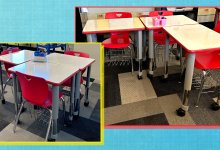
An Unconventional Seating Plan Designed to Benefit Focus and Learning
After years of search and experimentation, this teacher finally hit on a room layout that allowed for efficient shifting between whole class, small group, and independent work. - Classroom Management
All the Reasons for Seating Students in Groups of 3
This desk arrangement facilitates peer discussions and supports effective collaborative and independent work. And students prefer it. - Learning Environments
Supporting Students to Study Abroad in High School
Studying abroad can be a transformative experience, and there are many resources and scholarships available for students who want to pursue it.3.4kYour content has been saved!
Go to My Saved Content.