How Object-Based Learning Supports Deep Thinking
Tactile learning experiences—a strategy borrowed from museum education—can help students of all ages retain new information.
Your content has been saved!
Go to My Saved Content.
When the students at University Avenue Elementary enter Science Specialist Natalie Lupo’s classroom, they don’t shuffle over to their seats or sit quietly waiting for instructions. Their entrance routine involves five minutes to wander freely around the perimeter of the room and investigate the plants, animals, natural specimens, and objects that adorn the tables, windowsills, and display cases. After the students complete a circuit, they are directed back to their seats, where the teacher asks them what they noticed or what sparked their curiosity. Despite this being a part of their daily science exploration, the objects always change so that students constantly see different things and expand their thinking.
Strategies that involve the integration of real objects into the classroom and incorporate them into learning capture the essence of object-based learning (OBL). This approach is in large part borrowed from museum education, where artifacts and specimens act as tangible invitations for deeper inquiry and investigation.
Object-Based Learning Engages the Senses
OBL is worth integrating into your classroom because it is effective for engaging a wide variety of learners. When you walk into a natural history museum, and you see a giant display of multicolored butterflies expertly mounted on a display board, it immediately catches your eye. An intriguing display sparks your curiosity and invites you to step closer, investigate further, and read more than you would if the display were simply made up of text or pictures. OBL also creates emotional engagement, an additional level of engagement that leads to deeper learning and better recall, like when learners make personal connections between the items they see in the kitchen of a historic house or living history museum and the everyday objects they have at home.
Objects are inherently multisensory, which makes them more accessible to a wider range of learners, especially those at the early childhood level. Inviting a student to try on a reproduction Roman helmet or run their hands along the pelt of an arctic fox engages senses that would otherwise be idle when information is only gathered through speaking or listening. These multisensory learning moments also encourage learners to linger longer and make them more receptive to additional information shared along with the object.
Object-Based Learning Works for Older Students
But OBL isn’t just beneficial for our youngest learners. Students at the secondary level can benefit just as much from the incorporation of objects into their learning, so long as it is done in a developmentally appropriate way.
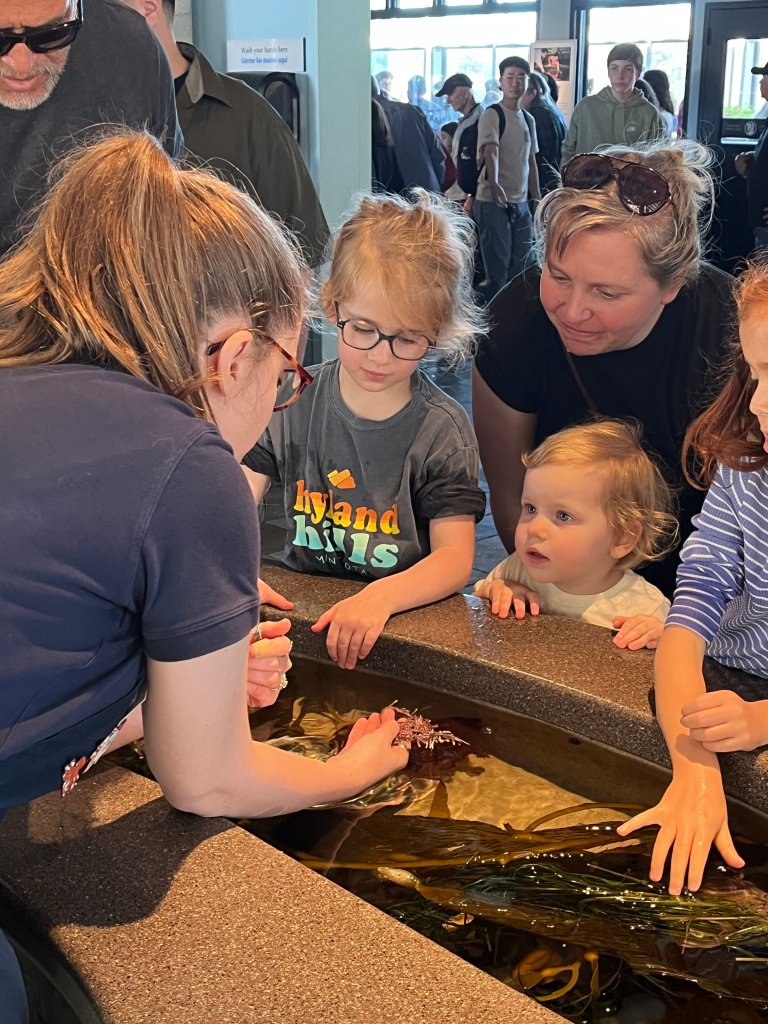
Try having your learners research the stories behind objects and their creation, such as the evolution of common household items like the toothbrush or the process used by wigmakers during colonial times. You might have them investigate works of art or textiles to get creative inspiration for their own artistic endeavors. You can help them develop their ability to use descriptive language or inquiry abilities in writing through “blind box” or “blind bag” activities, where you hide objects in paper bags and invite students to hold the bags and then try to draw or write descriptions of what they feel.
4 Ways to Access Object-Based Learning Resources
Given the benefits of OBL and how it works for learners of all grade levels, it isn’t a very widespread practice in classrooms today. One of the largest barriers is finding high-quality, curiosity-provoking objects. Not only can they be expensive, but also they take up a lot of space. Not every school comes equipped with its own storage closet.
However, there are several ways that teachers in any community can get hold of the resources they need to bring OBL into their classrooms.
1. Many nature centers, state parks, and national parks have traveling trunk programs where educators can check out suitcases filled with observation tools and natural objects for a short amount of time. In some cases, they will even pay for shipping and handling.
2. Almost every county in the United States has a dedicated historical society that usually includes a large collection of objects and artifacts, many of which never see the light of day or are stored in boxes or basements for their entire life. Reaching out to these organizations, especially if you happen to visit in person, and inviting them to come to your school with those objects is something worth inquiring about and might even result in opportunities for on-site field trips or extended partnerships.
In my recent book, The National Park Classroom, I tell the story of teacher John Zingale, whose OBL history lessons eventually developed into his students engaging in a multiyear project where they helped to scan many of the objects in the collection of a local historic site.
3. Try lending libraries. The Science Museum of Minnesota has an astoundingly large collection of objects and piles of educational materials and teaching resources used in summer camps that were no longer being utilized. Instead of throwing all of these things away, the museum opened a lending library where, for a small fee, teachers can check out an amazing array of items that are generally reserved for curators or docents.
A quick Google search revealed many museums across the country that have similar programs. If you don’t happen to live near one, inquire as to whether or not your local museum would be willing to consider piloting such a program with you.
4. Check with other schools in your district or area to see if you can borrow from each other and establish an “inter-school lending library” of objects. My father taught biology and physiology for decades and amassed a collection of anatomical models and specimens in jars that he sometimes lent out to the local elementary school (or to his son for science fair projects).
If you’re interested in learning more, here are two additional resources. The Phoenix Art Museum shows how OBL can lead right into units about research or reading that build literacy skills. Flinders University developed an impressive graphic that you or your learners can use to construct questions about many aspects of an object for longer periods of time.
Both of them can help you integrate OBL into your classroom in small ways like using the museum time approach or larger ways like incorporating it into a project-based learning unit.