3 Middle School Labs You Can Do With Eggs
You don’t need fancy equipment to have students begin exploring topics like chemistry, cell biology, and scientific measurement.
Your content has been saved!
Go to My Saved Content.
One of my favorite things to do is to design labs based around kitchen supplies. One reason is that I don’t need to order expensive materials from a lab supply store. A second reason is that it also shows students that there are tremendous opportunities to explore fascinating things that we might take for granted.
The humble egg is one of my go-to tools for scientific exploration. There are opportunities to explore chemistry, cell biology, and scientific measurement. In my own middle school science classroom, I’ve led the following three labs. For each one, I recommend having students wear safety glasses and long sleeves for safety.
These labs can be done separately, but I especially like doing them as a sequence. Students begin by figuring out how to measure an intact egg. They then dissolve its shell and investigate the chemical reaction taking place. Finally, the shell-less egg becomes a model for investigating movement across a semipermeable membrane.
MEASURING AN INTACT EGG
In this activity, students learn how to accurately measure the volume of oddly shaped materials by measuring the total volume of water displaced. To start this lab, I first put students into groups of three to five and give each group a ruler and an egg. For this activity, I just use a raw, intact egg, so it is important to remind students to be careful so they don’t crack it.
I then ask each group to come up with their best estimate for the volume of the egg. Students will usually argue about how to best measure the egg’s length, width, and height as they attempt to use the volume formula they have been taught.
Students will make their best estimate for the volume of the egg, but many students will begin to question how they could get a more exact answer. This curiosity helps make the next part of the activity more impactful since students are answering a question they posed.
In part two of this activity, I give each group a beaker of water with a known volume of water. I do not initially tell them how to use this to find the volume, but I encourage them to try different things to figure out a more exact measurement of the volume of their egg.
Not every group immediately figures it out. But as groups begin to place the egg into the beaker and assess the displacement of the water, they share what they are trying with other groups. By the end of the activity, all of the students have seen displacement in action and understand how to find the volume of an irregularly shaped object.
DISSOLVING AN EGGSHELL IN VINEGAR
In this second activity, students analyze properties before and after substances interact to determine whether a chemical reaction has occurred.
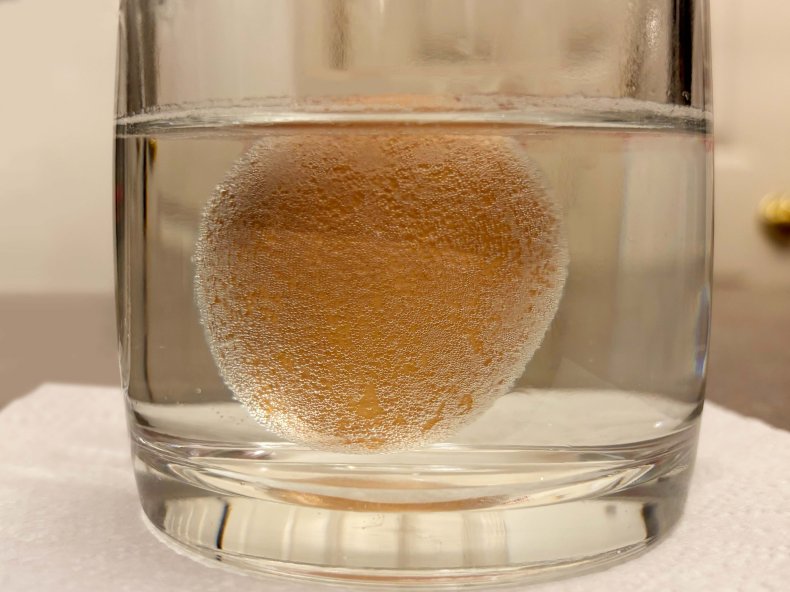
To get started, I put students into groups of three to five and give each group one hard-boiled egg and a container with white vinegar. Then, I explain what elements are present between the eggs and the vinegar: calcium, carbon, oxygen, and hydrogen. These are the elements that students will need to account for throughout the experiment.
To begin, students add their egg to the vinegar and then complete three sketches of what they see. The first sketch is completed as soon as the egg is in the vinegar, then the second sketch about 10 minutes later, and the last sketch the next day or the following.
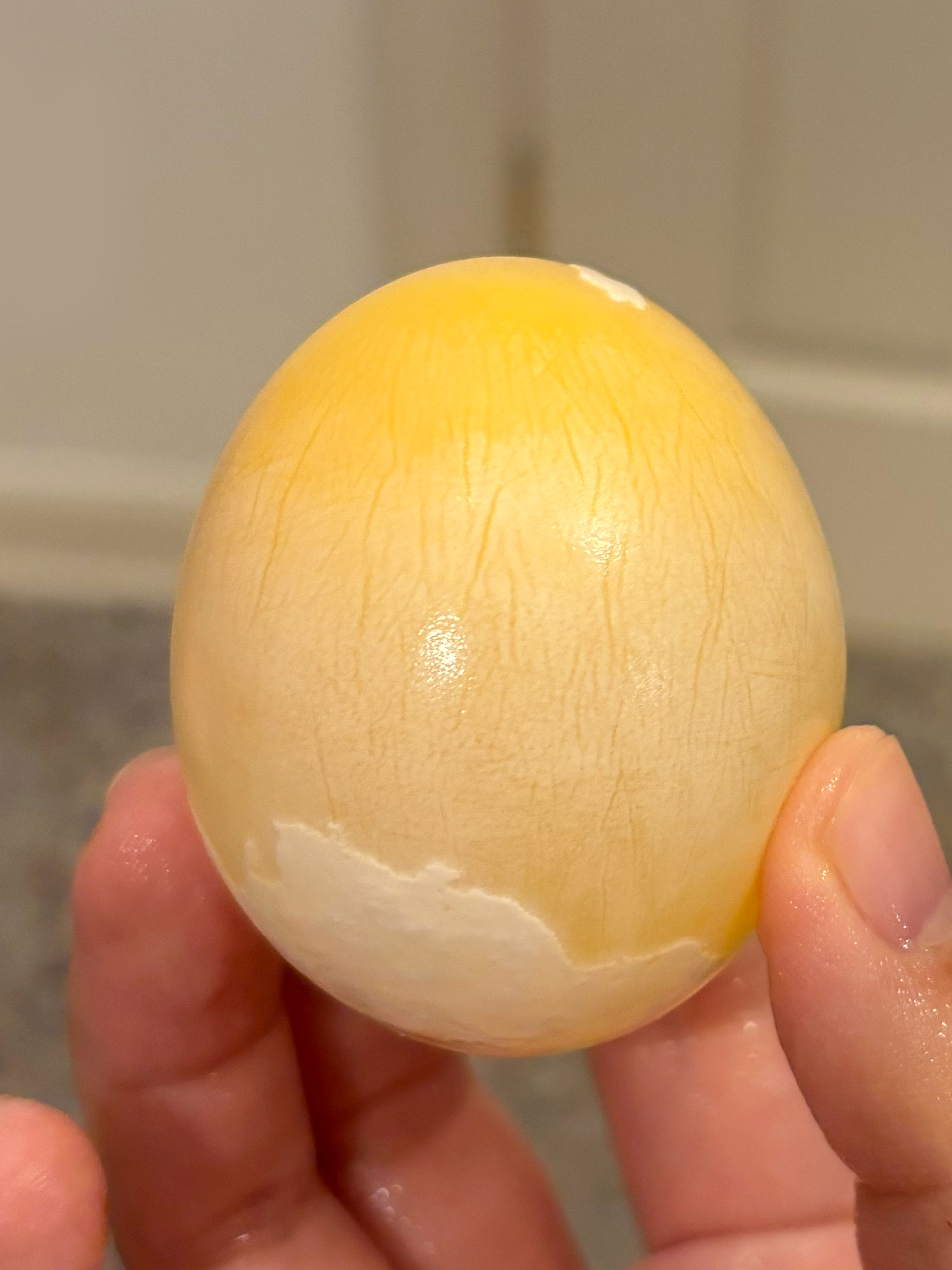
After one to two days, the shell of the egg will dissolve. This is where you can start prompting student thinking and help them recognize an example of the law of conservation of mass: Nothing is created or destroyed, it is only changed or rearranged. So, with the shell gone, it is up to students to explain where that mass has gone.
Through student predictions and whole class discussion, students will find that the mass has moved into the vinegar solution.
MEASURING CHANGES IN AN EGG’S WEIGHT
After completing the above activity in which students dissolve an eggshell, you can reuse those shell-less eggs to practice measuring an egg’s weight. The egg with the dissolved shell serves as a model of an animal cell; the membrane of the eggshell is semipermeable like a cell membrane. The contents of the egg are a mix of sugars, fats, proteins, and water.
Students will see that water can enter and leave the egg, depending upon the concentration of solutes in the surrounding environment.
To get started with this activity, students, in groups of three to five, take their shell-less egg and add it to either a container of water (a hypotonic solution) or a container of salt water (a hypertonic solution). Students then sketch their egg three times: right after the egg has entered the solution, 10 minutes later, and one day later.
This part can potentially turn a little messy—the egg in the salt water will lose its own water and will become floppy. Some of my students noted that this was kind of gross, but also cool. The egg in the water solution will gain additional water, becoming enlarged. Students get to see in action how a semipermeable membrane allows water to move based on the environment it is in.
Each of these hands-on activities helps boost students’ engagement and understanding of science topics, using the incredibly simple material of an egg.