Starting an Earth Club to Support Science Education in Elementary School
With a variety of projects, this club has students apply science concepts while building responsibility and pride in their school community.
Your content has been saved!
Go to My Saved Content.
What if a before-school program could help K–5 students connect with nature, build school pride, and strengthen science learning, all before the first bell?
This is the story of how my school did just that, with practical tips for starting a program to develop future changemakers.
We call our before-school environmental stewardship program Earth Club. These students are proudly known as “planet stewards.” Third-, fourth-, and fifth-grade students meet for 25 minutes before school to clean the campus, maintain the garden, plant flowers, and lead recycling projects, such as collecting plastic lids and beach toys for our beach toy libraries. In the process, they build pride in their school, environmental responsibility, and practical skills such as how to grow a garden and actively care for the place in which they live.
Integrating Science, Stewardship, and Community
During weekly campus cleanups, students remove trash from the playground and play structures. At the end of our weekly cleanup, students sort, weigh, and record their trash findings on the data sheet below.
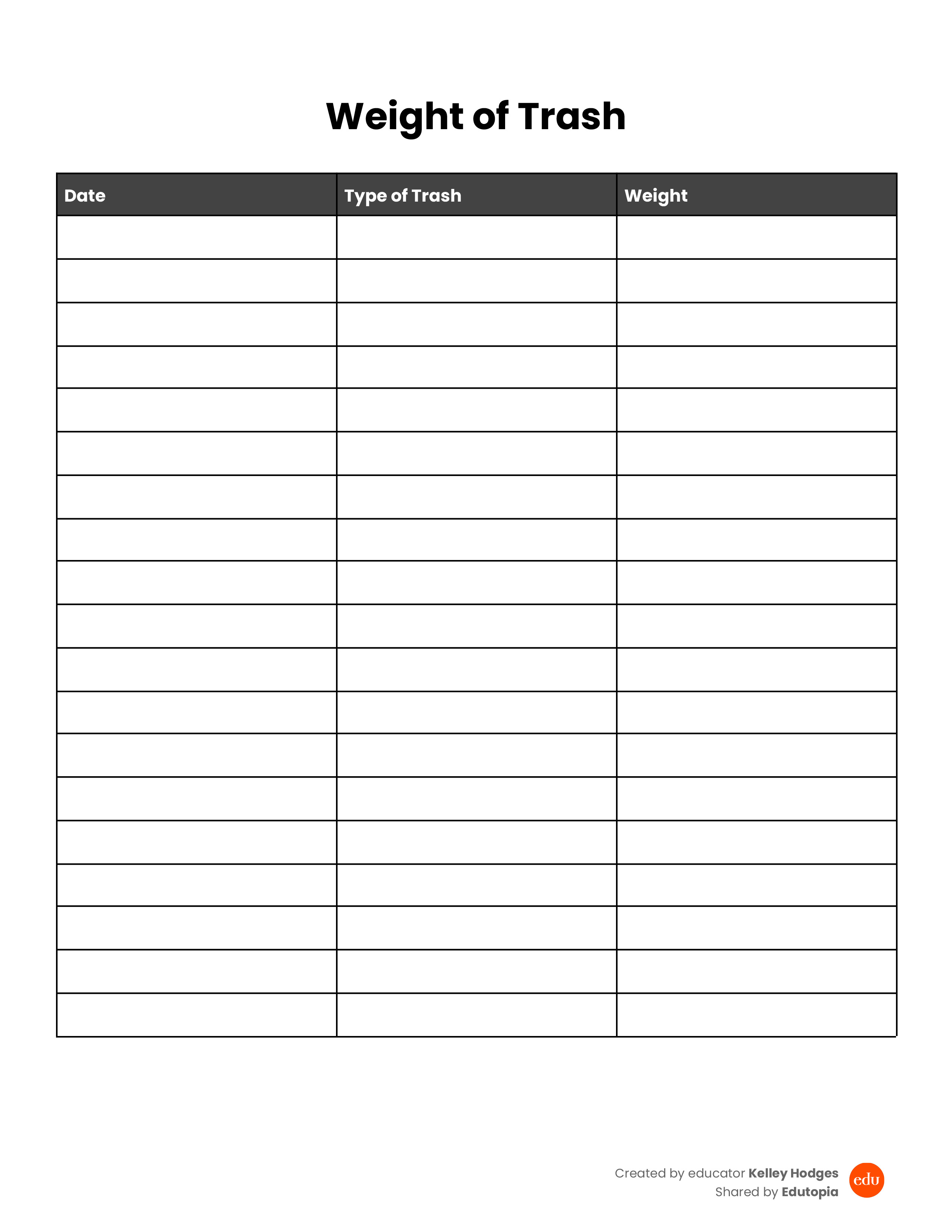
Listening to students as they sort and weigh provides an opportunity to share observations, identify patterns, and develop solutions. After a stormy weekend, two third-grade students noticed that most litter gathered against the fence line of our playground and inferred that the trash had been blown there by the wind. Another student noticed the school’s trash can tipped over. Our planet stewards were visibly excited and eager to share the news with our custodian and suggested adding a lid to the trash can to keep trash from flying out during weekend storms.
Within our school garden, students work collaboratively to grow vegetables and nurture a space for pollinators, such as butterflies and bees. As they bustle around the garden, there is chatter about changes they see (“Hey! Look! There’s a flower!”) or animals they find (“Come here! Quick! Look at this frog!”), providing opportunities to connect their experience with their learning in science (plant structures, life cycles, ecosystems, and adaptations).
Sometimes we learn from failure. One morning, a fourth grader noticed the lack of growth in the bell pepper bed and called me over. As we talked, other students gathered around the garden bed and discussed reasons the bell pepper seeds had failed to germinate. We inferred that the bed wasn’t getting enough sunlight due to the location in the garden and decided to replant the garden bed with herbs that prefer shadier locations.
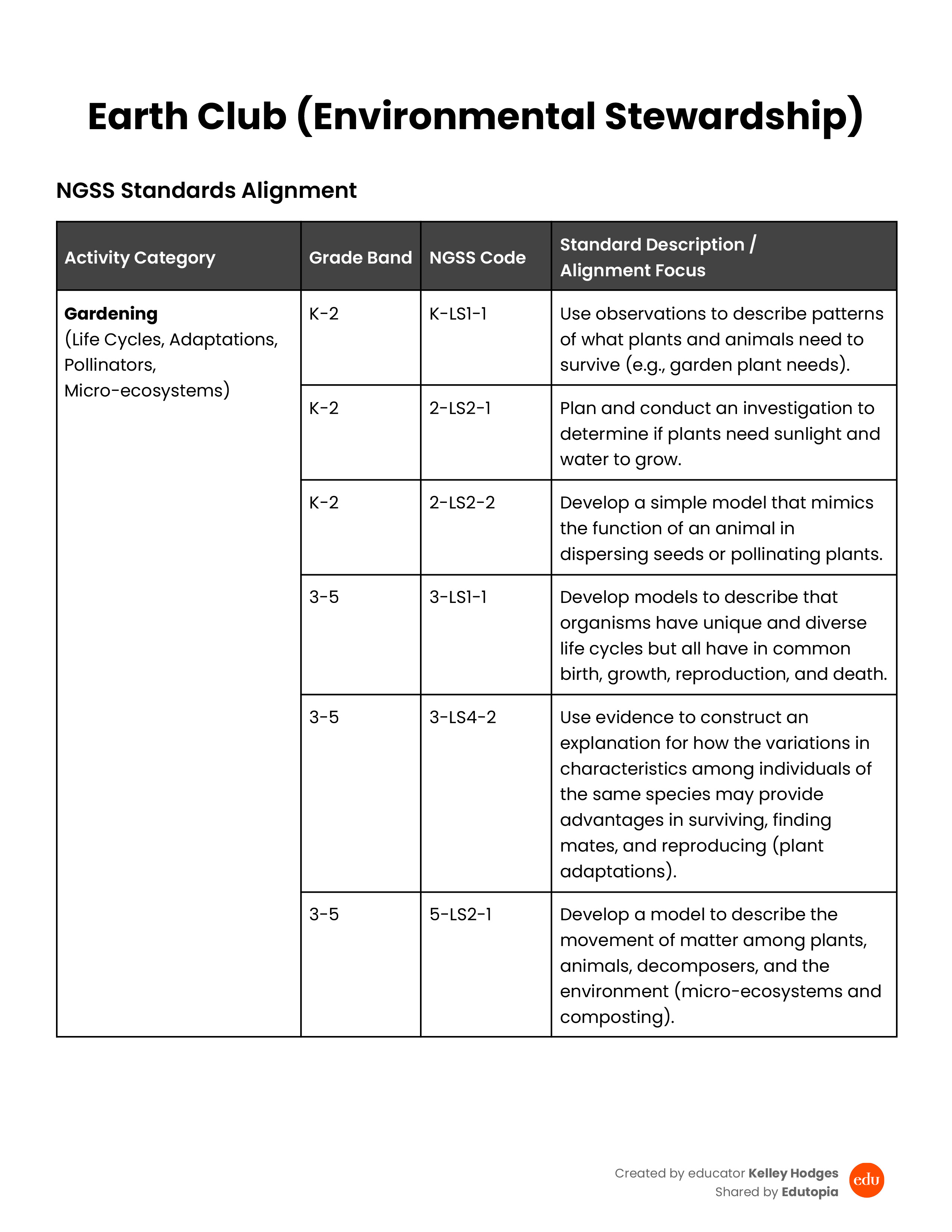
The garden space is used throughout the school year for traditional learning as well as experiential learning. The following document contains Next Generation Science Standards (NGSS) that align with activities taking place within the school garden:
Sharing and Celebrating Success
Near the end of the school year, we celebrate with a garden party that includes a simple breakfast of fruit, juice, and muffins, time to enjoy the beauty of the student-created garden, and small awards, such as Earth pins, which everybody receives as a way to recognize the time and effort of our planet stewards. After the garden party, we pack up the spring garden (tomatoes, bell peppers, basil, okra) into donated garden containers and give the plants to fellow students, faculty, and staff. This special tradition is something we look forward to and enjoy.
Success has also translated into interest in the science classroom. Students in Earth Club share pictures and ideas they create at home that connect with their learning on science concepts that take place in the school day. For example, in science, we learned about the impact of erosion on coastal shorelines and engineered models of living shorelines to consider ways to reduce erosion. After the science lesson, an Earth Club member illustrated and shared her solution to reducing erosion on sensitive coastal shorelines.
How to Get Started
Before I started Earth Club, I met with our principal and fellow educators to share my plan for hosting a before-school club: activities, communication with classroom educators, and permission from parents. Enlisting the support of administration and fellow educators allows for open communication and investment in the success of the students at our school.
I started with a small group of 10 to 15 students in mid-January, which gave me time to communicate and develop plans for the spring garden. My classroom is a portable located at the edge of campus; the garden space is small and attached to my classroom. To secure the space, I communicated with our administration and school district to obtain permission to place garden beds and equipment boxes in the open area beside my classroom.
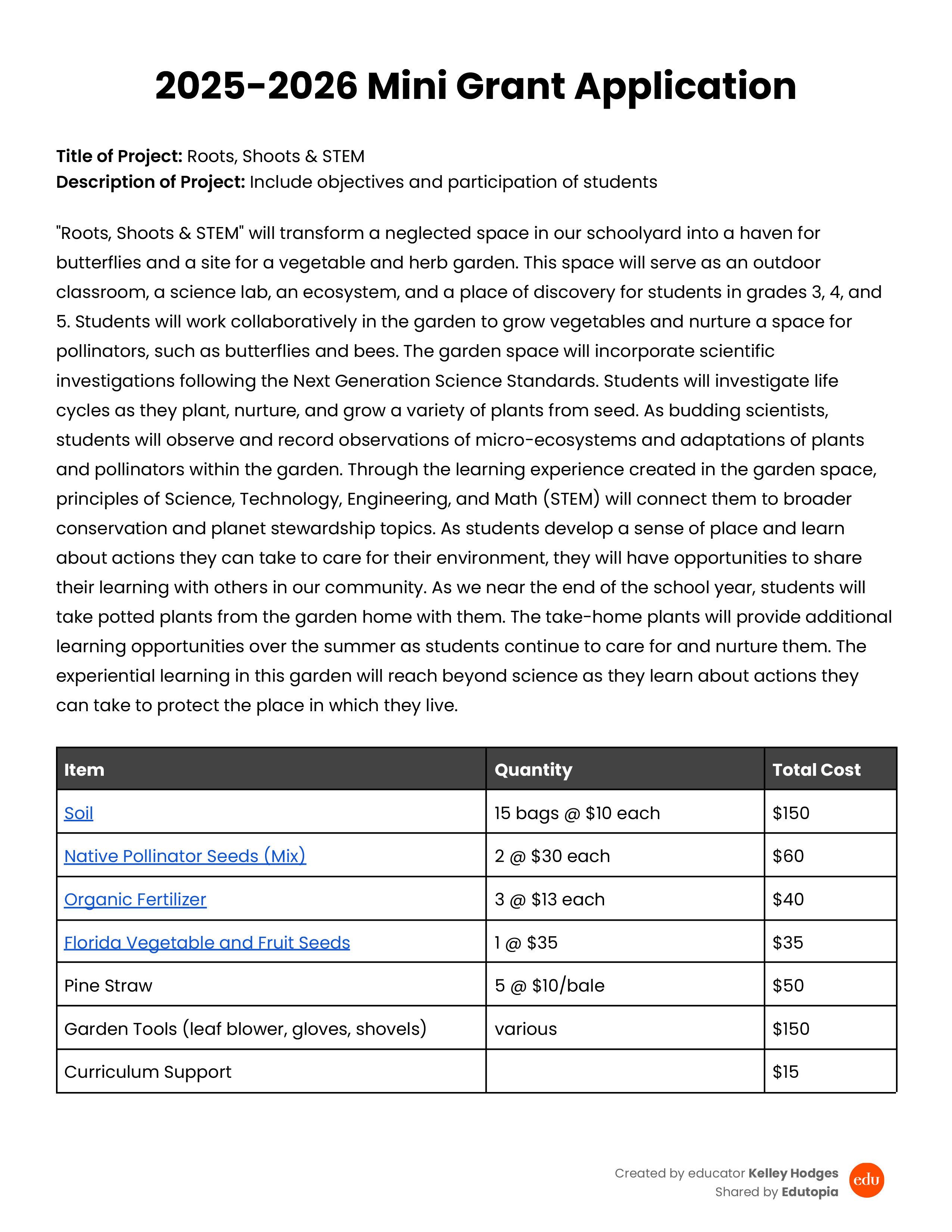
The later start also allowed time to write grants and gather donations of gently used garden tools. I received grants from our local education foundation and Farm Bureau, and requested support from our parent-teacher organization. An example of my grant proposal is below. I also enlisted the support of our school families through classroom newsletters and social media to acquire donations of garden supplies.
Planning and Organizing
Hosting a before-school activity, like Earth Club, means the early part of the day is spent with students instead of planning. Additional planning time may be needed as the club is being created.
Consider creating simple rules and consistent daily routines along with a weekly schedule. My rules include behavior expectations (we treat each other with kindness and respect) and arrival time (between 7:00 a.m. and 7:10 a.m.). I request that students attend at least twice a week; some attend less frequently due to transportation issues. I keep the attendance flexible for this reason.
Upon arrival, I separate students into teams with instructions for a task of the day. I work alongside students with every activity and use the opportunity to help them connect with nature or discuss topics that interest them.
Our weekly schedule looks like this:
- Monday: playground cleanup
- Tuesday: weed/plant/water common areas
- Wednesday: school garden
- Thursday: school garden
- Friday: day off
Consider creating a system to organize tools and supplies and make them readily available for students to access. At our school, we have a few garden boxes filled with essential tools that students need for each day. Tools include handheld garden shovels, rakes, trash pickers, and buckets. Students gather the tools they need and return them before leaving.
Create a plan for rainy days and cold weather. I set up indoor stewardship activities, such as an art station to create colorful school posters, a sorting and recycling station, or a place for melting old crayons into new shapes. These stations are easy to set up, and students can clean up after themselves.
Last, don’t feel like you need to be the best at everything to start something like this. I started this club knowing very little about gardening. I enlisted help from a group of retired garden enthusiasts and asked for advice from master gardeners in our area. I share with students that I am learning with them, and everything they see growing is a triumph of learning.