Using Picture Books as Entry Points for Complex Topics in Middle School
Teachers can use nonfiction picture books to introduce background information and vocabulary so that students have a mental framework for understanding a new unit.
Your content has been saved!
Go to My Saved Content.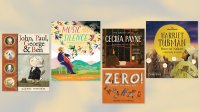
Middle school students regularly learn about increasingly complex and often unfamiliar topics, time periods, scientific concepts, historical events, current events, and more. Without relevant background knowledge and understanding of academic vocabulary, students may struggle to make connections, interpret information, and have a clear understanding of the topics presented to them verbally and through texts.
I discovered the value of picture books early in my career as I attempted to engage eighth graders in a unit about the American Revolution. I read them John, Paul, George & Ben, written and illustrated by Lane Smith. The book provided an accessible entry point into the topic, students loved the humor, and the true-or-false section provided an opportunity for my students to examine facts about these historical figures.
One way to help students build schema is to use nonfiction picture books to acquire background knowledge and introduce vocabulary. While picture books are often associated with younger readers, many of these books offer intellectually complex introductions to topics that middle-grades students encounter within their curriculum. In a relatively short time, a single book can introduce essential vocabulary, establish historical or scientific context, provide meaningful visuals, spark questions, and provide additional resources to learn more.
These books also offer an accessible entry point into challenging ideas without lowering the level of thinking we expect from students. A text can be approachable in its language and length while still raising sophisticated questions about science, history, ethics, and the world around us.
Anchor New Concepts to What Students Already Know
When students encounter a new topic, they bring their schema, experiences, and vocabulary to the learning process. Connecting new information to existing knowledge helps them anchor information into an organized schema, recognize relationships, and make meaning.
When students lack that foundation, they may spend much of their time trying to understand unfamiliar concepts and terms and then miss the larger ideas. Nonfiction picture books are one useful strategy to build this foundation while developing engagement and sparking curiosity before students encounter more demanding texts and assignments. These are often quick to read, they introduce important terminology, and the illustrations make abstract ideas more concrete. Back matter in the books can extend the learning beyond the main text, featuring timelines, diagrams, additional resources, images, additional research, and more.
The goal here isn’t to replace current texts and assignments with picture books; it’s to increase schema and prepare students to engage in their curriculum.
What to Consider WHEN Selecting Books
Will the book engage middle school students? I find that the best books present meaningful storytelling, compelling illustrations, surprising details, and questions that spark curiosity.
What knowledge does the book provide? I look for titles that introduce concepts, people, events, vocabulary, or relationships that students will encounter within the curriculum. For example, Zero! The Number That Almost Wasn’t, written by Sarah Albee and illustrated by Chris Hsu, can help teachers introduce math concepts and includes facts about multiple times in history.
What thinking does the book make possible? Beyond the facts it communicates, I find that considering the questions the book raises is crucial. Does it invite students to examine evidence, consider competing perspectives, recognize patterns, or wrestle with ethics? For example, Music and Silence: The Passion and Protest of Pablo Casals, written by Christy Mihaly and illustrated by Mariona Cabassa, connects history, music, and activism while providing opportunities to consider ethical dilemmas.
The last question I ask when selecting books is, “Is the information current, is it credible, and does it have strong back matter to support the story?” Back matter can be particularly valuable for middle school readers. Timelines, source notes, glossaries, maps, diagrams, and recommended resources can help students investigate a topic more deeply and distinguish the narrative from the evidence behind it. For example, Harriet Tubman, Force of Nature: A Biography in Poems, written and illustrated by Caroline Brewer, tells an engaging story through poetry and also includes a glossary, notes on the illustrations, maps, historical photos, source notes, and a bibliography.
Strategies for Integrating Nonfiction Picture Books in Your Classroom
The following two strategies have helped me find success with incorporating nonfiction picture books:
Introduce a unit with a read aloud: Before students begin a challenging unit, read a nonfiction picture book aloud to develop background knowledge, introduce vocabulary, and engage students before they encounter more demanding material. After reading, invite students to share what they learned, what surprised them, and what they still wonder about. Their questions can help shape subsequent instruction and provide a starting point. For example, The Curious Life of Cecilia Payne: Discovering the Stuff of Stars, written by Laura Alary and illustrated by Yas Imamura, could introduce astronomy, how scientists investigate the world, and/or the challenges that women scientists have faced throughout history.
Create an accessible collection of books: I make it a point to keep nonfiction picture books visible and accessible in the classroom. Invite students to explore books connected to their interests when they finish assignments, and provide regular opportunities for independent reading. Additionally, students can share an interesting discovery or recommend a title to classmates. Over time, these informal reading experiences can expand students’ background knowledge, spark curiosity, and encourage them to investigate topics further.
Questions to Pair with Nonfiction Picture Books
I use these prompts with my students to encourage critical thinking, shift the focus to building background knowledge, and help them make connections.
- What do you understand now that you didn’t understand before reading?
- What new words or concepts did you encounter?
- What facts or ideas seem especially important?
- What did you already know about this topic, and how did the book change or expand your understanding?
Pair Picture Books with Complex Texts
A picture book can establish context, introduce vocabulary, and provide a conceptual framework before students encounter a primary source, scientific article, textbook chapter, or research assignment. After reading both texts, I’ve seen that students can identify shared concepts, compare the information in each, and consider how the more complex text extends their understanding. This process helps students use what they already know to interpret new information and recognize connections across sources.
A picture book may take only a few minutes to read, but the knowledge it introduces can shape how students understand a unit, interpret a source, or approach an unfamiliar topic. Easy to read doesn’t mean easy to think about.