Teaching Irony in Middle School With Picture Books
Using picture books as mentor texts is the perfect way to teach verbal, dramatic, and situational irony to middle schoolers.
Your content has been saved!
Go to My Saved Content.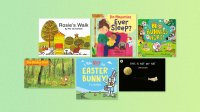
Nothing gets middle school students’ attention like using a picture book in a lesson. At first, they’re surprised. Maybe even a little smug. Aren’t picture books a little beneath them? Yet, once they’re immersed in the lesson, it doesn’t take long for them to change their minds.
In my teaching experience, there’s just nothing more engaging than a story. Research on the use of picture books with older students supports their effectiveness. They are accessible and appealing to all readiness levels and a wide range of learning styles. While your middle school students might initially balk at listening to a picture book being read aloud, experts cite the ambiguous target audience of picture books as one of their greatest strengths in the classroom. Their seemingly simple premises can disarm older students and invite participation in surprising ways.
Because they can encourage abstract thinking, picture books are an especially effective tool in teaching complex concepts like situational, dramatic, and verbal irony. Ironic picture books often depict varying points of view and contradictory text and pictures, which requires readers to interpret them. Here are some of my favorite strategies for teaching irony to middle school students using picture books as mentor texts.
Situational Irony
A thief breaks in, but instead of robbing the place, he leaves money. This is a great example of situational irony, in which the outcome of a situation is the opposite of what is expected. To teach situational irony, you can have students create a “What Did You Expect?” visual aid to use along with the wordlessly brilliant The Chicken Thief, written and illustrated by Béatrice Rodriguez.
In this book, a fox steals a chicken, but things do not unfold as one might expect. As you go through the book for the first time, pause at pivotal parts of the story to have students analyze and draw what they expect to happen next. After finishing the story, have students analyze what actually happened. Then, discuss and compare the two. How do these scenarios display situational irony? Extend the lesson by having them write their own stories using situational irony.
Dramatic Irony
Another form of irony is dramatic irony, in which the reader knows something the character doesn’t. A great teaching strategy to use for dramatic irony is to have students conduct eyewitness interviews. An outstanding picture book to use with this strategy is This Is Not My Hat, written and illustrated by Jon Klassen. In this story, a little fish steals a hat from a big fish and tells readers all about how he’ll get away with this crime.
Working in pairs, have students create questions, pretend to conduct eyewitness interviews with the different characters in the book, and compare the responses. For example, one student could pose as the reporter, asking some questions (“Big Fish, when did you first realize your hat was stolen?”), while their partner pretends to answer as Big Fish. Discuss how they think a character like Little Fish might respond to learning some new information. Extend the activity by having students compile the story and interviews as a full news report, including multiple characters’ points of view.
Verbal Irony
With verbal irony, a narrator or character says one thing but means the opposite. A strategy to use for verbal irony is to have middle school students rewrite and/or re-illustrate a story in a way that takes everything literally. To teach this strategy, read a mentor text like the delightful No Bunnies Here!, written by Tammi Sauer and illustrated by Ross Burach. In this book, Wolf shows up in Bunnyland, and one brave bunny tries to convince Wolf that there are no bunnies around.
After reading, have your students rewrite or re-illustrate different scenes from the story to remove the irony and have the plot follow the literal meaning of the words being said. Compare the two versions. How does the meaning change? Extend the activity by having students act out or illustrate their own examples of verbal irony.
More Picture Books for Teaching Irony
If you’re looking for some more ironic mentor texts, Rosie’s Walk, written and illustrated by Pat Hutchins, is especially good to use for situational irony and the “What Did You Expect?” strategy. In this story, Rosie the hen blissfully goes for a walk while a fox follows her, running into one sticky situation after another.
Another mentor text to use to teach dramatic irony is my picture book Do Mommies Ever Sleep?, illustrated by Karen Obuhanych. In this story, a baby has some interesting ideas for why he thinks his mom never sleeps, never once suspecting that he might be the reason. As a bonus, your students will think conducting an eyewitness interview with a baby is hilarious.
I Am NOT the Easter Bunny!, written and illustrated by T. L. McBeth, is another great mentor text to use to teach verbal irony with the re-illustrating activity. Throughout the story, the main character insists he isn’t the Easter Bunny, all while doing very Easter Bunny–like things, leading up to a fun twist at the end.
Using these mentor texts, your students can analyze, compare, and create situational, dramatic, and verbal ironies with a variety of activities. Surprise and engage your middle school students with a medium that is sure to be not only accessible but also memorable as they learn and apply their knowledge of irony.