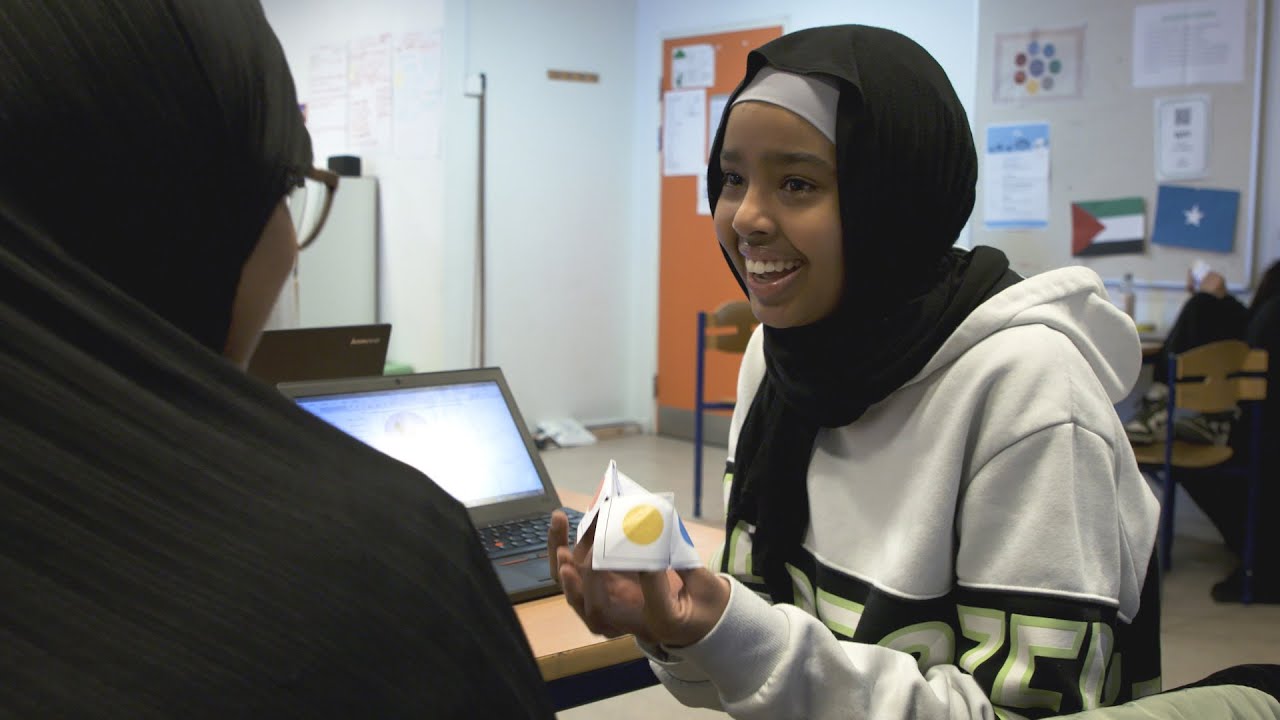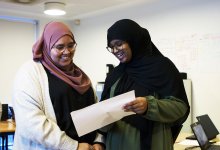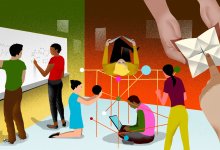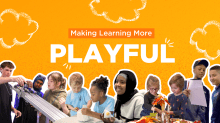
A collage of photographs of students over text that says Making Learning More Playful.
Collage by Hannah Bogenreuther
Play & Recess

Making Learning More Playful

In this series, we showcase six schools that are taking innovative—and practical—approaches to play-based learning, and share compelling evidence that learning through play benefits students of all ages.

March 24, 2023

Your content has been saved!

Go to My Saved Content.

While it’s commonly accepted that play is the foundation of learning in early childhood education, space for active, hands-on play tends to dwindle as children progress up through the grades. Yet research shows that when kids are engaged in meaningful, play-based activities, their brains are more open to all kinds of learning. 

What does it look like when schools commit to joyful, child-centered learning that includes play all the way up through eighth grade, or even high school? Edutopia has been visiting schools around the world that make play central to their pedagogy, as part of our effort to uncover evidence-based strategies that any teacher can adopt to drive more creativity, more student agency, and better academic outcomes for their learners. 

  • School Culture

    What Makes Learning More Playful?

    By bringing playful approaches into the classroom, teachers can engage more students at a deeper level, improve learning environments, and boost motivation.
  • Play & Recess

    Creating Opportunities for Unstructured Play

    When schools make space for free play in a natural environment, students are left to their own devices to build, create, and problem-solve—and the benefits continue once they are back in the classroom.
  • Brain-Based Learning

    Using Movement to Teach Vocabulary

    When students explore new words through movement, they understand them better, retain them longer, and feel more empowered to use them.
  • Student Engagement

    Handing Over the Reins for a More Playful Learning Experience

    With guidance and support from teachers, student-led learning expeditions can boost engagement, motivation, and deeper learning.
  • Collaborative Learning

    Making a Math Lesson More Hands-On

    When teachers provide opportunities for students to construct figures and play with dimensions while exploring geometry, math becomes more accessible to everyone.
  • School Culture

    How a School Made Play Central to Learning

    At a primary school in the UK, both students and teachers have become more engaged and curious as a result of a shift to a fully play-based approach—and learning has become more joyful for everyone.
  • English Language Learners

    Lowering the Stakes for Language Learning

    By intentionally creating lessons that are social, collaborative, and joyful, educators can make it easier for students to build their skills—and confidence—in a new language.
  • Collaborative Learning

    Activating Learning by Milling to Music

    When students pretend they’re at a fancy party making small talk, a simple brainstorm for writing ideas becomes more lively, more cooperative—and more effective.
  • English Language Learners

    5 Playful Strategies That Reduce Language Learning Anxiety

    We visited a classroom in Denmark to see how a playful learning philosophy can put students at ease and make language learning joyful and engaging.
    Paige Tutt
  • Learning Environments

    The Benefits of Taking Kindergarten Outdoors

    By exploring outside their classroom—and even their schoolyard—two teachers found their students’ learning potential became boundless.
  • Instructional Coaching

    The Role of Coaching in Developing Playful Lessons

    Giving teachers time to collaborate on making classroom activities more active, social, and meaningful can result in higher student engagement—and deeper understanding of academic content.
  • Assessment

    Taking a Playful Approach to Assessment

    When teachers bring collaboration, creativity, and choice into assessment, anxiety and dread give way to confidence and joy as students show off what they have learned.
  • Interest-Based Learning

    Dedicating Space for Curiosity and Exploration

    By turning a plain old hallway into a destination that every class visits regularly to tinker and play, a school made limited resources go further and saw student enthusiasm soar.
  • Literacy

    Building Literacy Skills by Sparking Imaginations

    When teachers provide activities that encourage kindergarteners to explore the elements of storytelling through play, they lay the foundation for reading and writing.
  • Play & Recess

    Across Grade Levels, Should Learning Be a Lot More Playful?

    Denmark has fully embraced playful learning in its K–12 schools. We visited two schools to see the pedagogical approach in action.

Edutopia developed the Making Learning More Playful series with support from The LEGO Foundation

Share This Story

  • bluesky icon
  • email icon

Filed Under

  • Play & Recess
  • Research

Follow Edutopia

  • facebook icon
  • bluesky icon
  • pinterest icon
  • instagram icon
  • youtube icon
  • Privacy Policy
  • Terms of Use
George Lucas Educational Foundation
Edutopia is an initiative of the George Lucas Educational Foundation.
Edutopia®, the EDU Logo® and Lucas Education Research Logo® are trademarks or registered trademarks of the George Lucas Educational Foundation in the U.S. and other countries.