Pairing Images and Text for Critical Analysis
Teachers can give students opportunities for close reading through exploration of books paired with visual media.
Your content has been saved!
Go to My Saved Content.
In my work with students across age groups, I have found great power in using words and images, as well as elements of design, to build capacity for critical analysis and discussion. Comics can be an ideal space for this type of work because they contain so much, and there are such a wide variety of comics being published both in short form and long form (often called graphic novels).
This post draws upon work I’ve done with the National Council of Teachers of English on a freely available comics series, Great Immigrants, Great Americans. Although this article is inspired by that work, what I’ll explain can apply to a range of texts.
Reading to Empower Critical Thinking and Encounter Perspectives
By setting up comics and narratives with guiding questions, teachers can build a foundation for books to mean more. Ultimately, reading can help us become better thinkers and more empathetic humans.
In working with high school students in a recent semester review activity, I invited responses to use words and images to highlight parts of the American story that need to be told more often. Scaffolding this work can include questions and explorations of comics. Try some of these guiding questions to help students begin pondering:
- What can you see clearly in this comic?
- How does the page layout and design add to other images and ideas you’ve seen?
- What’s still missing that you’d like to find out more about? What character names or dynamics are you most familiar with, and which ones have you not heard about in other encounters with this narrative?
- How are relationships portrayed in this comic? Who or what seems to be in the foreground and background? How does this foregrounding line up with how you’ve encountered this story in other media?
Close Image Reading and Intentional Pairing
From introductory steps, students can engage in an even closer reading. In a recent lesson, I paired the new Supergirl trailer with a video rendering of Nathaniel Hawthorne’s The Scarlet Letter. This 10-minute video resulted in about 45 minutes of discussion about trauma, reclaiming self, and storytelling.
Specific moments, actions, or lines of dialogue can impact reading and viewing. For the Supergirl trailer, this included a line spoken about the gradual destruction of the title character’s home world. Though it might be assumed that such pain is brief, the character reminds the audience that grief and loss are long and meandering processes. Building on this, the notion of taking up pain and expulsion can be located in the discussion of how Hester Prynne makes meaning of her imposed marking, the letter A.
Here are some questions to build this kind of paired textual activity with comics, film, and prose:
- How do the character’s expression, dress, and posture change from the beginning to the end?
- What do changes in the character signify about their internal dynamics?
- How does color scheme change from early parts of the character’s journey to later renderings?
- For film, how do diegetic and non-diegetic sounds change (for example, sound effects and music)? How does lighting change?
- For comics, how do the panel shapes and colors change? How does the shape or manner of a character evolve as they change?
- For prose, how does the sentence structure change? Where does the focus of the narrative voice shift?
Just as we change as people and readers, authors and creators shape content to convey dynamics of change using the tools they have available. This is process-affirming work that students can benefit from talking through, and it demonstrates author and creator moves that students can make when they craft their own stories.
Responding After Reading
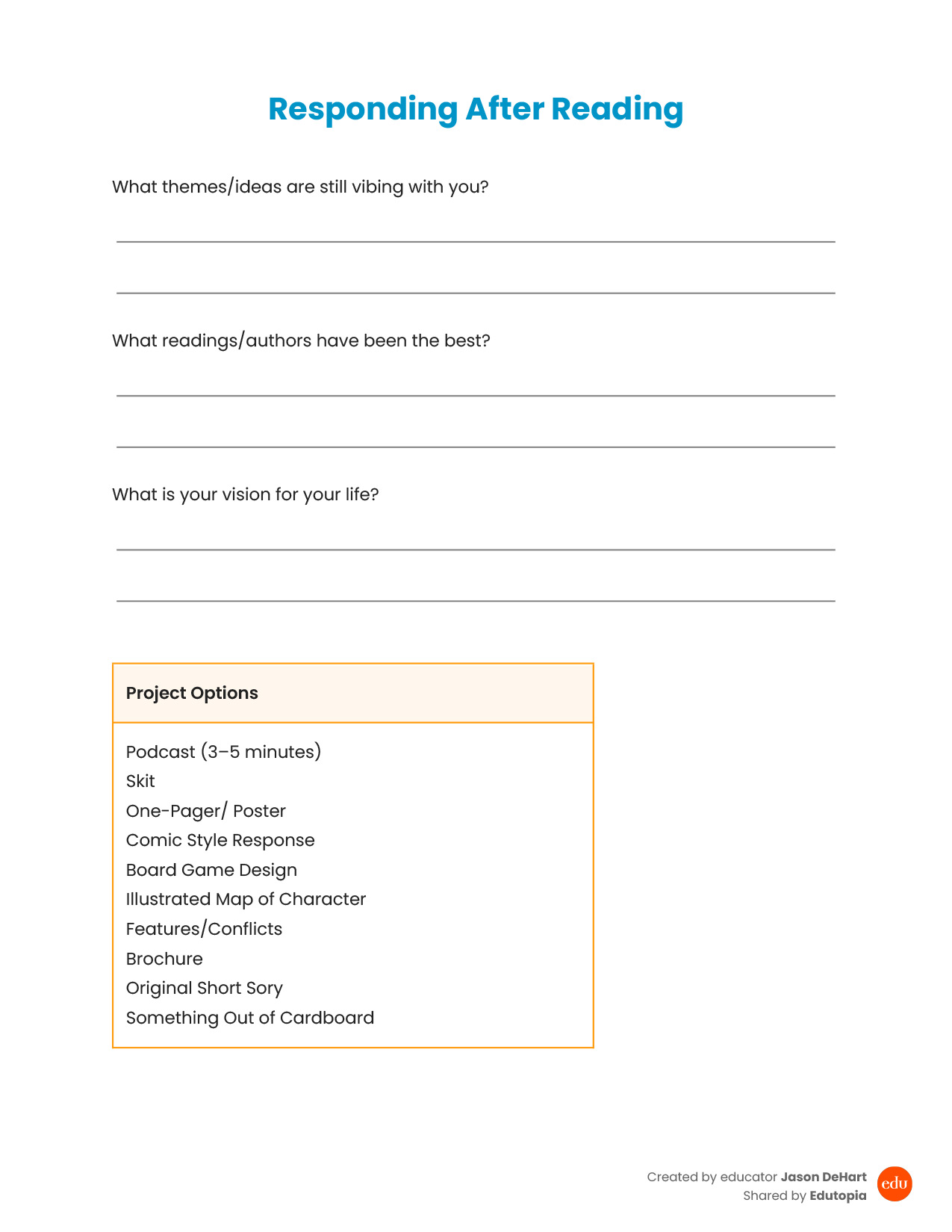
From exit tickets to full narrative responses, there are many ways that conversation can continue after reading and viewing. The chain of inspiration is always essential, and student awareness and voice is a constant lesson target.
I often create a table of options, like the document at left, for students to consider. As we discuss options, I often invite suggested additions to the list when students are willing to work with me to provide a description of the idea in detail.
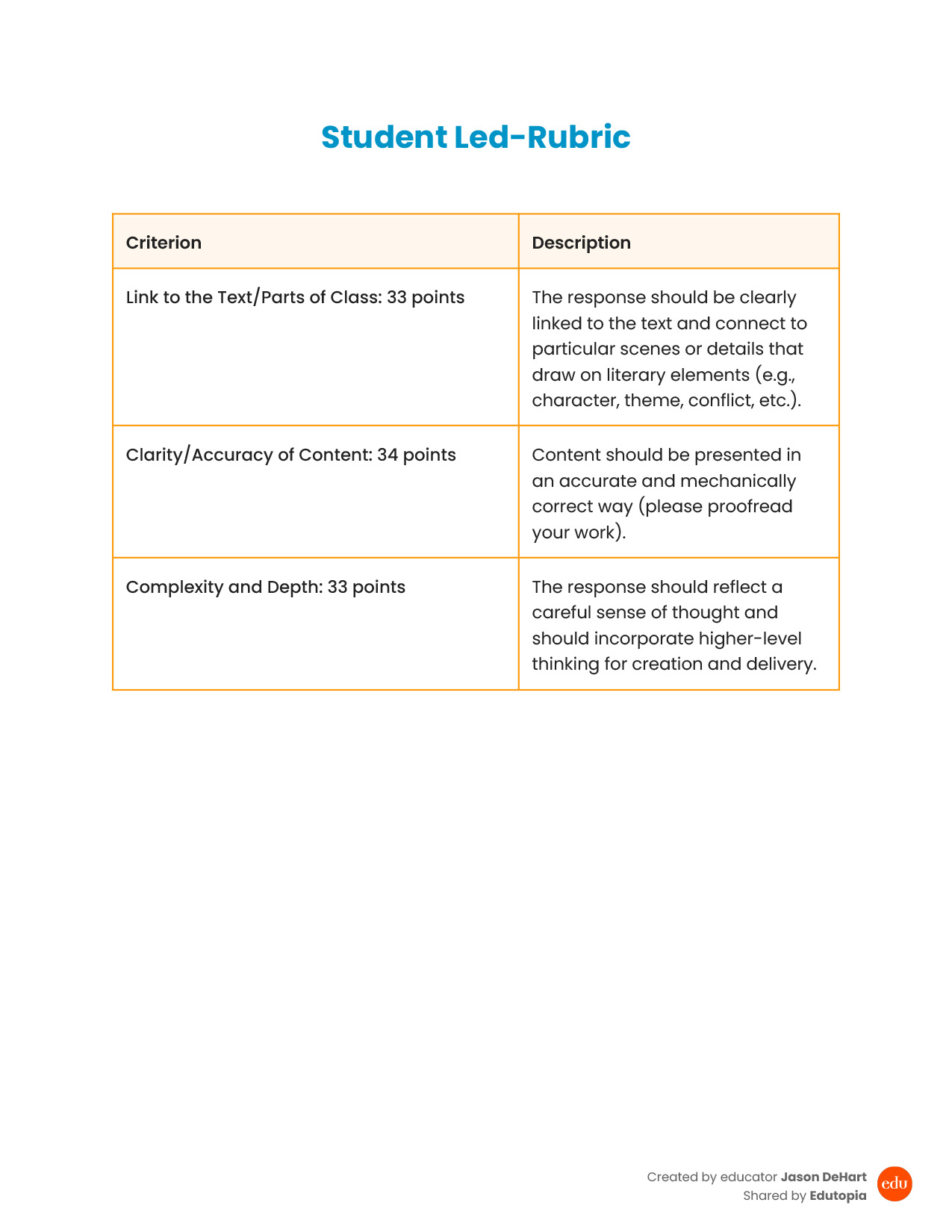
I also use a simple, easily shaped rubric and invite students to ask questions and make suggestions on features for how they’ll be graded.
In some cases, curricular demands shape the kinds of products that I have students share. However, when possible, I open up avenues of creative expression, since we use a wide variety of texts to build our thinking and discussion.
This past semester, as an alternative to the cycle of reading and answering questions, I spent more time with students in developing their questioning through Socratic approaches in small groups.
For additional resources, you can also visit Read Write Think, which now includes a page with resources curated from two educator teams. Each educator created two resources that connect directly to the Great Immigrants, Great Americans comics. These resources can also be adapted to work with a range of comics texts. One resource in particular, a set of text-based questions, has been helpful to me in helping students think through the questions they want to pose in groups when reading.
With so many texts being created and made available every day, and with so many tools opened for communication, our work of building critical analysis, curation, and empathy is limitless.