A Multisensory Approach to Literacy in Kindergarten
Teachers can help students develop phonemic awareness with these playful activities that engage multiple sensory pathways.
Your content has been saved!
Go to My Saved Content.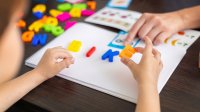
If you observe a kindergarten classroom, you’ll notice that young children have a lot of energy. They learn best when they have the opportunity to move around, touch, talk, and explore their learning environment.
Emergent literacy is the foundation for reading and writing. For young students, it develops through listening and observing in full-body engagement with language. For new kindergarten teachers, this can feel exciting and overwhelming. Having to balance standards-based instruction with the natural energy of 5-year-olds is no small task, but multisensory learning is a powerful and research-supported approach that can help.
Multisensory instruction is a helpful tool for supporting early literacy skills. When young learners move, touch, speak, and see language in action, they develop deeper phonemic awareness and stronger letter-sound connections because they are experiencing language instead of just memorizing it. Cognitive science reminds us that learning persists when multiple sensory pathways are engaged, helping students anchor new knowledge in meaningful ways.
Students are much more likely to take risks and keep trying when learning feels interactive and joyful. For multilingual learners, hands-on strategies provide essential support that makes language accessible, inclusive, and empowering. In a classroom centered on multisensory learning, every child has a pathway into literacy and can find success.
5 Practical Strategies for Kindergarten
Try these ideas to support your emerging readers.
1. Make sounds come alive with manipulatives. Young learners often struggle with abstract concepts like phonemes, but tools such as magnetic letters, counters, or small objects can help make that connection clearer. For example, as you slowly say a word like cat, students can push one object forward for each sound they hear: /c/ /a/ /t/. After they have segmented the sounds, they can replace the objects with letters to visually and physically build the word. Doing this helps students connect sounds to symbols in a tactile way that increases phonemic awareness and letter-sound correspondence.
2. Get kids moving while they learn words. Movement is a powerful tool for supporting early literacy and naturally aligns with how kindergarten students learn. Instead of asking students to stay still, teachers can intentionally add movement to phonemic awareness activities. As students clap syllables, tap their bodies for each sound, or step forward while saying word segments, they feel the rhythm and structure of language. For example, a student might take three steps as they say the sounds in dog: /d/ /o/ /g/. These small movements support understanding and help focus students’ energy in a purposeful way.
3. Teach letters through touch and play. Tactile experiences also help students learn letter formation and recognition. Writing letters requires cognitive understanding and fine motor skills, and multisensory tasks can support both as students practice. Activities like writing in shaving cream, tracing letters in sand, or shaping letters with Wikki Stix allow students to engage their senses of touch, sight, and hearing. As students form each letter, saying the corresponding sound strengthens the connection between the symbol and its meaning. These experiences are simple to implement and very effective at boosting early writing skills.
4. Sort, talk, and notice patterns. Word-sort tasks give students an opportunity to actively explore language. Organizing picture or word cards based on beginning sounds, vowel patterns, or word families allows students to analyze how language functions. After sorting the words, students can have a conversation about what they did. When students explain their thinking and describe what they notice, their vocabulary, oral language skills, andphonics knowledge grow. This combination of hands-on activity and discussion creates a rich learning experience that extends beyond mere memorization.
5. Act things out to make words stick. Vocabulary activities can significantly deepen comprehension when students connect words to actions. Acting out words like jump,slide, or gigantic, or performing scenes from a story, helps learners connect language with movement and meaning. These quick, playful moments reinforce comprehension, create memorable links, and give students a way to experience words before they read them independently.
Challenges and Considerations to Keep in Mind
Multisensory instruction can be highly effective, but it does come with challenges such as maintaining on-task behavior and effectively managing instructional time during lessons. To maintain a productive literacy learning environment, it is important that movement have structure and purpose and be focused on core goals. Implement clear routines to help students transition smoothly between activities.
New kindergarten teachers can start with small, deliberate additions of one or two strategies to daily lessons and then gradually increase them as needed. Eventually, multisensory approaches become a natural part of the classroom and transform literacy instruction into an active, engaging, and meaningful experience.
Thoughtfully designed lessons that engage sight, sound, movement, and touch teach children how to read and empower students to become active, confident, and motivated readers.