How Imaginative Play Can Help Young Children Heal From Adversity
Play can help children become fluent in the language of the nervous system, learning what their bodies and brains need in times of distress and dysregulation.
Your content has been saved!
Go to My Saved Content.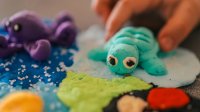
Early childhood represents the miraculous years of neuroplasticity and imagination. Our imaginations develop through play and make-believe with trusted adults and other children. Emotional trauma and adversity can negatively impact a young child’s imagination by disrupting emotional regulation, where their nervous system gets locked into a survival state. It is so hard to play in imaginative ways when you must work hard to protect against anything that feels unfamiliar, unsafe, or threatening.
The brain doesn’t simply record events and experiences; it learns from these and therefore shapes itself in response to the environment. When a child’s brain and body are surrounded by unpredictability, the brain builds itself around protection, not connection. This can lead to a loss of joy and creativity, withdrawal from activities, or a preoccupation with reliving the traumatic event through repetitive behaviors or thoughts. Imaginative play can provide an opportunity for sustainable, flexible, and healthy changes in the developing brain.
Nervous system development and imaginative play
In this time of early childhood, understanding nervous system development is critical in assisting how we address the neurodiversity of the developing brains and nervous systems in our young students. Nervous system development is complex, and even today, we know very little about how individual regions of the brain work collectively through neuronal connections and projections. We do know, however, that human brains are not complete at birth. By design, they continue to develop throughout a person’s life. Creative imaginative play is a driver in nervous system development.
From utero through the first five years of life, the brain is in its greatest phase of maturation. During this time, an infant’s nervous system is also developing. Stimuli from the social environment enter the brain stem, where attunement and attachment with a caregiver is critical for regulating the sensory and motor systems that are so important for emotional, social, and physiological well-being. According to Peter Levine and Maggie Kline, “The fetal period through the first two years of life creates the blueprint that influences every system in the body from immunity to the expression and regulation of emotion, to nervous system resilience, communication, intelligence, and self-regulatory mechanisms for such basics as body temperature and hormone production.”
Imaginative play is deep learning, preparing the mental skills (executive functions) of problem-solving, creativity, working memory, sustained attention, emotional regulation, and predictability to develop through these play-filled experiences and safe environments. These predictable and playful routines modeled during the school day counteract the chronic unpredictability that these children often face in their day-to-day experience.
Imaginative play activities
There are a variety of imaginative activities and practices that early childhood educators and caregivers can integrate as predictable moments of the morning or afternoon routine. These activities allow children to reclaim their imaginative play, social connection, and emotional healing inside a safe and supportive environment. They are especially important for our children who do not always experience a sense of felt safety. These children may benefit from one-on-one with an adult, small groups, and opportunities to practice imaginative play more often. Here are some examples.
Ice cream shop: In this activity, children are the creators of the most unusual ice cream flavors in their own ice cream shops! They can draw, color, or use a variety of materials and props that are already in their centers and classrooms. Ice cream analogies are wonderful ways to teach and reinforce the language of the nervous system and the body: sensations. Our young children have not been conditioned out of their bodies, and they understand sensations such as cold, creamy, sharp, gooey, light, etc. Describing the colors, shapes, and tastes of their ice cream provides an opportunity to integrate sensations. “How would you describe ice cream? Soft, crunchy, smooth, mushy, creamy, cold, and sometimes it can feel numb on our tongues. What flavors will we create and sell today?”
Taki ice cream
Butterfly ice cream
Trash truck ice cream
Vanilla monkey ice cream
Slithery snake ice cream
Green sprinkle frog ice cream
What are other flavors that would be fun to make? This can also be a wonderful partner activity, building ice cream towers with different shapes, colors, and decorations.
Magic carpet ride: This activity can be initiated on carpet squares, on towels, or by using large sheets of paper or cardboard so that children can decorate their own carpets. Children can personalize their magic carpets with special names and even create maps of where they will fly. There are no limits, as children fly to both real and imaginary places.
We can brainstorm with our children the different places they can travel to—a particular friend’s or family’s house, clouds, water, stars, planets, the zoo; a specific town, city, state, or country. Maybe they would like to fly and visit a superhero, favorite Disney character, or Netflix show. Maybe children would like to fly to imaginative places they create! As the children prepare for their magic carpet rides, the following questions could be helpful prompts for their magical adventures:
- What will you bring with you? (Food, clothing, favorite toys, blankets, stuffed animals, or people?)
- What will you fly by and see from your magic carpet? How do you think you will feel?
- Will your magic carpet go fast or slow? Will the ride be bumpy or smooth?
- What will you do when you arrive at your special place? How long will you stay?
Animal moments: In this activity, students choose an animal, insect, or imaginary creature they would like to be for the morning or afternoon. In preparation for this transformative creature day, children learn about the foods their animal eats, places they live and sleep, the ways they move and talk. They can share everything unique about this animal. They can also draw, paint, and record their findings if writing is not an option. Children can use household items, nature materials, paints, crayons, clay, pieces of material, buttons, and anything that feels appealing as they begin creating their animals, bugs, or creatures. Students can also choose to dress like their animals or create puppets as well.
Benefits for Students and Adults
Not only are these activities fun and enjoyable for our children, but adults have the opportunity to learn deeply about the children’s perceptions, priorities, thoughts, feelings, joys, and fears. An example of knowledge learned from an activity would be to see sad faces on the sock puppets and a repetition of sad or angry words as they played with their puppets. Children might not be able to tell us how they are feeling, but they can express their feelings and sensations through this type of play.
We can tap into their agency and creativity, validating the strengths of their hearts and minds, while teaching them about the language of the nervous system, sensation. When children become fluent in the language of the nervous system, they can begin listening to their bodies, knowing what their bodies and brains need in times of distress and dysregulation. These activities provide an opportunity to learn about the language of their bodies.