Strategies That Empower Students to Answer Questions When Called Upon
When students feel like they don’t know the answer to a question, engaging in low-risk conversations can help them find their way.
Your content has been saved!
Go to My Saved Content.
A teacher calls on a student who doesn’t know the answer to the question. The student reacts like a deer in the headlights. There’s an awkward silence followed by embarrassment. We’ve all been there, and it doesn’t matter which side of the desk you’re on.
What can teachers do to encourage students to participate in conversations? How can we model communication strategies to empower students to take agency and control of their learning?
I’ve used two effective strategies in the classroom to help students move forward: “Be an Active Learner” and “Accountable Talk.”
Students Don’t Have to Know the Answer to Participate
The first strategy I use, “Be an Active Learner,” is designed to be a resource for students to use when they are called on and they don’t know the answer, or to empower students to raise their hand and ask for help if they don’t understand something in class. “If you don’t understand, raise your hand!” I had a large poster with sentences that the students could read from and ask instead of saying, “I don’t know,” or saying nothing at all.
The poster looked like this:
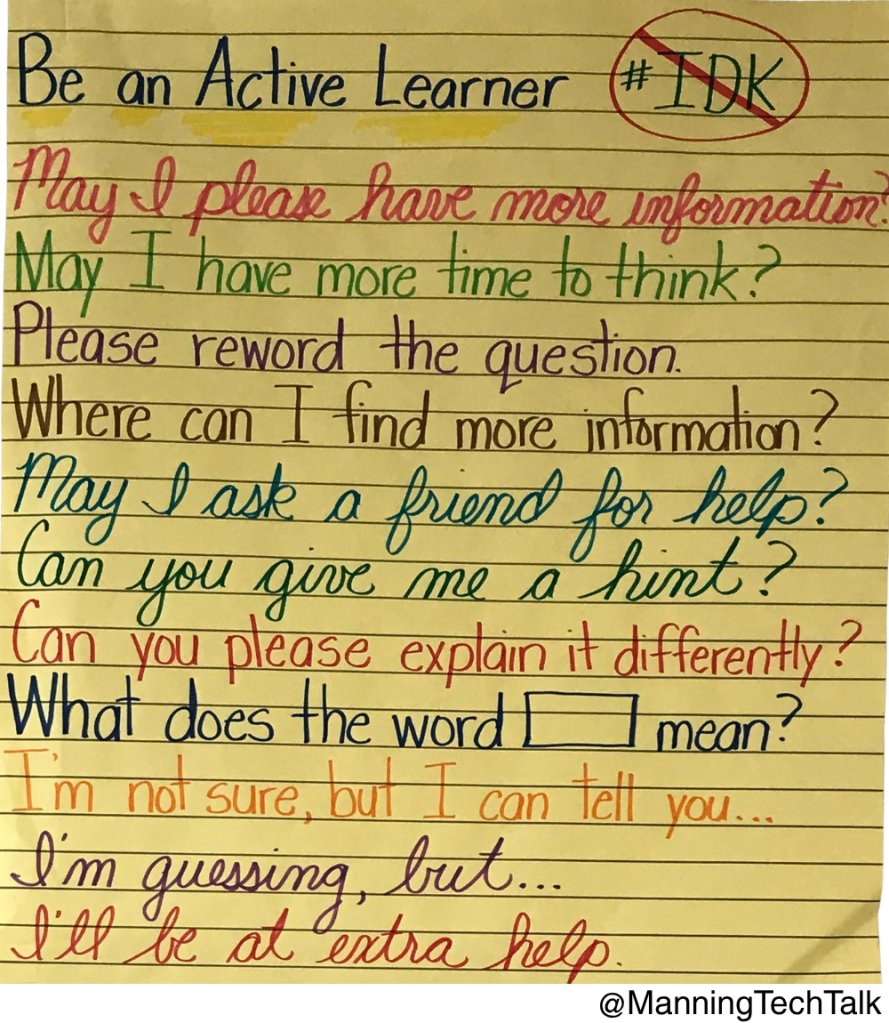
I hung the anchor chart on the wall in the front of the room above the whiteboard so that it was visible to all students. I could easily point up at the sign to encourage students to utilize the participation prompts. It sent a clear message that it was OK to not know something, and it also empowered them with strategies to work out what to do when they needed help.
In addition to displaying the poster, I provided smaller cards that students could leave on their desk and paper-sized cards that they could use during group work or insert into their notebooks or binders.
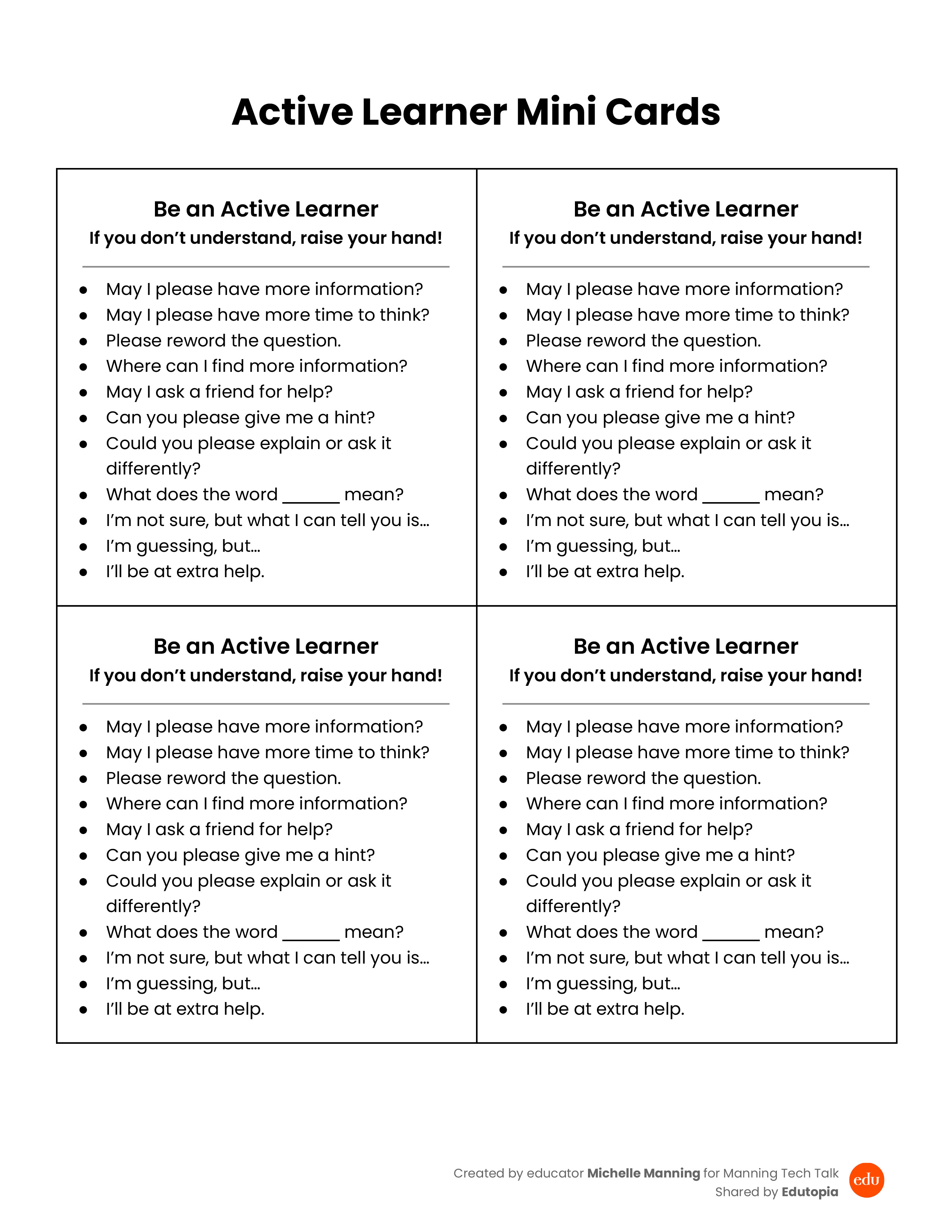
I often praised students for asking questions to help create a risk-free environment where students felt safe admitting that they didn’t know something or asking for support. I believed that it was not only important for students to know the content, but just as important for students to have skills and strategies when they didn’t.
It took a little prompting, encouragement, and modeling, but eventually it happened. I called on a student and watched her gaze at the poster, and she read one of the questions. No more silence. No more disengagement. The conversation continued, and I was able to clarify the content. This helped the student I called on—and the other students who I’m sure had the same question. And I always told my students that their questions and mistakes made me a better teacher because I gained insight into how they were processing what I said. Their questions challenged me to explain the content in a different way to ensure that they understood. Everyone in the room was learning and growing, even me.
Prompts That Promote Productive Conversation
To continue the momentum, my next goal was to encourage healthy, equitable conversations between the students, during collaborative group work or whole class discussions. The “Accountable Talk” sentence starters required students to listen to their peers and respond in a way that would continue the conversation. The sentence starters fell into six categories: agreement, disagreement, clarification, confirmation, confusion, and extension.
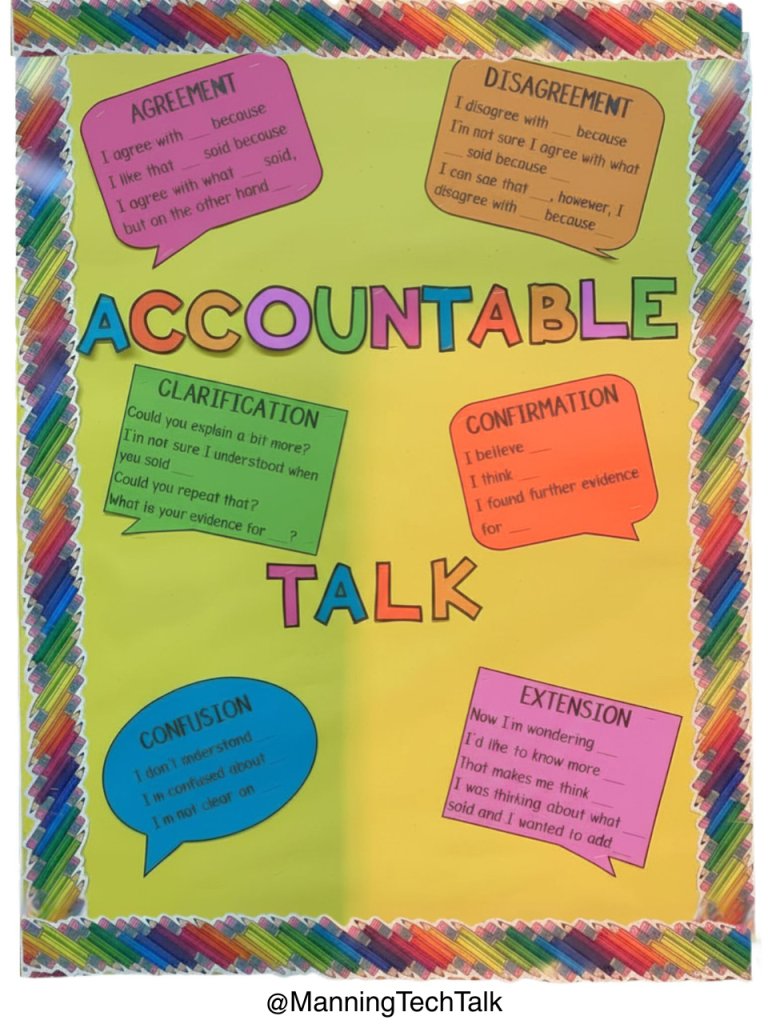
I created a bulletin board display in the classroom, but I also made table paper–sized cards and individual desk cards for students to refer to if they needed them.
It was exciting to see my students transition from using monosyllabic responses or having back-and-forth arguments to engaging in healthy, respectful conversations.
When I first started using this strategy, I walked around the classroom to observe student groups and their conversations. My students were reluctant, but I modeled the sentence prompts and encouraged them to utilize the Accountable Talk cards.
In the beginning, it was a little awkward as students read the sentences aloud. Eventually, they got more comfortable interacting with each other. They gave responses beyond agreement, knowing it was OK to not agree with a classmate, and had more faith in themselves. In addition to providing resources to continue the conversations, the sentence starters led to deeper conversations that required students to provide evidence that supported their opinions and claims.
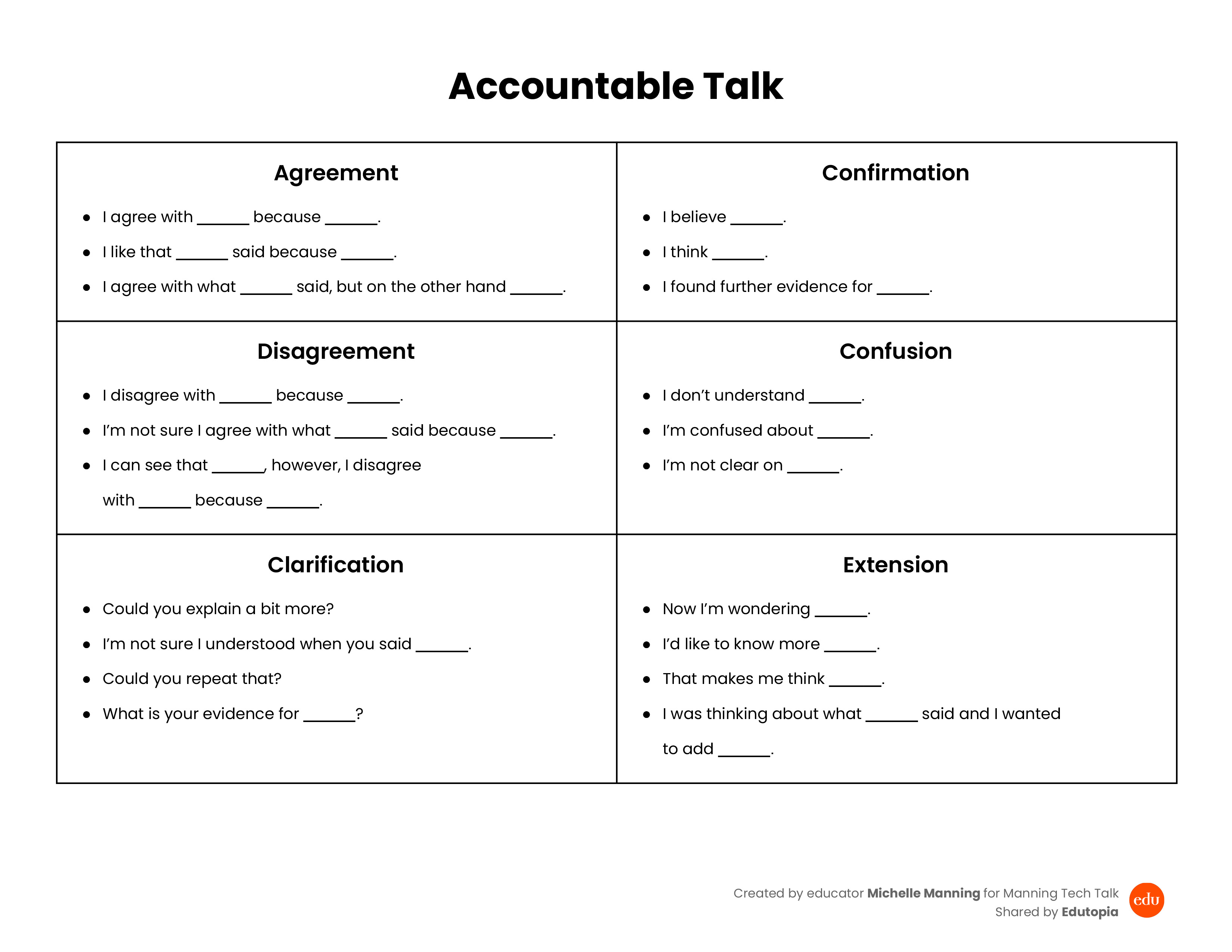
One way to change things up is to put the sentence starters in a jar and have students respond to the prompt they selected.
Creating a low-risk learning environment that encourages participation and provides meaningful resources for students can change the climate of any classroom. Students who don’t say much or prefer to communicate through text learn important verbal communication skills. Shy students get the support they need to feel confident. Students who have struggled quietly become comfortable with asking questions and seeking help. Classrooms that were once filled with awkward silence are now buzzing with conversations from engaged, empowered learners.