The Many Benefits of Having High School Students Go Touch Grass
Access to technology means students usually begin with someone else’s observations instead of their own. This activity can change that.
Your content has been saved!
Go to My Saved Content.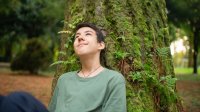
Before each school year begins, I spend time thinking about what content I want my students to master, but I spend more time thinking about the habits I hope they develop. I want my students to become curious observers and thoughtful creators. That has become increasingly challenging in a world where many students experience life through a screen before they experience it firsthand.
Today’s students have instant access to information. They can search for answers, generate images, summarize articles, and watch videos on almost any topic within seconds. These technologies are remarkable, and I use them regularly in my classroom. But this means that students often begin with someone else’s observations instead of developing their own.
This led me to adopt a simple philosophy that now shapes the culture of my classroom: experience first, technology second. I want my students to encounter the world before asking technology to interpret it for them. This allows them to have experiences first, so that they have something meaningful to engage with, reflect upon, and apply. By design, I ask students to demonstrate that learning through projects that reveal their own engagement and reflection. One of the ways I introduce this philosophy is through an assignment I affectionately call “Go Touch Grass.”
A Surprising Challenge
I intentionally make the assignment simple. I have students spend time outside without the expectation of immediately producing something. Some take a walk through their neighborhood. Others sit in a local park. Some journal, sketch, paint, or photograph details they notice in nature. Others simply observe. The point of the activity is not to hike the tallest mountain or visit a famous landmark. It is about slowing down long enough to pay attention—to the world and their experience of it before anything else filters that experience for them. For many students, that is surprisingly difficult.
We live in a culture that rewards constant stimulation. Silence feels uncomfortable. Moments of boredom are quickly replaced with scrolling. The goal of this assignment is to help students resist the urge to fill every quiet moment with a screen. As they slow down, they begin noticing things they might otherwise overlook: changing light through the trees, conversations between birds, the rhythm of a creek, and, especially, their own thoughts. These observations become the foundation for authentic learning.
The assignment itself is remarkably adaptable. Students do not need access to a national park. There are plenty of opportunities for outdoor observation: a neighborhood sidewalk, a school courtyard, a local greenway, a backyard, or just 20 quiet minutes beneath a tree. Any of these can give them enough space to experience something. Only after students have had this experience do I ask them to think about how they want to communicate what they discovered.
Some students choose to create podcasts reflecting on their observations. Others produce short videos, digital stories, or photo essays. Some design presentations or record interviews. Just as often, students choose nondigital products, such as paintings, written reflections, or poetry. The product itself isn’t the important part. I want the thinking behind the product.
The variety of projects often surprises me. One student spent hours at a local pond drinking coffee and painting. She submitted a wonderful painting of a golden dragonfly hovering over the water. Another student submitted a photo-timeline of a hike he took with his friends on a local greenway. Both reflected on how uncomfortable it initially felt to be outside without a phone, only to realize how much they had been missing. The big discovery was that when students began with real-life experiences, they realized that they had something worth saying.
Lasting Benefits
Although I typically introduce this assignment during the first part of the school year, I have found that it changes the tone of our classroom for the rest of the year. Students become more engaged because they recognize the importance of the learning process instead of simply the end result. They begin to understand that our classroom values observation before opinion, curiosity before conclusions, and creation before consumption. Those expectations carry into everything else we do, whether we are analyzing literature, discussing philosophy, studying history, or collaborating on projects.
Before beginning research, I look for opportunities for students to observe. Before asking them to present ideas, I encourage them to wrestle with those ideas first. Before they create, I ask them to reflect. The assignment is less about spending time outside and more about establishing a pattern of learning that students carry with them throughout the year.
I hope this approach prepares students for a future where technology will continue to evolve at an incredible pace. New tools will emerge. Access to information will only become faster. Those developments make distinctly human skills even more valuable. Observation, curiosity, creativity, reflection, and discernment cannot be outsourced. They are cultivated through intentional experiences. Our students do not simply need to know how to use technology. They need to know how to think before they use it.
The goal is for students to leave the classroom more attentive—to the world around them, to the people beside them, and to the ideas worth sharing. In an age when digital tools continue to multiply, helping students become thoughtful observers before they become digital creators may be one of the most important lessons we can teach.