60-Second Strategy: Coffee Shop Mode
A simple visual cue helps students practice independence and problem-solving while creating uninterrupted time for small-group instruction.
Your content has been saved!
Go to My Saved Content.One challenge many elementary teachers face is finding uninterrupted time to work with a small group while the rest of the class remains engaged and productive. At Ojibwa Elementary School in Macomb, Michigan, second-grade teacher Renee Sheridan uses a simple routine she calls “Coffee Shop Mode” to create that space while helping students build self-management skills.
The strategy begins with a clear visual cue: a green apron. When Sheridan puts it on, students immediately recognize that Coffee Shop Mode is in effect. “When they see that apron, they know, ‘Oh, I’m supposed to be independent,’” Sheridan says. The visual cue lets students know she will be meeting with a small group and that it's time for them to begin working on their own. Before gathering her group, Sheridan reviews expectations and reminds students that this is a time to solve problems on their own. Whether a pencil breaks or a supply runs short, students are encouraged to think through solutions before turning to an adult for help. As the routine becomes part of the classroom culture, students grow more comfortable making decisions on their own—and relying less on the teacher for minor needs.
Once the expectations are clear, Sheridan calls the students she needs to meet with and begins working with them. Because the routine is familiar and predictable, the rest of the class knows what they should be doing and can continue working without her. That consistency allows Sheridan to give her full attention to the students in front of her. Those small moments of problem-solving begin to add up—students learn that they are capable of handling everyday challenges on their own, building confidence along the way.
“Problem solving without an adult really gives them a chance to grow and develop as humans,” Sheridan says.
In addition to creating focused time for small-group instruction, Coffee Shop Mode helps students practice independence in meaningful ways. By pairing a memorable visual cue with clear expectations, Sheridan has created a routine that encourages students to think for themselves, solve problems, and develop skills that extend beyond the classroom.
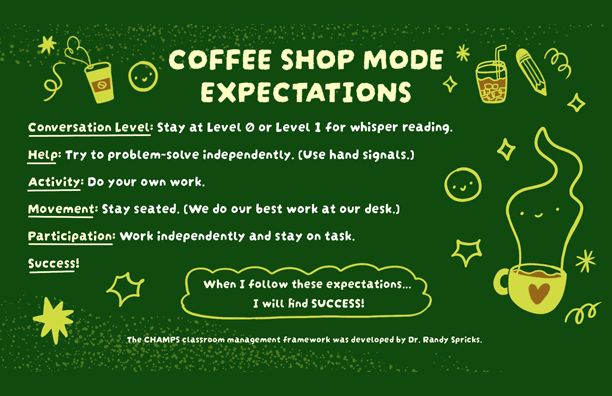
Sheridan shared an editable version of the Coffee Shop Mode expectations slide similar to the one seen in the video for other educators to adapt or use (requires Google sign-in to make a copy).
Find more quick teaching strategies for the early grades right at the top of Edutopia’s 60-second strategies collection.