Time Management Tips for New Secondary Teachers
These ideas can help you manage tasks like a veteran and begin to find a sustainable work-life balance right from the start.
Your content has been saved!
Go to My Saved Content.
Twenty-two years ago, fresh out of a teacher credentialing program, I was wholly unprepared for the fullness of every teacher’s plate. Delivering instruction may constitute the majority of a teacher’s working day, but new teachers swiftly learn there are a multitude of other tasks that need attention.
One of the keys to maintaining mental, emotional, and physical health during your first year of teaching—and all of the years that come after—is to develop time and task management skills. When you understand how to effectively utilize your professional time, you will be able to reserve your personal time for that which fills your cup and brings you joy.
Establishing Priorities
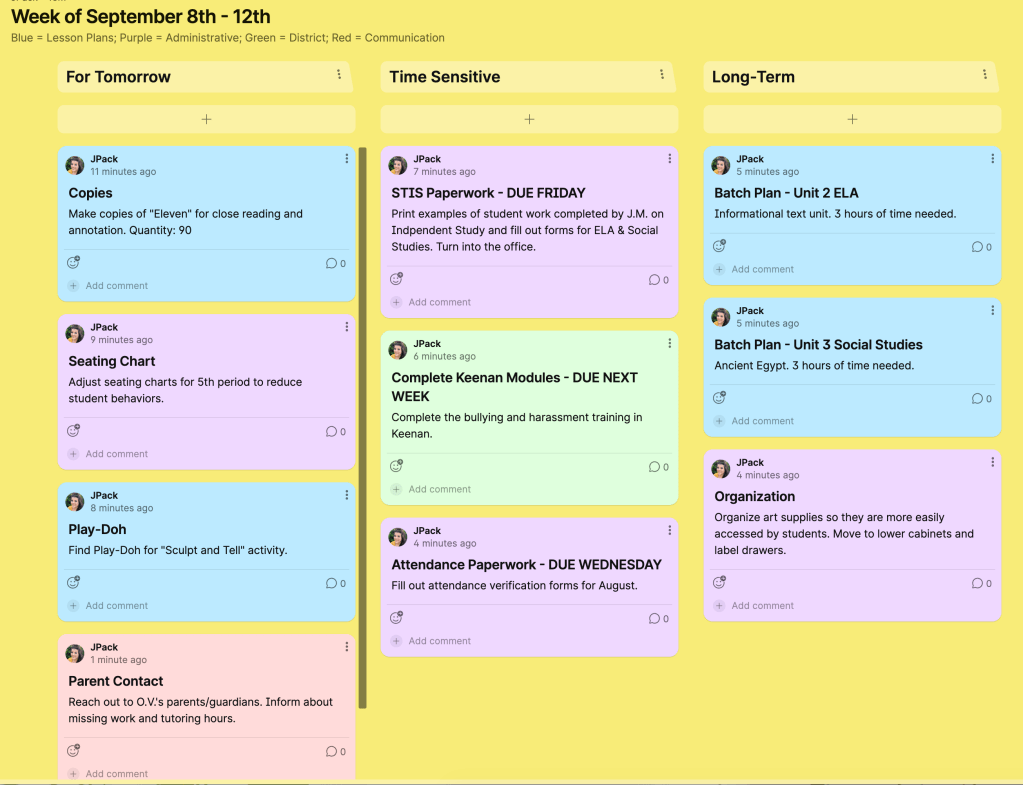
The first step in time and task management is to establish priorities. How do you decide what is essential and what can wait? I’m a big believer in keeping a running list of tasks. I create a list for the week and sort the tasks into categories based on the following questions:
- What do I need to do in order to be ready to teach tomorrow?
- Which time-sensitive tasks are due today? This week?
- Which items should be addressed slowly over time?
Each time you add a task to your list, sort it into the appropriate category. You can take an analogue or digital approach by using a notebook, spreadsheet, task manager, or web-based tool like Padlet. My running list is set up with three columns labeled “For Tomorrow,” “Time-Sensitive,” and “Long-Term.” Since I use Padlet, I like to color-code the posts to further drill down the categories of work that need to be accomplished. For example, anything pertaining to administrative tasks is purple, whereas classroom management tasks are orange.
Once you have identified your highest-impact tasks, time blocking and task batching are two productivity strategies that can help you be intentional about when and how you will tackle each task.
How to Use the Time Blocking Strategy
Time blocking (sometimes referred to as time boxing) refers to scheduling specific blocks of time for particular tasks. At the beginning of the week, evaluate the items on your to-do list and schedule a block of time to handle each. For example, you can respond to emails from 7 a.m. to 7:30 a.m. on Monday, Wednesday, and Friday, and plan to grade an assessment from 3:30 p.m. to 4 p.m. on Thursday. My calendar typically includes time blocks for school/home communication, lesson planning, data analysis, documenting independent study paperwork, and maintaining the organization of classroom supplies.
When a time block ends, you move on with your day, even if you are not finished. If you need more time, schedule another time block for the next day instead of letting a single task dominate your afternoon or evening. Time blocking works because of Parkinson’s law, which says that work expands to fill the time that is available. If you give yourself 30 minutes to accomplish a task, you are more likely to work efficiently than if you loosely plan to tackle a task “after school.”
How to Use the Task Batching Strategy
Task batching is another productivity strategy that can help you manage your running list. A helpful analogy to understand task batching is baking cookies. You can choose to mix just enough batter and bake a single cookie at a time, or you can bake two dozen cookies at once. Similarly, you can plan one lesson at a time, or you can plan an entire week, month, or unit in one sitting. The result is that you will gain more flexible time daily to manage all the other items on your running list of tasks.
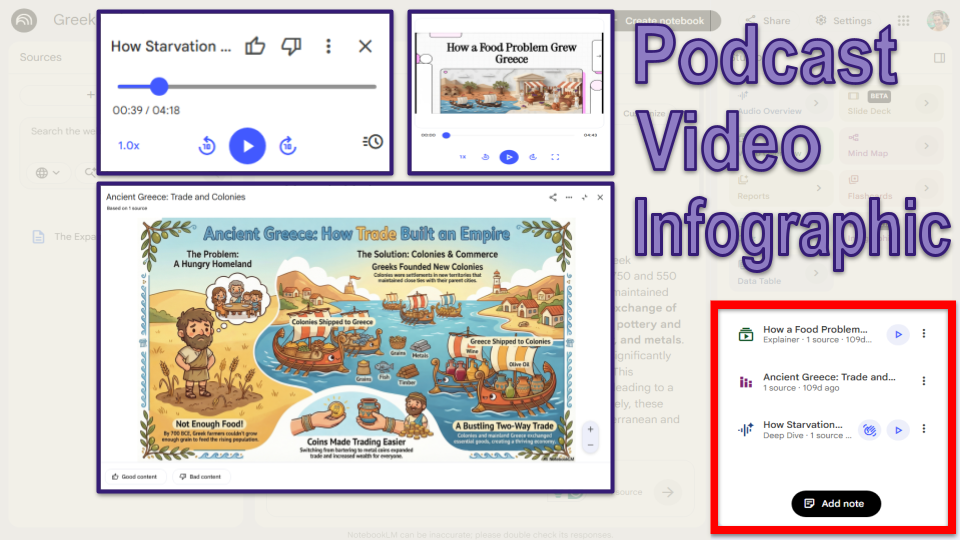
Since lesson planning is an ongoing, long-term commitment, I take the last Friday of summer to batch-plan the entire first unit for each class that I teach. Then, while I’m teaching unit one, I plan a day during the first six weeks of school to batch-plan unit two. Planning an entire unit at once allows me to gather or develop resources and hyperlink them in a single document for ease of use. I also like to batch-create instructional resources during this time using NotebookLM to turn content into podcasts, explainer videos, infographics, and comics.
Planning an entire unit at once may seem daunting to new teachers, so you may want to begin by planning one week at a time. However, the ultimate goal should be to work up to planning an entire unit in order to free up the most amount of your time for other tasks.
Task batching is not limited to lesson planning. I also batch-plan all of my parent communication in one sitting and do all of my grading for the week. Rather than making copies day by day, I try to make copies for an entire week or two at once. By lumping tasks together and tackling them all in one go, you are eliminating the decision fatigue that comes with constantly switching back and forth between duties in an attempt to stay one step ahead of your running list.
Since I started task batching several years ago, I have devoted less of my personal, unpaid time to professional tasks. Before, I would routinely spend 90 minutes before school each day and at least two hours after school, whether on campus or at home. Now, I am able to complete the vast majority of my work within my contracted day. This has led to an improvement in my mental health and allows me to spend time being a parent to my own child once my workday ends.
A Word of Encouragement
Maintaining running lists of tasks and utilizing productivity strategies will not completely eliminate the overwhelm. This is both natural and normal for new secondary teachers—and even veteran teachers! Our teacher plates will always be full, which is why we must be adaptable and flexible. Remember that effective time and task management develop with experience. Each year, you can become more efficient and better able to focus your time where it matters most.