If You Want Your Students to Be Kind, Teach Them How
Middle school teachers can combine engaging activities with a healthy dose of patience to promote a culture of kindness.
Your content has been saved!
Go to My Saved Content.
Put-downs and insults are used so frequently in today’s society; they are tossed around without a second thought to the impact they are having on our or our students’ emotions, behaviors, and relationships.
During transitions and group work especially, I was constantly hearing unkind language such as, “Shut up,” “That’s dumb,” and “Where’d you get those shoes?” Simply telling students to “be kind” paused the behavior in the moment, but it did nothing to effect lasting change. When I spoke with my students about their behavior, they didn’t see what they were saying as being unkind; it was simply part of their communication style. However, words have an impact on how we feel about ourselves and others.
Teaching Kindness Requires Patience and a Plan
It doesn’t happen overnight, but with consistency and patience, a culture of kindness is achievable. Educators can build this environment for students through observations, learning, experiencing, and reflecting. That’s not to say a worksheet, a kindness lesson, or a unit on kindness would be unhelpful. On the contrary, everything we do matters.
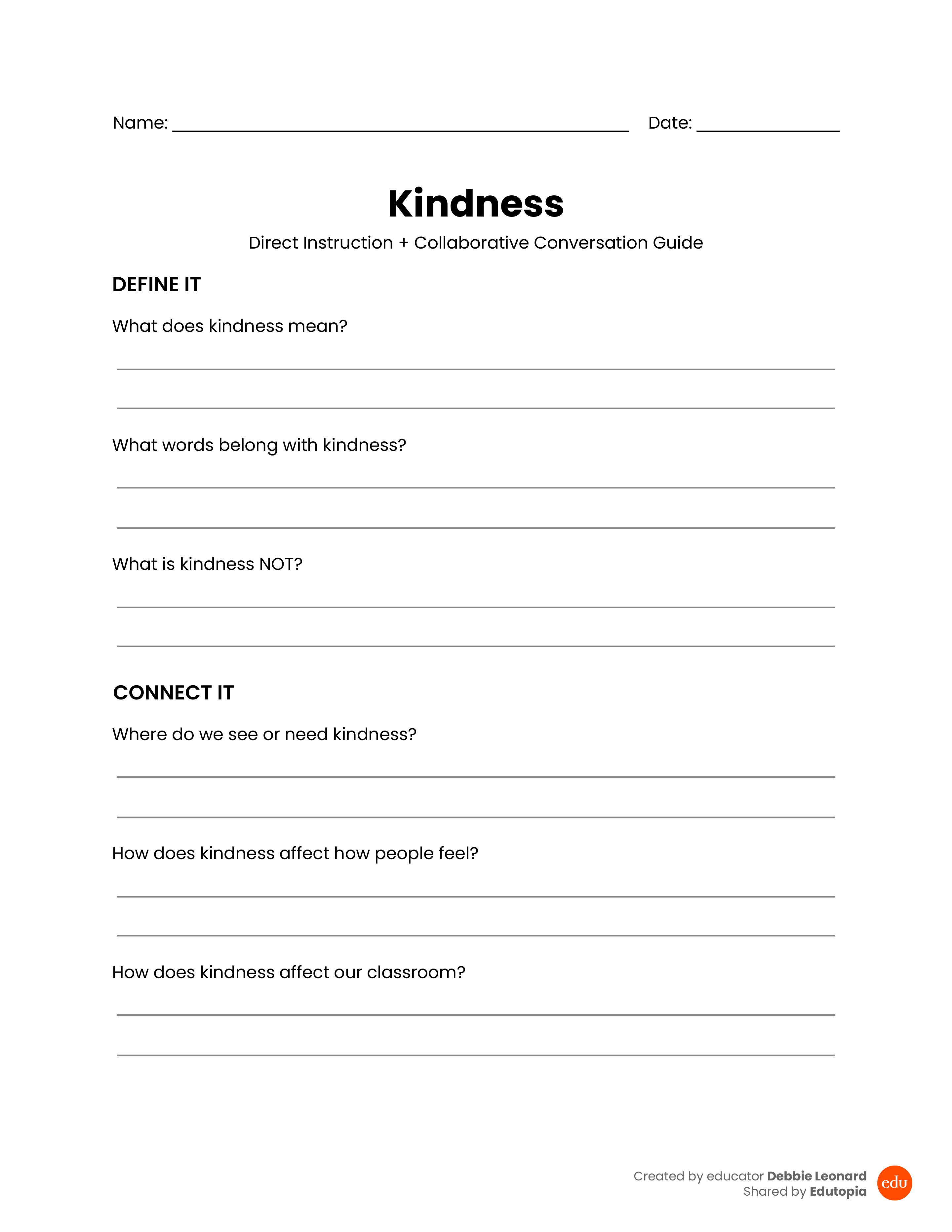
To truly develop a strong culture of kindness, it’s important not to give up. A study on habit formation showed that, on average, it takes more than two months before a new behavior becomes automatic, so we need to be persistent. Below you’ll find strategies that I’ve used in my middle school classroom. Each kindness habit is meant to last from three to 13 minutes.
Facilitate the Expression of Kindness
Start by activating your students’ memories and understanding of kindness. Open the conversation by sharing stories about kindness that you’ve personally experienced—as the giver and receiver—as well as how those moments made you feel.
Next, invite your students to share their experiences and feelings about kindness. There are four elements to include when discussing kindness: the emotion, the person, what they did, and how it turned out. I’ve simplified this as a “kindness formula”: Emotion + Name + Action = Outcome or Name + Emotion + Action = Outcome.
For example: I felt thankful that Jada saved me a seat at lunch, so I didn’t have to sit alone.
It’s important to give students space for thoughtful reflection, followed by jotting down a few memories, using the kindness formula. Next, get them up, moving, and discussing with a think-pair-share strategy. After a few minutes, bring the conversation back to the whole class and have them share out their experiences.
Promote Self-Awareness and Commitment
Developing a habit of kindness requires self-awareness and a commitment to the community. Include everyone who plays a role in your classroom, from the students and teachers to the aides, coaches, and administrators.
This commitment includes being kind to others, as well as to yourself. Perfection is not the goal—awareness and effort are. We won’t all be perfect all the time, but it’s important to consistently make an effort to develop an awareness of kindness where we listen for it internally and externally in the words we use and the actions we take.
Consider creating a kindness commitment together as a class. Keep it short and to the point. Print it on poster board, have everyone sign it, and display it prominently on the wall or a bulletin board. As a goal, students can state how many acts of kindness they’ll try to perform, as well as tracking how frequently they hear or speak unkind words to others.
Kick things off with your own goals:
“I will commit to a total of seven acts of kindness daily. At least once a day, my act of kindness will include doing something for others. I will also try not to say or do something unkind or hurtful to others. If this occurs, I will apologize. My goal is not to exceed more than four slip-ups in the week.”
Track each student’s progress with a Google Doc. Explain that it will be kept private unless the student asks to publicly share their goals with the class. Before the student shares, check what they plan to say.
Build a Common Language
One way that I teach students to navigate the positive and negative aspects of goals, emotions, solutions, and outcomes is by using a Behavior Mapping Worksheet (BMW). The BMW helps students see clearly how emotions drive our choices, and our choices determine outcomes. I designed it to stretch students’ ability to see problems from a different point of view. The more practice and discussion you’re able to provide, the better students will become at developing self- and social awareness.
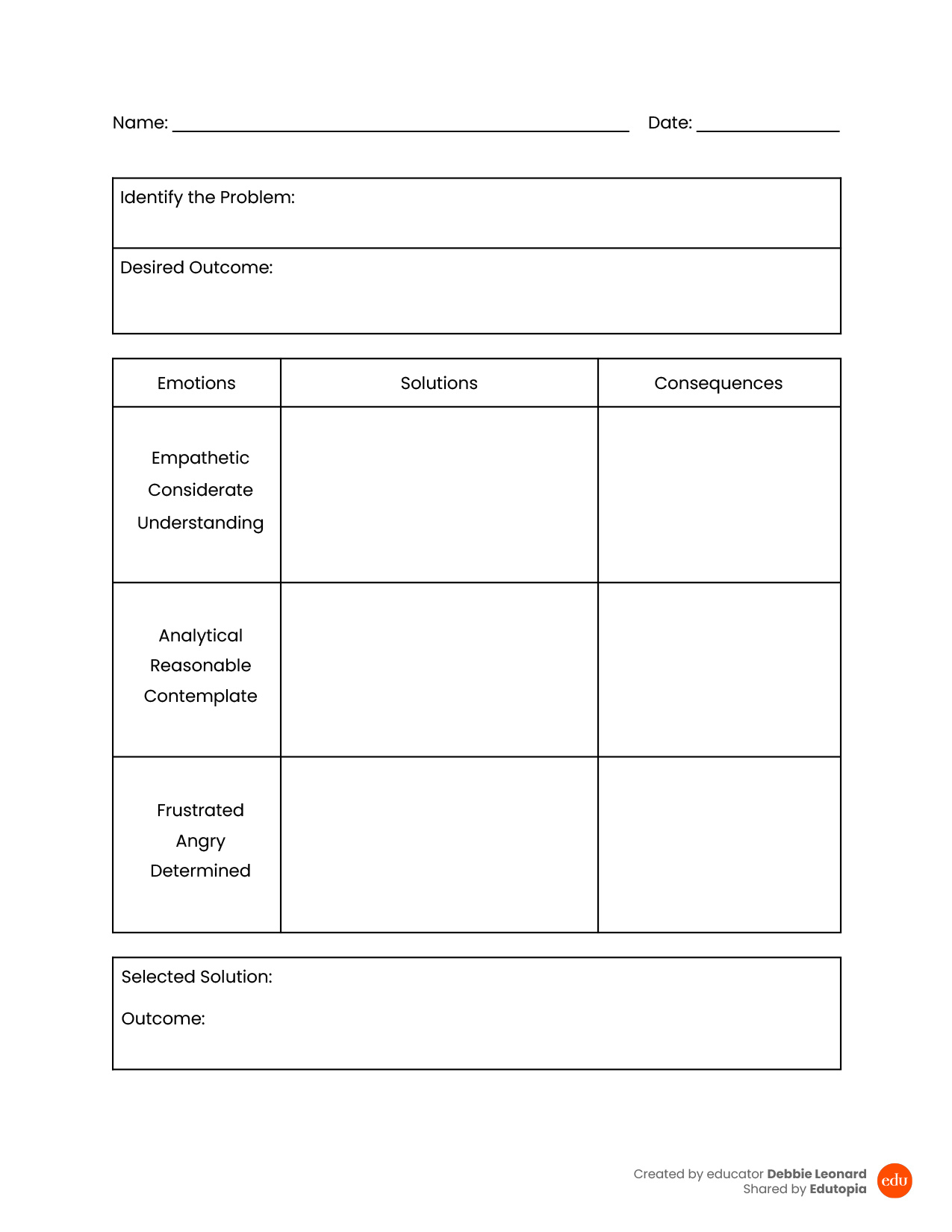
For the BMW to become an effective tool for increasing kindness, self-awareness, and self-regulation, it’s imperative to review and discuss a variety of student-centered problems from different perspectives. I do this through multiple approaches including small-group discussion, independent practice, discussion, and role-playing.
Use this completed version as a reference. Feel free to adapt it based on your students’ needs, and keep trying until goals are being met and kindness has become a habit.
5 KINDnESS-CENTERED Class Projects
Set aside time each day for students to engage in acts of kindness. The following activities allow them to witness and celebrate good deeds:
Kindness Bulletin Board: Have students create emojis to represent their kindness connection and place it on the bulletin board. Make reference to it daily.
Kindness Chain: I pass out strips of construction paper. Students write down kind deeds, and we hang them around the room or even out in the halls.
Kindness Flower or Tree: Each day, a student adds a word associated with kindness, places it on the tree, and explains its meaning.
A Wall of Caring: Utilize mantras, Mad Libs, and quotes. I set a consistent time and weekday for students to read and share a personal story (if they want to).
You Matter Care Cards: Have students design their own personal “business cards.” When they see or hear of a kind deed, they record it on the back of the card and save it. At the end of the week, students read their cards and pass them out to the deserving students.
Be prepared for students to backslide. When that happens, reteach, practice again, and bring attention to the kindness you notice. Culture isn’t built in one lesson.