How Sensory Play Helps Preschool Students Develop Self-Regulation
Teachers can set up hands-on exploration to promote young students’ ability to calm themselves when emotions are running high.
Your content has been saved!
Go to My Saved Content.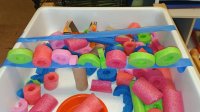
As a teacher in a mixed-age preschool classroom (ages 2.9 to 5), I always find it interesting to see how the classroom dynamics shift in the fall. This year, our incoming group of students was on the younger side, and for several children, it was their first experience in a school setting. One of the biggest challenges has been supporting children who struggle to manage big emotions like frustration or anger. For example, when a block tower is accidentally knocked over, it can quickly lead to pushing, hitting, or crying. Once this type of dysregulation occurs, it can be difficult for children to regain control of their nervous system and calm themselves, focus, or communicate their needs to a teacher in a productive way.
In addition to well-established calm-down strategies like deep breathing, modeling positive behaviors, and redirection, my co-teacher and I have leaned heavily on sensory experiences as a way to prevent emotional escalation and support children during dysregulated moments. We typically refresh the materials in our sensory table every Friday to align with the upcoming curriculum theme. However, we’ve also pulled out the water table or filled trays with sand on the fly if it seems like certain children would benefit from working with those materials in the moment.
Here are some examples of sensory experiences that can be easily adapted and implemented in other preschool classrooms to promote self-regulation and calm.
Water Play for Relaxation
It seems so simple, but preschoolers are naturally drawn to water play. Water play gives children the opportunity to engage their senses while pouring, splashing, or squeezing sponges. If I’m setting up water play for a larger group (four students can comfortably fit at the sensory table), I ensure that a towel is nearby to quickly wipe up spills. I also offer four of the same tools (e.g., funnels) to minimize waiting or conflict.
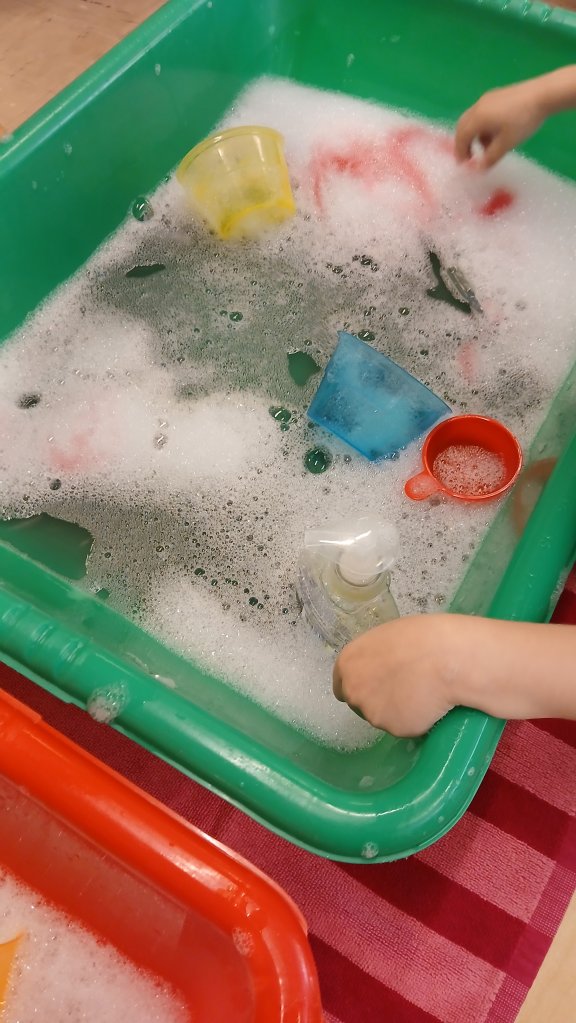
If I’m setting up water play for one or two children who need to decompress, I use a tabletop tub with only a few tools. I add warm water to the tub, a few squirts of dish soap, and some measuring cups. Placing the tub on the table provides clear boundaries for where the water play takes place, reduces spills on the floor, and allows me to sit and co-regulate with a child who is upset. Pouring the water back and forth between the containers allows the child to relax, reset, and work through their emotions to prevent a larger tantrum.
Sand for Mindfulness
We have a large sandbox at my school where children can spend time scooping, dumping, and moving sand. We also frequently fill our sensory table with sand and provide individual trays so that children can explore sand inside the classroom on a regular basis. Playing with sand encourages children to be in tune with what they see and feel, which makes it a naturally mindful experience. Sand is also a forgiving substance—if you make a “mistake” when working with it, you can smooth it out and start again. This freedom to create, erase, and try again supports emotional regulation and flexible thinking.
When working with sand trays, it’s a great idea to set clear expectations so that children use the materials safely. We remind them to keep the sand in the tray and to use their shovels “low and slow” in the sandbox. If children don’t use the materials responsibly, we put the individual trays away and reintroduce them at another time.
Tactile Input with Tape
Stretching painter’s tape across the sensory table gives children an opportunity to make bridges out of foam shapes. My students enjoy the tactile sensation of ripping the tape and sticking the shapes to it. Painter’s tape is a great choice because it’s easy to tear and won’t damage any classroom surfaces. I show children how to use the tape intentionally to minimize waste and maximize the surface area available for building bridges.
In this activity, they used their executive function to lay the tape in lines that made sense for their bridge designs. Some of them chose to place the sticky side of the tape facing up, while others preferred the sticky side facing down. It was interesting to observe the variety of bridge shapes that emerged from these approaches. Beyond offering a novel play experience, this setup also offered moments for co-regulation. I modeled intentional ways of using the tape for this activity, and children mirrored my slow pace and calm tone. The ease of use and children’s enjoyment makes this a standout option for sensory play.
Working With Developmentally Appropriate Tools
During a recent construction-themed week, I discovered that many of my students love exploring real tools and woodworking materials. Having a screwdriver board set is a great investment because it allows children to work safely and independently with minimal frustration.
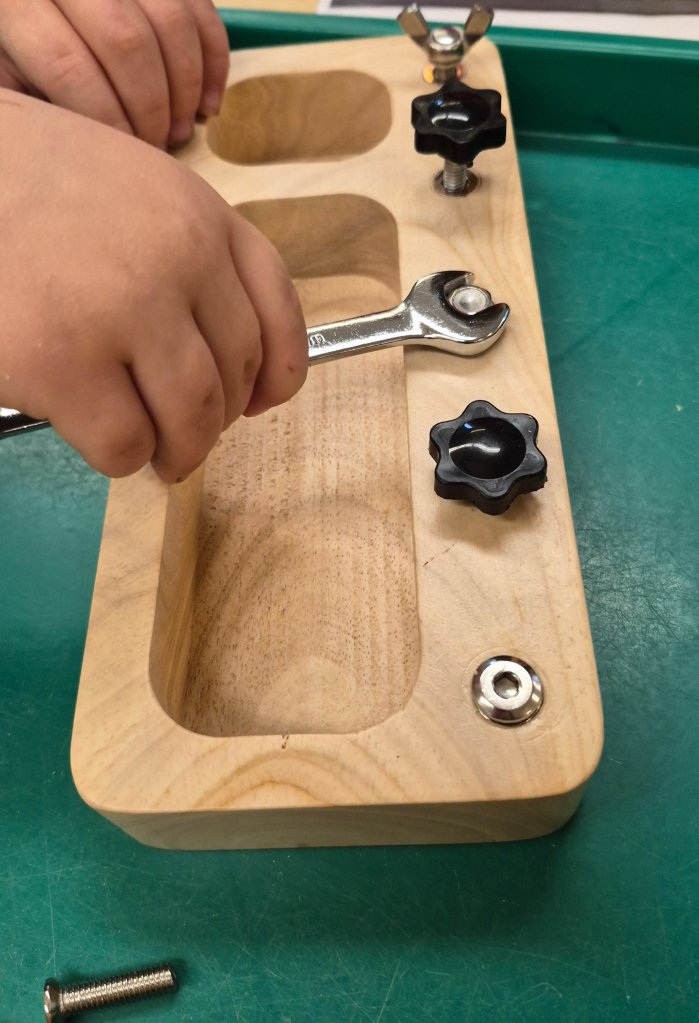
For a child who likes tools and is beginning to show signs of dysregulation, offering them a woodworking manipulative set could be a good way to prevent negative behaviors from escalating. Woodworking provides repetitive and rhythmic motions (tightening and loosening a screw) that can lead to a more focused and centered state. Using developmentally appropriate tools also helps children feel successful, and spending time with items that have real metal and wood gives them proprioceptive input that often has a calming effect.
If you feel that a child is too dysregulated to use woodworking manipulatives safely, try other strategies for calming first and circle back to this sensory experience when you have confidence that the child is ready to use the materials for their intended purpose.
Shared Focus Builds Connection
While planning intentional sensory opportunities for my preschool students, I’ve learned that sensory play, in general, creates a shared focus that can strengthen student-teacher connections in the classroom. While helping a child move shapes or letters on a light board, I might discover their favorite color or what they like to eat for breakfast. Hammering golf tees into play dough with a child may help me learn how they like to spend time on their weekends.
By working alongside children in these moments, teachers can help their students feel safe, supported, and connected in the classroom.