How to Develop Test-Ready Students
There’s a difference between teaching to the test and developing test-specific thinking that will help students effectively apply what they’ve learned all year.
Your content has been saved!
Go to My Saved Content.
Many people see standardized testing as a single event meant to measure a student’s knowledge, skills, and readiness. This high-pressure, onetime approach leads us to ask: Why is it so important? Test scores affect school accountability, intervention cycles, and access to more advanced classes. With so much riding on a single test, it’s no wonder students and teachers feel the pressure. The real challenge, though, isn’t the test itself, but the difference between what students are asked to do on test day and what they usually experience day-to-day in the classroom.
Stem the Gap Between Test Content and Mental Effort
A major problem with standardized tests is that what teachers teach isn’t always aligned with what is tested. Teachers focus on the content and methods that fit their lesson plans or textbooks. Standardized tests, however, are based on state standards and test guidelines that can differ in important ways. When there is this mismatch, students may work hard and learn a lot but still have trouble on the test. This isn’t because they lack ability, but because the test asks them to use their knowledge in new ways. This gap is frustrating for teachers and discouraging for students.
Standardized tests also require significant mental effort. Students have to remember several things at once, sort through tricky answer choices, make inferences, and handle complex texts. However, success on standardized tests isn’t just about knowing the material. It’s vital that students build mental strength and learn how to keep going when questions get tough. Like athletes who practice under real game conditions, students need to practice the kind of thinking these tests require.
The importance of testing extends beyond K–12 education, as Robert Marzano and his colleagues highlight, in the book Test-Specific Thinking, specifically in regard to the ACT. Marzano states that when the ACT released Reading Between the Lines: What the ACT Reveals About College Readiness, many students were unable to read complex texts. College entrance exams serve as gateways to opportunities throughout life (college admissions, scholarships, and advanced coursework), making the development of test-taking skills essential for academic and career advancement.
Hone Strategic Thinking Skills to Improve Test Performance
Marzano also points out that strategic and analytical thinking are just as important as knowing the content. Students need to know how to break down questions, rule out wrong answers, check their understanding, and pick the best strategies. These critical-thinking skills help on test day and improve overall learning and academic performance.
Recognizing the difference between teaching to the test and developing test-specific thinking is essential. While teaching to the test narrows instruction, cultivating test-specific thinking builds flexible reasoning and real-world problem-solving that help students far beyond any assessment. Bridging students’ daily classroom learning with the distinct thinking skills required by standardized assessments will allow educators to focus on equipping students with the thinking, practice, and strategies needed to meet these demands.
Access Sample Tests So That Students Know What to Expect
Many states provide released items that give examples of how the students will need to demonstrate their knowledge of their grade-level standards. These types of sample tests consist of parts A and B, multiple-choice, selected-response, drag-and-drop, and drop-down-menu–style questions.
It’s important to give students opportunities to be exposed to and practice these question types, to minimize struggles with attacking these technology-enhanced items. While the focus of everyday learning should be centered around students understanding and practicing essential grade-level standards through explicit and systematic instruction, released items can serve as a resource to check if students are able to apply particular standards in a different, more synthesized context.
For example, the Missouri standard on identifying main ideas and details is a universal skill that is taught in multiple grades and builds in complexity over time. The released items on the state test show that students will need to read a passage and answer two-part multiple-choice questions, highlight text evidence within an excerpt of the text (technology enhanced), and drag and drop questions to match main ideas and details.
Considering the internal processes required—decoding, comprehending the passage, understanding the question, analyzing answer choices, and filtering irrelevant information—the cognitive load can be overwhelming for students who haven’t practiced demonstrating their understanding in these formats. This means that students who show daily proficiency may still struggle to transfer their learning during the test.
Embedding Strategic Practice in Everyday Instruction
Teachers can plan for this at the start of an instructional unit by using released items to craft practice questions that help students build the internal thinking processes needed to approach these tasks with confidence. The goal of this work is not just to answer the questions, but to strengthen the cognitive skills required to attend to the text and understand what each question is asking. This practice can take place in whole-class groups or in cooperative learning groups to provide a scaffolded way for students to process the information and apply the strategies being taught.
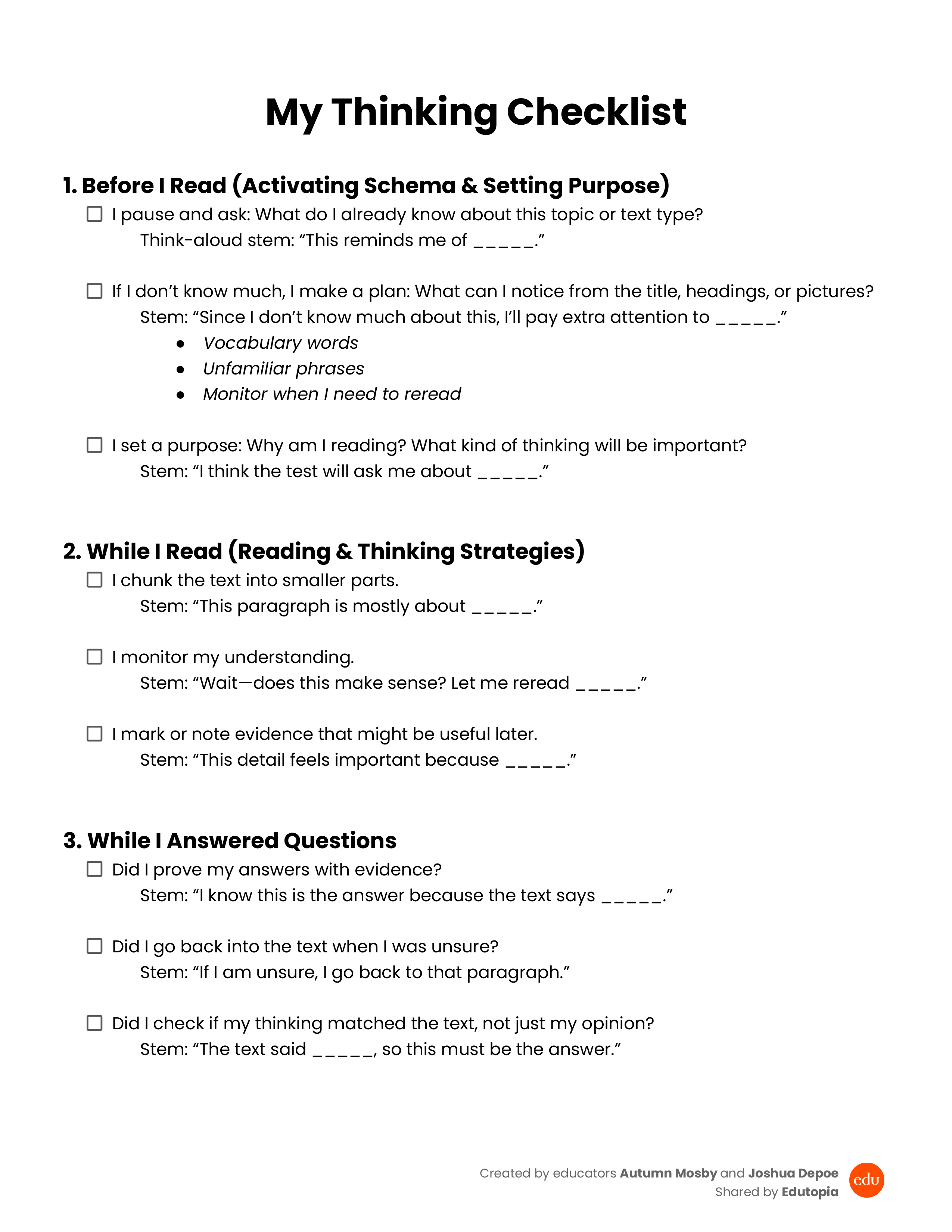
A thinking checklist can support students in developing the metacognitive habits necessary to manage the multistep demands of standardized tests. Because all tests require substantial reading, background knowledge and reading challenges can significantly affect comprehension. However, we can teach students how to identify key words and apply strategies that help them set a clear purpose for the task.
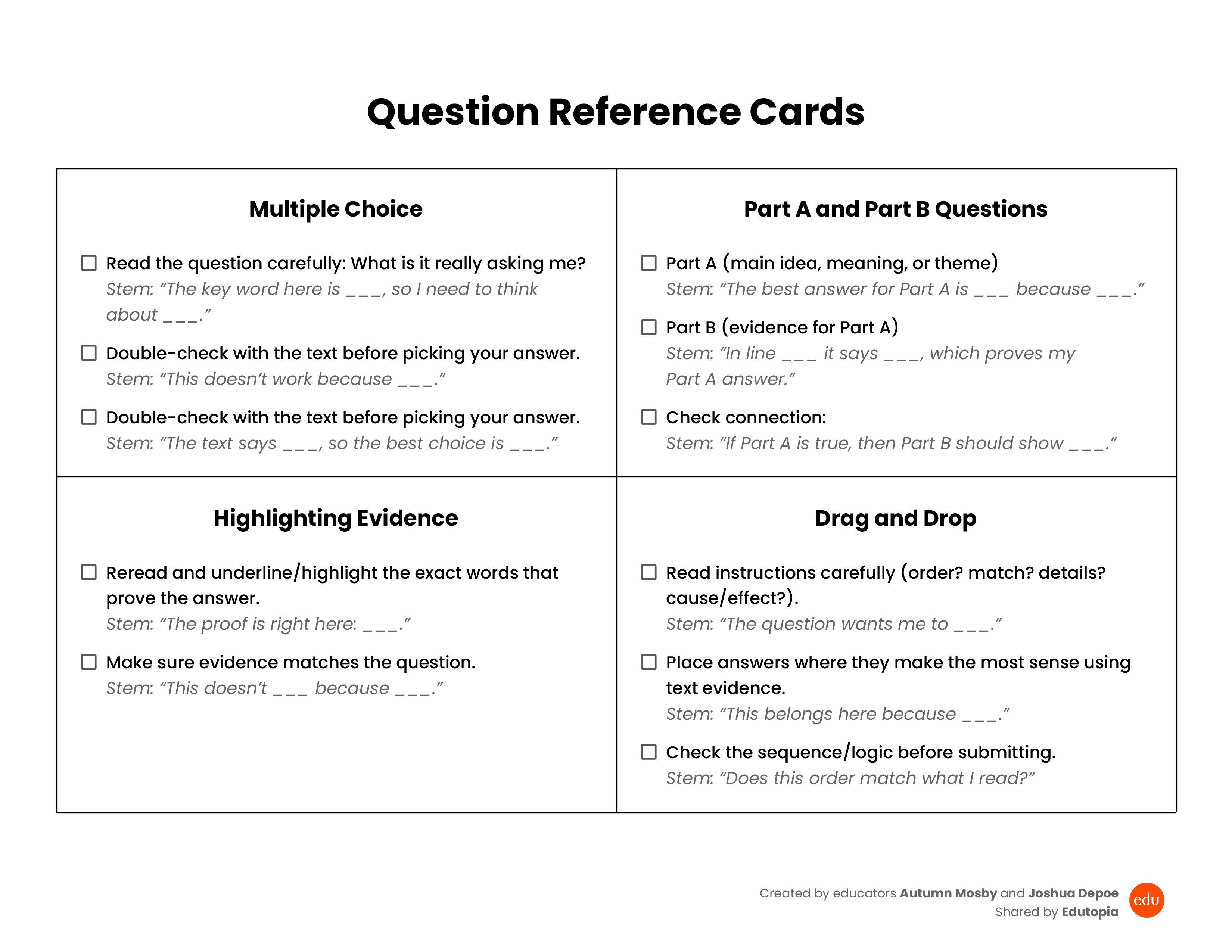
Question reference cards can also help students recognize different question types and learn how to navigate them more effectively. By building this awareness, we ensure that the structure of the questions does not interfere with students’ ability to demonstrate what they truly know and can do.
Prepared Students Don’t Have to Cram for Tests
The benefit of embedding this kind of practice into instruction throughout the year is that students develop necessary content knowledge and the grit and endurance required to take these tests. When students know what to expect, they are less likely to shut down and more likely to show a clearer picture of what they truly understand.
This approach also helps teachers avoid cramming right before testing, which can leave students feeling fatigued before they even begin. Will the results of one test ever fully capture what students know and can do? The short answer is no, but we can set students up for success so they are ready to tackle these tests when the time comes.