Fun Ways to Bring Summer Camp to Preschool
These activities use simple materials to create highly engaging experiences for preschoolers all summer long.
Your content has been saved!
Go to My Saved Content.When I think about summer camp, I remember my own childhood: being outdoors, playing in the woods, listening to the sound of waves, running around on muddy feet, and building tents with whatever materials we could find. Those activities were joyful, allowing us to build stories every day and expand them with new adventures. The summer allows me to plan similar activities for my preschool students, giving them a feeling of being “at camp” and allowing them to learn through exploration. Here are some ways to get your kids excited about learning all summer.
Arts and crafts
There are so many arts and crafts themes that can get preschool students excited and learning. One day, we used tape, paper tunnels, and toy cars to make our own “Monster Jam” setup. I thought children would play with it for a short time, like a normal 10-to-15-minute small group activity, but they stayed with it much longer than I expected. When the timer beeped to finish, children asked for more time, so I extended the activity.
Some children followed the roads, while others tried different ways to make their cars go faster or higher. One child even placed a snack bowl under the track to make a ramp and kept testing how the car would move.
The room was full of conversation and excitement. “Mine is faster!” “Wait, try this way.” “It’s stuck, we can fix it.”
Make-you-own didgeridoo. During NAEYC’s Week of the Young Child’s Music Monday, we read a book called Do You Do a Didgeridoo? After reading the book, children kept asking if they could make their own didgeridoos and try making different sounds. The best thing I could think of was using paper towel rolls so that children could decorate them in their own way. We put out feathers, confetti, fake flowers, colorful paper, and whatever else caught their attention.
After making their didgeridoos, children started experimenting with different sounds and volume levels. Some children made loud sounds, others tried quiet sounds, and a few even pretended their didgeridoos were microphones while singing, and then they kept testing different ways to use their “sound machines.”
food, nature, and gardening
Lemonade stand. I love to plan a weeklong lemonade stand project. On the first day, we went to the school kitchen, where each child was invited to hand-pick their lemons. The next day, students made and decorated “chef hats” with construction paper, crayons, and pom-poms.
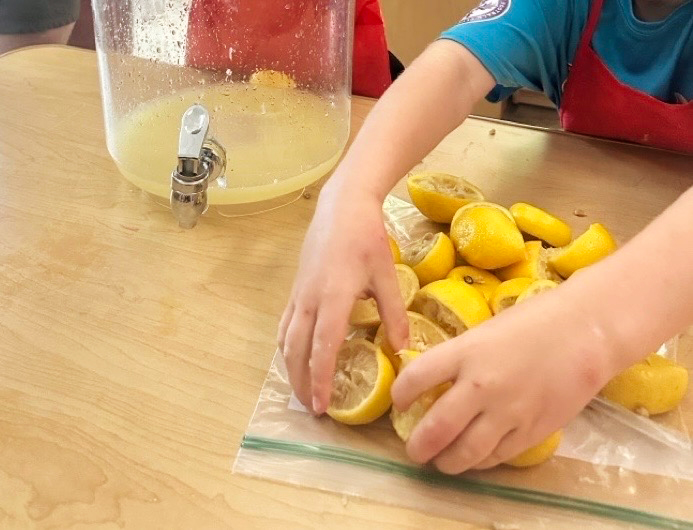
After that, the children worked together to make lemonade. They took turns squeezing lemons using hand squeezers, adding sugar and water, and adjusting the mixture by watching, guessing, tasting, and spilling as they went. I supported them through the process, but they were the ones testing their recipes and ideas.
Once the lemonade was ready, they set up a small stand outside the classroom. They carefully placed the jar full of lemonade and stacks of small cups, excited to invite teachers to taste what they had made.
The next day, we sat together in a circle, and children were eager to hear the feedback from teachers and staff. As I read the notes aloud, children reacted with excitement:
“Best lemonade ever!”
“Sweet and sour like preschoolers!”
“I had three cups… shhhh, yummy!”
I could see the pride on their faces, and by their giggles I knew their hard work had paid off.
Worms. When I first introduced children to a worm-finding activity (yes, the tiny wiggly creatures), I was surprised to see the before-and-after experience. Before going outside, we made a chart about children’s interest in worms: Half of the class was interested right away, a few were unsure, and some children said, “Eww, I can’t touch worms. They are too wiggly and slippery.”
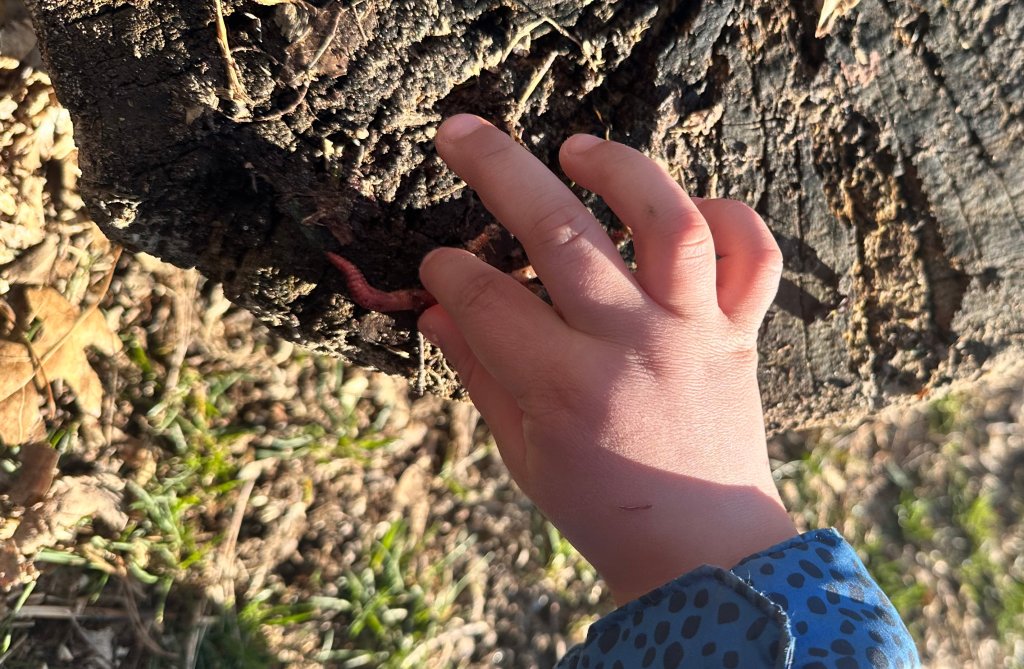
After learning about worms and reading a few books, the children who were unsure slowly started showing interest. One boy said, “If you find a worm outside, make sure you do not bring them inside because they have families.” A little girl added, “It’s nature, we don’t hurt them!” Soon more children raised their hands, and the conversation became full of curiosity.
When we went outside, the ground was still wet from last night’s rain. Children bought their magnifying glasses to look at the worms more closely. Almost all of the children explored and picked up worms. The children who were still unsure or nervous asked a friend to pick one up for them and place it in a tray.
Seed balls. I also like to make marigold seed balls with children. I asked the children to gather on the carpet while we used the grinder to mix recycled paper and water together. Right away, children started asking questions. “Why are you putting paper inside water?” one child asked. Marmar quickly said, “Shhh, let’s see what happens next.”
When children saw the paper turning into pulp, their curiosity really started to grow. They kept touching it, squeezing it, and watching the changes happen. I kept adding water little by little until the consistency felt right, and what surprised me most was the patience that children showed during the process. Then we added marigold seeds and rolled the mixture into small seed balls with our hands. We talked about how marigolds help pollinators and why they matter. Children were excited to realize the seed balls they made could later turn into flowers.
To extend the experience, children took their seed balls home with a simple note inviting families to plant them together. Soon, families began sharing photos and messages. One parent shared, “My child reminds us to water the garden every morning. It’s become our new routine.”
Animal cams. Using trusted live animal cameras from sources like the Smithsonian National Zoo and the San Diego Zoo, we watched animals together as a group. Before introducing any technology, we made sure to communicate with families and had their permission. Children were immediately drawn in, noticing details and making their own connections. When we watched two pandas, one sleeping and one eating bamboo, a child quickly said, “Oh no—the other one will eat all the food while it’s sleeping!”
After that, children wanted to build homes for animals, so we used blocks, magnets, and toy animals to create different habitats. Some created icy spaces for animals that live in colder climates, while others built warm, sandy habitats for animals that live in hotter places. Through their play, they began to see that animals need different environments to live.
Camping. Another moment came when children began talking about camping. Since it was summertime, many children were sharing stories about going camping with their families. One child asked, “Can we go camping?” while another added, “We can’t go without our parents.”
Instead of ending the conversation there, I brought the idea into the classroom. We set up an indoor camping space using a real tent, simple decorations, fishing games, and a pretend campfire. I invited children to bring a small backpack with their favorite stuffy and blanket for our classroom camping day.
The next day, children came in excited, carrying their backpacks and showing friends what they had brought from home. Inside the tent, they played games, read books together, and sang camping songs. Some children pretended they were sleeping in the tent while others kept unpacking and repacking their backpack.
These camp experiences reminded me that children do not need expensive materials or complicated setups to learn. Some of the best experiences started from scratch with simple classroom materials and children’s ideas.