Observing and Documenting an Emergent Curriculum in Preschool
Teachers can structure learning experiences by providing time and space for children to ask their own questions and make discoveries.
Your content has been saved!
Go to My Saved Content.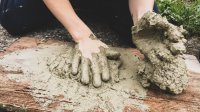
To an outside observer, it looks like the kind of play a lot of us try to avoid: 12 preschool students, 12 mud-splattered raincoats, a steady rain, and the spigot of the rain barrel turned full blast. The children have been busily digging for an hour, carving out a network of rivers that branch out from the barrel, converge into a lake, spill over a dam, and give way to a rushing waterfall before disappearing into the trees.
It might look chaotic, but if we pause to take a closer look, beneath the giggling and muddy hands, serious learning is underway. This is how an emergent curriculum—one that is aligned with student interests—begins: by providing the time and space for children to follow their curiosities and make their own discoveries. These spontaneous moments of play lay the foundation on which intentional teaching can be scaffolded and meaningful learning experiences can be built.
Structure Rooted in Play
For those of us accustomed to our well-organized lesson plans neatly mapping out the year ahead, the idea of trading in that predictability for the spontaneity of play can feel daunting to say the least. But just like any other skill, it only takes a bit of practice, a lot of reflection, and a willingness to be surprised. Emergent curriculum doesn’t mean abandoning structure, though. It means shifting where that structure lives and allowing it to be rooted in the children’s questions and play.
So how do we make that shift? It may feel counterintuitive, but in an emergent curriculum, planning begins with observation. When beginning with play, learning often happens before we’ve planned for it. By slowing down and observing, teachers can extrapolate the learning experiences that organically arise from children’s play: the problem-solving involved in converging two rivers, the perseverance in building a strong dam, the negotiation and teamwork, the scientific reasoning as they test hypotheses, the descriptive language they use to explain their efforts, the fine motor skills required to dig, scoop, and pour. The list goes on.
Documenting and Observing
For many of us, this is the trickiest part—learning to see the domains embedded in the play. One way we can build this skill is through purposeful observation and documentation. In emergent curriculum, observation is a form of research that will guide the intentional scaffolding and serve as a primary resource for documentation.
Documenting observations doesn’t have to be overly complicated. It can be done with the class as a whole (to identify group interests), or for individual child learning. Sometimes documentation is as simple as taking a photo or short video, or jotting down quick notes and quotes from the children. Teachers may also opt for a more structured documentation approach, such as using reflective questions to guide their observations:
- How are the children using materials, and what does it tell me about their thinking?
- Who is leading the play? Who is following? Are their roles shifting?
- What kinds of problems are they trying to solve?
- How do they respond to challenges and setbacks in their play?
- What words, descriptions, or forms of storytelling emerge as they share ideas and coordinate?
- Are the children testing their ideas as they play?
- What questions are they asking?
These questions can help us pay attention to the children’s interests and learning within the play and encourage us to stay present and curious in guiding the learning, rather than jumping in to direct it. To help teachers translate play scenarios into the language of developmental domains, simple categories like these can serve as a documentation tool:
- Play scenario: Digging rivers and lakes, building dams.
- Cognitive/academic: Planning and sequencing, early math (comparing quantities).
- Motor development: Digging, scooping, balancing, pouring, hand-eye coordination.
- Social and emotional: Collaboration, negotiation, persistence.
- Scientific thinking: Observing water flow, testing hypotheses, predicting outcomes.
- Language development: Describing actions, using positional and descriptive vocabulary.
What Comes Next
Over time, a collection of observations will reveal learning across the developmental domains and provide concrete evidence for assessments by highlighting areas in which the individual children excel or have gaps in learning.
Observation not only helps us extract the learning happening in the moment, but also serves to spark ideas for what scaffolding we may want to introduce next.
Are the children interested in exploring depth? Maybe it’s time to add some rulers into their play. Are they gravitating toward construction? Add some books about bridges and dams into the classroom library. Are they curious about objects that float? Turn the sensory table into a space to float and sink various collected items. When we build learning experiences around the children’s interests, we are not only meeting learning objectives, but also sending the children the message that their curiosity is worth exploring.
In a field where making learning visible is standard practice, how do we translate this play onto our classroom walls? In an emergent curriculum, the observations we record come to life through documentation displayed in the classroom. Thoughtfully curated displays of learning-focused photos, extended written reflections by both teachers and children, and children’s drawings and quotes come together in telling and illustrating the story of the learning behind the play. These displays are a window through which to see play as a meaningful form of learning that aligns with developmental standards. Most important, visible documentation offers children the opportunity to see their past learning experiences reflected back to them, deepening their connection to the learning, fostering pride in their discoveries, and inspiring new ideas.
Emergent curriculum finds meaningful learning experiences in the smallest of curiosities—a puddle, a feather, a trail of ants. With a little observation, documentation, and intentional planning, we can provide an education that not only meets but expands on the standards.