3 Innovative Instructional Coaching Models
These strategies bring teachers together and naturally generate evidence of coaching’s impact on student learning.
Your content has been saved!
Go to My Saved Content.
For many instructional coaches, the paperwork—filling in coaching logs and calendars—never seems to stop. By Friday, many coaches have carefully logged every meeting, email, and walk-through, but have nothing captured about what actually shifted in instruction or student learning. There is a difference between tracking “coaching activity” and “coaching impact.” Tracking coaching activity tells us where time went; impact data tells us whether that time mattered.
The most unmistakable evidence of learning appears in the work itself: in conversations with teachers and in classrooms where new ideas take shape. Those moments do not translate neatly into spreadsheets or test scores, but they tell the real story of growth. It is important both that coaching impact is visible and that coaches maintain the trust of teachers. To accomplish this, coaches must intentionally balance confidentiality and transparency in the design of the coaching process.
Beyond one-on-one meetings, here are three coaching formats that can produce valuable evidence of your coaching impact.
3 Coaching Formats that Make Data Visible
Group coaching formats multiply the impact of coaching. When teachers plan lessons together, try new strategies, and reflect on the results, they generate their own data. Collaboration and shared artifacts become authentic proof of growth.
Every coaching conversation has the potential to generate meaningful data if you design its structure effectively. These three formats help coaches and teachers capture authentic evidence of growth without adding more paperwork. Each includes a downloadable guide with planning templates, reflection tools, and leadership reporting tips.
1. Collaborative Inquiry Circles. These are small, coach-facilitated groups of three to six teachers who investigate a shared question about teaching and learning. The focus is on learning by doing, which involves planning together, trying strategies in classrooms, and reflecting on what works.
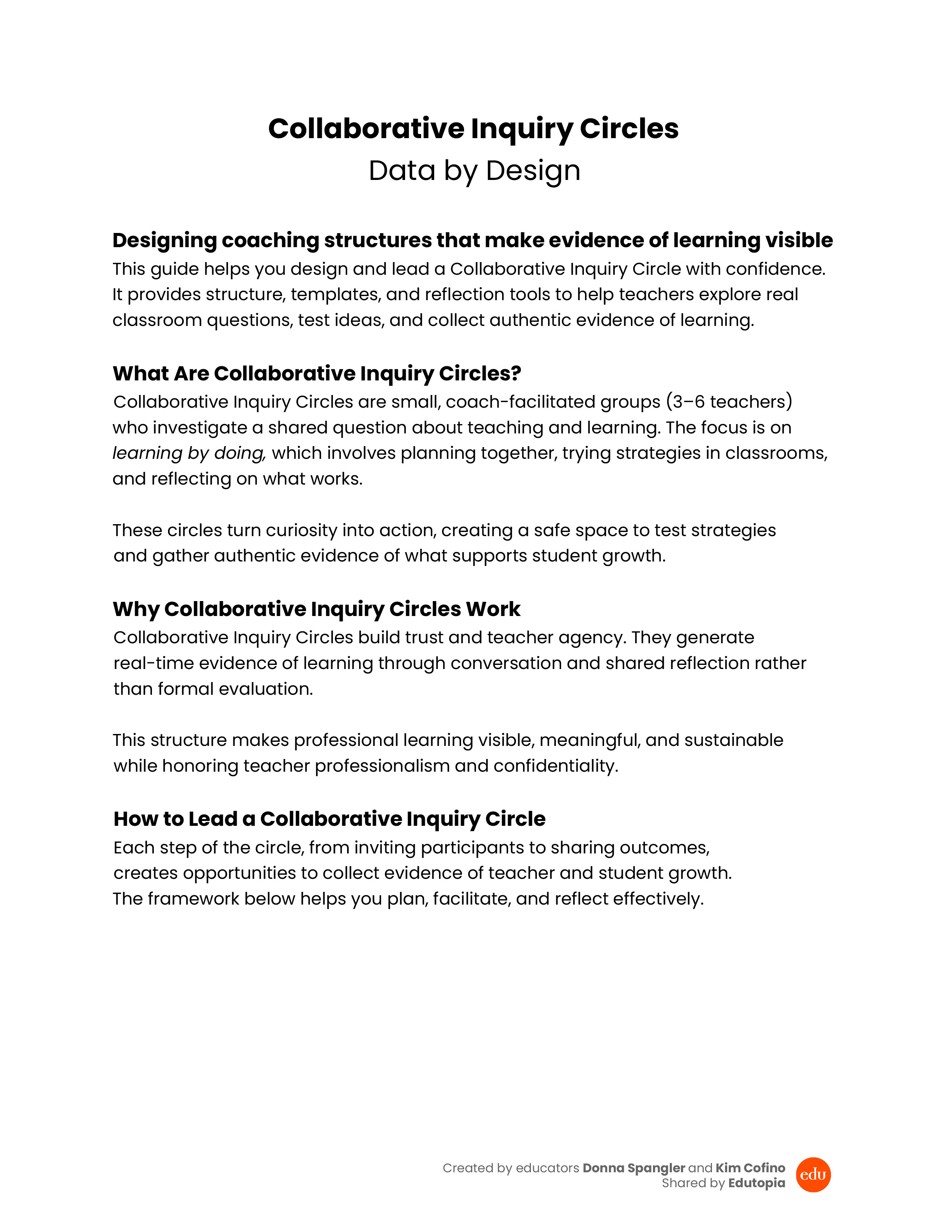
For example, a group of middle school teachers could concentrate on the question, “How can we increase student talk during whole class discussions?” During planning sessions, teachers share discussion strategies they want to try, such as sentence stems or structured turn-and-talks. In reflection meetings, teachers describe what they noticed in learner involvement, bring sample prompts they used, and discuss which moves led to deeper responses.
In this example, coaches collect evidence from shared planning notes, teacher reflections, and everyday observations about changes in student engagement, which together tell the story of professional learning over time.
2. Impact Story Sessions. At the close of a quarter or coaching cycle, teachers gather in Impact Story Sessions to share one small win. In a short, low-key conversation, they name what changed, what led to it, and how they know.

At the close of a quarter or coaching cycle, teachers gather in Impact Story Sessions to share one small win. In a short, low-key conversation, they name what changed, what led to it, and how they know.
For example, during an Impact Story Session, teachers might respond to the prompt, “What is one instructional change you tried that made a difference for students?” One teacher may share that simplifying directions led to smoother lesson launches, while another describes how using visual supports helped multilingual learners participate more confidently. As teachers talk, the coach captures recurring themes such as increased clarity or improved engagement. In this example, the coaching evidence comes from the recurring elements across stories, short quotes that teachers choose to share, and the consistency of instructional shifts across classrooms.
Because teachers decide what to share, confidentiality is protected, and the conversation produces collective evidence that coaches can summarize and communicate to leaders.
3. Strategy Reflection Studios. In Strategy Reflection Studios, teachers watch a colleague use a shared teaching strategy and then discuss it together using reflection prompts. Their conversation becomes data, capturing what they noticed, valued, and want to try themselves.
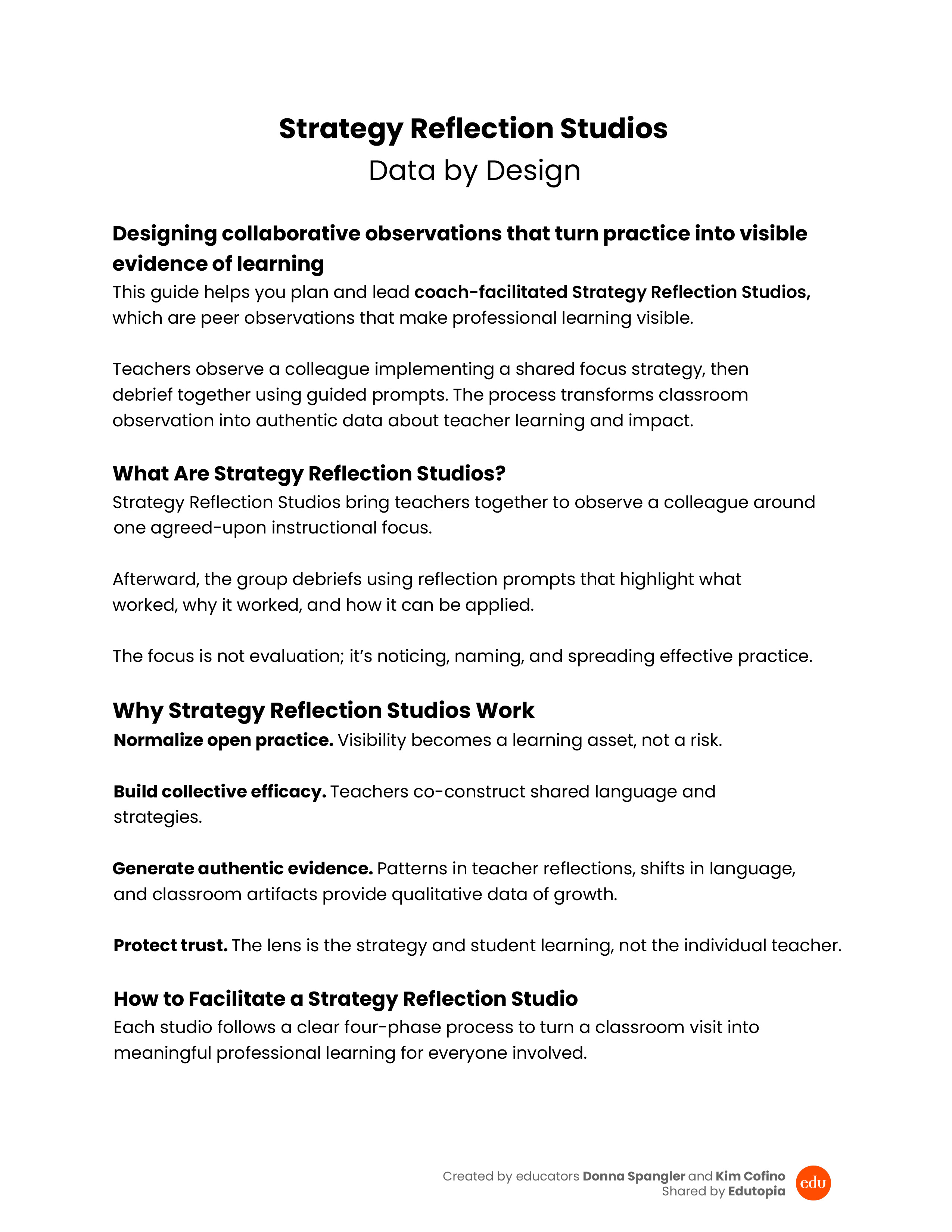
For example, teachers might watch a colleague use exit tickets as a formative assessment. In the debrief, they discuss what they saw in students’ answers, how they adjusted their teaching on the spot, and which questions prompted students to think the most. Teachers often mention specific techniques they want to use in their own classrooms. In this case, evidence comes from what teachers notice, the words they use to describe good teaching, and the strategies they decide to try next.
This approach encourages peer observation, helps teachers use common teaching language, and builds a culture where good practice is visible in many classrooms. Coaches gather and share data from these sessions to help build momentum and strengthen the team’s confidence.
Low-Stress, High-Value Reporting
When coaches intentionally design sustainable systems, useful data emerges naturally without adding to documentation overload. When time for reflection and collaboration is built into coaching routines, some data collection begins to take care of itself.
Effective coaching work does not happen by chance. It is built through intentional structures that make collaboration and inquiry part of the routine rather than add-ons. When teachers plan together, test strategies in classrooms, and reflect on what they notice, they generate evidence of learning. Data collection does not feel separate from the work because it is embedded within it. This kind of evidence reflects the kinds of information leaders often look for, including instructional trends, shared practices, and indicators of professional growth. Well-designed coaching structures make learning visible without increasing paperwork, protect confidentiality, and strengthen trust.