Using Board Games to Strengthen Literacy Skills
Creating board games based on vocabulary helps upper elementary students learn, build confidence, and have fun at the same time.
Your content has been saved!
Go to My Saved Content.
Vocabulary studies are essential for building students’ confidence in reading, writing, and speaking. Traditional activities often rely on drill and memorization, which can lead to low engagement. This year, in my grade four Dual Language classroom, I introduced an innovative approach by encouraging students to create their own board games to learn new vocabulary and Hanzi (Chinese characters).
This approach makes learning in their primary language fun for students and also provides significant benefits for teaching, learning, and assessing vocabulary.
3 Benefits of Using Board Games
1. Differentiated learning products: Research indicates that students who ask questions outperform those who do not. Creating a board game allows students to inquire about vocabulary by focusing on its sound, meaning, usage, and synonyms. This process accommodates different learning preferences, as some students may focus on the vocabulary itself, while others may explore its usage, synonyms, and idiomatic expressions. This differentiation enables teachers to gauge students’ understanding through visible evidence rather than relying solely on dictation.
2. Low-stakes assessment: As a language teacher, I’ve observed that traditional dictation can induce anxiety and doesn’t effectively support vocabulary retention. When board games are used as a low-stakes assessment tool, students can demonstrate their understanding in a relaxed environment. This encourages collaboration and fosters skills such as critical thinking and teamwork. Additionally, immediate feedback allows teachers to identify strengths and areas for growth, making the assessment process both enjoyable and effective.
3. Fostering creativity: According to Bloom’s taxonomy, creativity involves reorganizing elements into a new pattern. Encouraging students to create a board game provides an opportunity to rethink their language learning with agency and imagination. Designing a game involves integrating vocabulary, grammar, and cultural elements into an interactive format, allowing students to engage deeply with the material.
How students can make their Own Board Games
Introduction and play (one class period): Begin by introducing the board game project and explaining its purpose in vocabulary learning. Share examples of simple board games, such as Snakes and Ladders or Race and Trace, to familiarize students with game formats. I also encouraged my students to play the sample games I created using the vocabulary we learned. This allowed them to grasp the words in context, reinforce their language skills, and inspire creative thinking—all essential steps to prepare them for designing their own games.
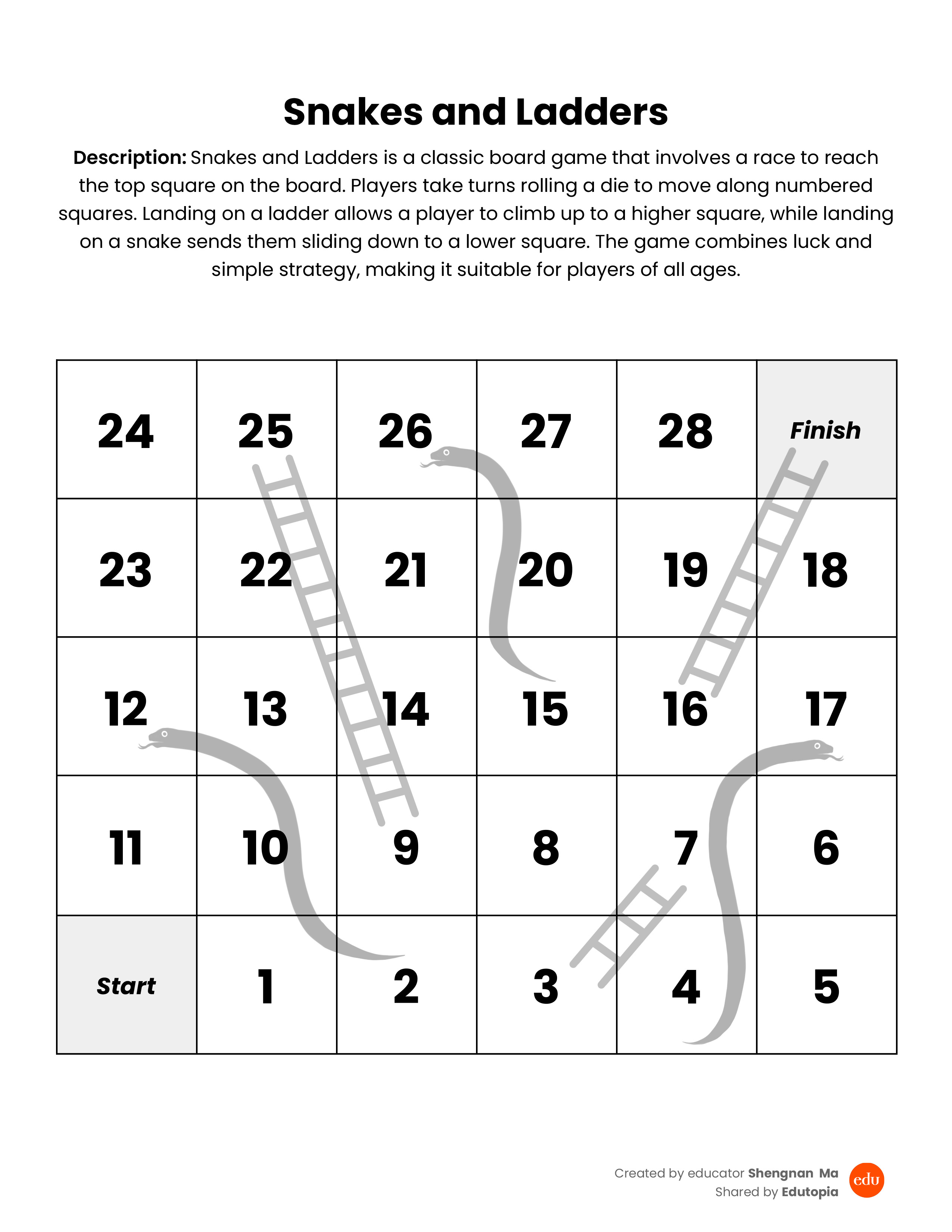
Design and planning (one class period): Students can work individually or in pairs to choose the vocabulary words they will use. Encourage them to create questions based on the sounds, spelling, and meanings of the words. They can also discuss their ideas and collaborate with their partners to generate creative questions. Provide templates and materials (like paper or recycled items) for game pieces. This step reinforces their knowledge and solidifies their understanding.
Creation of game components (two to three class periods): Students will create their game boards and pieces using various materials. They should visually represent vocabulary words through illustrations, symbols, or creative designs that are meaningful to the words. For instance, they might draw images that depict the meaning of each word or use colors and shapes to enhance understanding. To make the games educational and visually appealing, students could incorporate structures like grids, road maps, or even mazes to demonstrate their games, adding an interactive element that encourages critical thinking and problem-solving skills.
Presentation (one class period): Once the games are developed, have students present their creations to the class. They should clearly explain the rules of their games and the vocabulary incorporated, showcasing how each word is integrated into the gameplay. Students learn the rules from the games we play in class, so they should ensure that similar rules are incorporated in the games they created.
This sharing not only fosters communication skills but also encourages students to articulate their thought processes. Moreover, it provides opportunities for constructive feedback from peers, helping them refine their ideas and improve their game designs. Students may also use Seesaw (a digital portfolio platform) to take photos of their games and record their presentations. This allows them to save and reflect on their work, while also sharing their learning journey with family and peers, creating a comprehensive record of their educational progress.
Play and application (one class period): Finally, students can play each other’s games. This interactive environment allows them to practice their language skills in a fun and collaborative setting. Additionally, these board games can be incorporated as extension activities or bell work in daily lessons, providing ongoing opportunities for reinforcement and review of vocabulary. By engaging with the games regularly, students can further solidify their understanding and retention of the material while fostering a culture of collaborative learning in the classroom. Overall, the entire project can take approximately six to eight class periods from introduction to the final play session.
Hands-On Engagement Increases Students’ Understanding
Creating board games provides an engaging and interactive way for students to reinforce their vocabulary and language skills. By working with templates, designing questions, and crafting game components, students actively engage with the material. Presenting their games promotes communication and collaboration, while playing each other’s creations enables practical application of what they’ve learned.
This hands-on activity not only deepens their grasp of vocabulary but also makes language learning enjoyable and exciting.