
Using Tech Tools to Support Elementary Students’ Growth in Math
Teachers can use these tools to promote discussions and help students move from concrete to abstract understanding of concepts.
Your content has been saved!
Go to My Saved Content.In many elementary math classrooms, technology feels like an add-on or one more thing that we need to include. Whether we use adaptive programs to fill gaps or avoid screens to focus on “real math,” viewing technology as an extra prevents us from leveraging it as a powerful instructional tool. When we put pedagogy first, technology can help students visualize abstract mathematical concepts and make them more concrete. Students can then use these concepts to develop their mathematical voice and reasoning.
Visualizing Student Thinking
Building students’ conceptual understanding of mathematical concepts takes time. The CRA (Concrete Representational Abstract) framework is a three-stage instructional framework that helps students move from using concrete tools such as manipulatives to using pictorial tools, and later abstract concepts. Research shows that students who learn this framework have a better understanding of mathematical concepts. Manipulatives can be either physical or virtual, and they help our students to better visualize mathematical concepts; they are readily available on many platforms and websites.
One of my favorite ways to build in these visualizations is to use virtual manipulatives. Programs like PhET, Amplify’s Polypad, and Wixie are great resources for this purpose. All of these tools allow students the time and space to discover how to break down complex problems.
PhET. These tools are designed with curiosity in mind and work best when students get the opportunity to play with numbers. When you filter by math and grade level, there are many simulations just right for elementary students. Number Play is one of my favorites. It is ideal for helping primary students explore different representations of the same number and practice subitizing numbers from 1 to 20.
Amplify Desmos Math. Polypad is built into the Amplify Desmos Math platform. Although this platform has paid components, the Amplify Desmos Collection is 100 percent free and provides students with a variety of activities to visualize math concepts. When I teach the concept of equality to my second-grade students, the pan balance is a game changer. Using this visualization model, students can play with the numbers and their “values” and see the relationships between them, since the balance physically moves based on “weighted” bars.

Beyond the manipulatives, activities in the Amplify Desmos Collection include a multimodal toolbox with drawing tools, audio recording, and video embedding, which ensures that every student has an entry point to access the math in the lesson. Students can choose to share their thinking using any of these methods, which benefits all students. Students who choose to type an answer can do that, while other students may choose to use either the audio recording or drawing tools. In addition, Amplify Desmos includes a teacher dashboard that allows the educators teaching the lesson to view all of the students’ work from their own screen, which can help educators determine next steps.
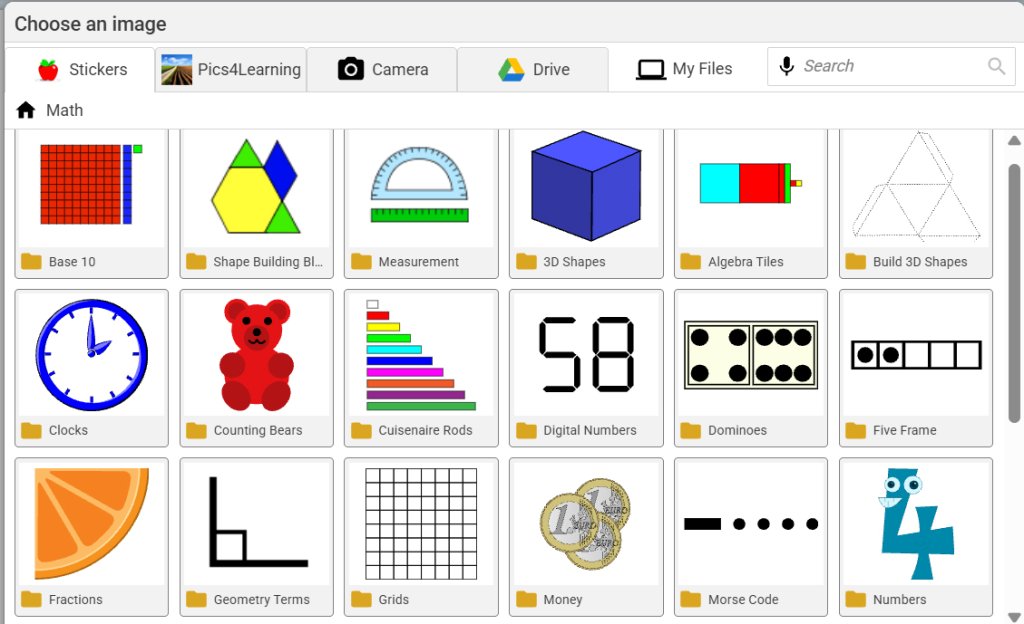
Wixie. Wixie offers an extensive image library of virtual manipulatives, from base 10 blocks to fraction bars. Moreover, Wixie allows users to clone images, which takes one image and converts it into an infinite supply of any of these manipulatives. This empowers students to use models and other manipulatives to represent their thinking.

Like Amplify Desmos Math, Wixie provides a canvas with a multimodal toolbox. However, Wixie allows students to go a step further; in addition to drawings, audio, and video, they can use animated graphics called talkies to explain their thinking.
Sharing Ideas: Math Discourse
Helping students to visualize math is just the first part of the equation. To deepen mathematical understanding, we need to move from individual ideas to building a shared language of math discourse in their classrooms. Technology can act as a bridge between visualization and discourse. We help students connect their ideas with those of their classmates. This builds an active culture of inquiry in our math classrooms.
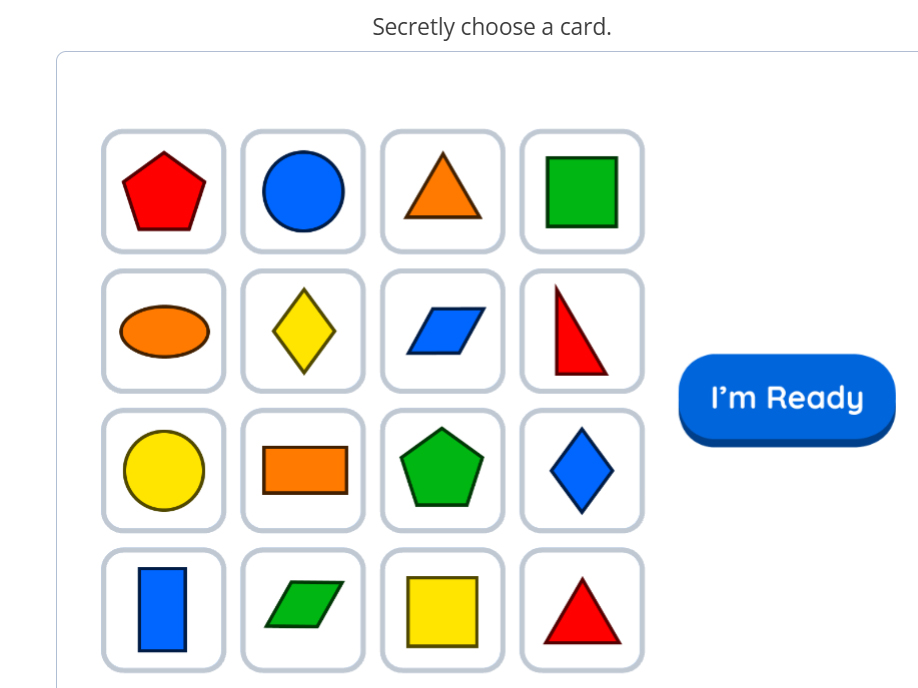
Amplify Desmos Math. Students can discover math patterns as they play Polygraphs, which is like Guess Who for math. Students see 16 math-focused cards, and they need to ask yes-or-no questions to determine the card selected. These questions require the mathematical vocabulary that students are currently mastering. For example, during a polygraph activity, a student might ask, “Is the value in the 10s’ place greater than 5?” Then, their partner would respond yes or no, based on their chosen card. Both students are using math discourse to describe what they are seeing and building a shared understanding of place value as they apply what they are learning to these visualizations.
The Amplify Desmos Math Teacher dashboard also offers the ability to anonymize student responses. It creates a safe environment where students can critique the reasoning, not the person, turning every “wrong” answer into a powerful learning moment for the whole class. Teachers can spotlight different solutions to math tasks in Amplify Desmos, and students can learn from each other’s responses.
Wixie. Wixie offers a variety of options that foster collaboration and connection in math classes—for example, the Showcase or Project Wizard to combine student work into a single project, creating a collective gallery of math thinking. Math becomes more of a community activity when the teacher is not the only audience for student ideas. Students get to learn from each other’s ideas and see different ways to solve problems.
Wixie’s Teams feature provides students even more agency, moving them from independent work to real-time collaboration. This allows multiple students to work inside a single project. There are many templates included in Wixie for math team projects. In addition, many math games can be converted into interactive Wixie activities using magic stickers like rolling dice, spinners, etc. Using these tools, students learn to speak the language of math together.