Fantastic Picture Books to Inspire Student Writing
Elementary teachers can use these books to give students an easy entry point into writing now that winter break is over—and throughout the year.
Your content has been saved!
Go to My Saved Content.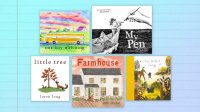
When students return to school in January, their writing stamina often needs a boost. Luckily, there are many great picture books that can help students ease back into writing, rebuild motivation, and stay engaged as the new semester begins.
Books to Inspire Student Writers
One Boy Watching, written and illustrated by Grant Snider (grades K–2): Using mostly fragments and single-word “sentences,” Snider creates a delicate story that explores a boy’s observations as he rides the morning bus to school. Numbers categorize everything that the young boy examines—a device Snider uses to show that writers can make close and detailed observations of their world to capture what many may not notice. Other techniques include environmental print, precise adjectives, different types of sentences, similes, and the use of ellipses.
To motivate student writing, try a number scavenger hunt where students work together to find groups of items in different numerical patterns around the classroom, at school, or at home. A sequencing activity that asks students to slowly and deliberately sequence their morning (or any other) routine can also encourage young writers. You could also use a Venn diagram to have students compare what the main character sees on his ride to school in contrast to what they observe on their own journeys.
Tiny, Perfect Things, written by M.H. Clark, illustrated by Madeline Kloepper (grades K–2): This text is also a testament to the power of observation. M.H. Clark’s lyrical writing and Madeline Kloepper’s gentle, detailed illustrations invite readers to join a quiet walk with a young girl and her grandfather. With an edict to “keep our eyes open,” they stroll through their neighborhood searching intently for things. The book wonderfully shows that the world is full of incredible things when we slow down and take the time to look closely.
Try writing mini-lessons that focus on precise adjectives, prepositional phrases, personification, and the four types of sentences. Extensions on lessons could include a “watching window” where students can look through a smaller taped-off section of any window in the school to closely observe what they see. This can be done at different times of the day to show how the world changes throughout the day. For another option, provide photocopies of the pull-out page at the end of the text so students can keep a list of all the tiny details they see when they look closely.
To encourage a wider perspective, make a tracking chart where students can record the sensory details they notice in different parts of their school (cafeteria, gymnasium, recess field, etc.).
Little Tree, written and illustrated by Loren Long (grades 2–4): As the seasons change, a little tree struggles to “let go” of their leaves while all of their fellow trees in the forest do. Fearing how life would be different if they changed, the little tree remains the same. As the trees around them grow and get stronger, Little Tree starts to wonder what would happen if they shed their leaves and grew. Long’s words and illustrations make this an ideal book to read in January as we think about the growth we want our students to experience before summer break arrives.
Long uses commas in a series, temporal phrases to move time, intentional fragments, personification, internal thinking, repetition, limited dialogue, and a circular ending. To help students connect with this text, you could have them write self-reflections including thoughts about what they’ve already accomplished, along with goals they want to achieve.
Students can also write about times in their lives when they were hesitant to change or did hard things and the outcome of those experiences.
Farmhouse, written and illustrated by Sophie Blackall (grades 4–5): Written by two-time Caldecott-winning author and illustrator Sophie Blackall, Farmhouse is a master class in thoughtfully crafted details in writing and pictures. In a unique twist, it’s intentionally written in one run-on sentence to carry the story across time in a particular way.
As we enter the second half of the school year, it’s important for teachers to encourage students’ careful and precise writing. This book can help students achieve this goal. Blackall uses specific adjectives and vivid verbs, parentheses, alliteration, prepositional phrases, personification, and vernacular specific to the time period of the setting.
To deepen their understanding of the book’s message, students can work in pairs to closely “read” various two-page spreads, looking for and naming the illustration techniques that Blackall uses to make her words come to life. Additionally, students can work in teams to break up the single run-on sentence into smaller paragraphs. Then, they can try to convince classmates that their choices are effective for readers.
Time Is a Flower, written and illustrated by Julie Morstad (grades 4–5): Julie Morstad is a dreamer who consistently encourages readers to wonder about their world without explicitly asking them to do so. With tangible and tender examples, she shows how time moves in our world in a variety of ways. Her illustrations depict dichotomy and juxtaposition along with celebrating people of different places, ages, and experiences. Morstad’s precise use of adjectives, verbs, adverbs, and nouns show students how word choice can make their writing come to life.
Students can emulate writing techniques such as line breaks and white space to create pacing, different lengths and types of sentences, repetition, and alliteration. Students can make deeper connections to the text through writing about their relevant experiences with scenarios in the text (losing a tooth, observing what happens to cut flowers after a few days, getting a haircut, etc.), thinking about specific words and pauses to record the progression over time. You could have students track important events (big or small) that occur in their lives in seconds, minutes, hours, days, months, and years. They could also write and sketch about these activities to mirror Morstad’s text.
My Pen, written and illustrated by Christopher Myers (grades 4–5): Written as a type of ode, My Pen demonstrates the power and purpose of being a writer. Readers get a multitude of ideas of what they can write and why it is important to write. As the most sophisticated book in this list (full of inferences and different themes), this text can be utilized for lessons in reading, writing, grammar, and social studies. Myers’s use of literary devices like similes, hyperbole, juxtaposition, personification, alliteration, and prepositional phrases can inspire students.
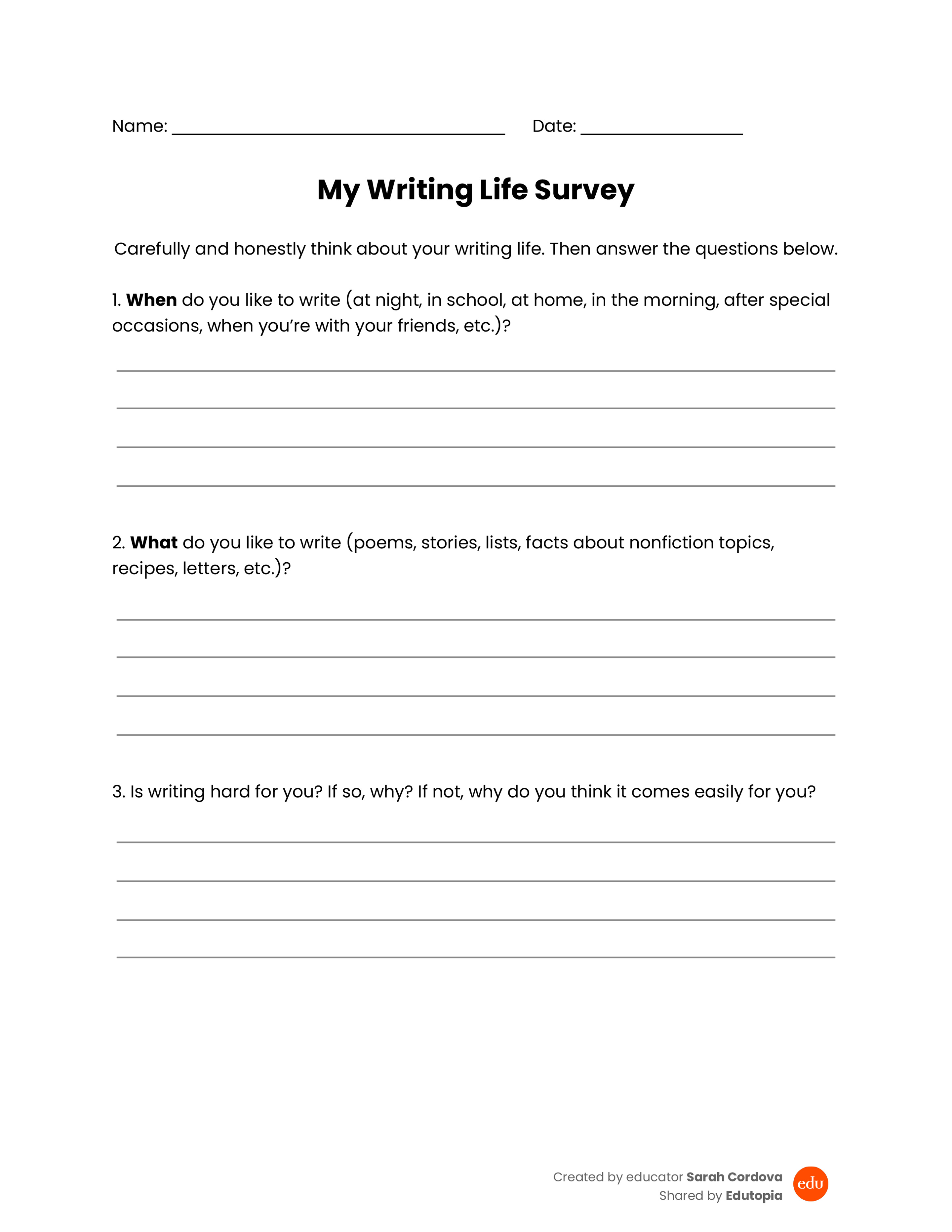
To help students deepen their writing skills, create a writing survey. Questions can help students identify their favorite writing genres and highlight underutilized parts of speech and literary devices to use in future writing pieces. Have students point out their favorite mentor author/texts on the survey, explain why they are so powerful, and also choose writing goals for the remainder of the school year.
Guide your students to consider how writing can be a powerful tool for change and think about documents they’ve read so far (in science and social social studies too) that have shaped their world in big and small ways.
Thoughtfully sharing these picture books can help ease the transition after the winter break and reengage students in their roles as learners and writers as they begin the new stretch of the school year with renewed focus and purpose.