6 Ways to Manage the Mental Load of Teaching
If you’re feeling overwhelmed by your responsibilities, these daily strategies can help you connect to the present moment.
Your content has been saved!
Go to My Saved Content.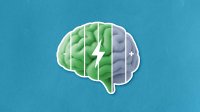
For teachers, protecting our brain and cognitive bandwidth is a necessity. When your brain is fatigued, it can lead to poor judgment and irritability, which ultimately affect classroom management and instructional performance. If you find yourself shutting down, spiraling with draining thoughts, how can you bring your brain back to a lively, vibrant, and mentally sharp state? The following strategies can help you manage the mental load of teaching and be more present in the classroom.
1. Self-Regulate So That You Can Co-Regulate
Think of your brain as a staircase in a house, from the downstairs (survival mode) to the upstairs (reasonable response). Accessing strategies to get to the logical part of your brain can help you and your students find calm when agitated by a situation. Try modeling effective rhythmic activities such as drawing, walking, organizing, stretching, and writing.
In the classroom, the approach could work like this:“We have an 80-minute class today. The agenda on the board may look overwhelming and make you feel a bit anxious… it’s OK. Before we start the first activity, let’s get into a positive, motivated, and regulated mindset. Use two minutes to get yourself ready to work. I’m going to use my two minutes to stretch, organize my desk in a way that allows me to be productive, and take a few sips of water to lower my heart rate.”
Allowing wait time can also help you in a tense moment. Take a breath between what you hear a student say and making your verbal response. Inhaling for three to five seconds between these exchanges provides relief to your nervous system and a neurological reset for your brain.
2. Protect Your Bandwidth with a Ritual
Don’t start your day by putting your nervous system on high alert; instead, prioritize a calm, regulated brain. Find a ritual that works best for reducing cognitive overload first thing in the morning.
For example, try a 28-second grounding ritual to shift your mindset to “teacher mode.” Use box breathing (four-second breath in, four-second hold, four-second breath out, four-second hold).
Taking time to breathe intentionally regulates your nervous system before class begins. Each day before my students enter the classroom, I always take two minutes to breathe. To continue supporting a calm and grounded baseline of regulation, I greet students at the doorway with intentional modeling of composure. When they see that I’m regulated, they’re more inclined to be regulated too. Don’t worry about anything academic in your greetings; just smile, say their name, and say hello (or whatever greeting floats your boat).
3. Brain Huddle
Jill Bolte Taylor, author of Whole Brain Living, breaks down the two brain hemispheres into four modules, also known as characters:
- Left Brain Thinker (character one) keeps organized and focused on goals.
- Left Brain Emotional (character two) stores trauma, anxiousness, cautious, an inner critic.
- Right Brain Emotional (character three) is creative, playful, lives in the current moment.
- Right Brain Thinker (character four) is conscious, intuitive, grateful.
When united, they form a brain huddle. Think of a brain huddle as a quick timeout with yourself where you consult the four characters to resolve and calmly decide how to react to an internal conflict. I apply the strategy by using it in a tough moment. My inner dialogue might sound like, “My character two is feeling anxious now; I need character four to step in to help settle me down by resetting my thinking about how grateful I am to be teaching these amazing students.”
In the classroom, I find that the brain huddle works best when students transition from one activity to another. Transitions are often difficult for teachers and students due to unknown expectations about the assignment. However, setting up clear expectations for a lesson makes the brain less exhausted. In my classroom, I’ll tell students, “For this activity, you need to bring character one (the organizer) and character four (the observer). You’ll be taking notes and watching a documentary. Take a 30-second brain break with these two characters and come up with a plan to set yourself up for success.”
In addition, naming the four characters can offer students a more personal and introspective connection to the concept.
4. The 15-10-5 Productivity Rule
When we’re goal-oriented and productive, we generate levels of dopamine that put us in a positive mood. Set aside three time intervals each day: 15 minutes, 10 minutes, and five minutes. In 15 minutes, find something that can teach you something new. In 10 minutes, connect with a colleague or friend. In five minutes, reflect on the past few days (identify positives and negatives) or plan for tomorrow.
I use 15 minutes during my prep to listen to a podcast or read the news. At lunch, I talk with colleagues for 10 minutes (often more, as it’s easy to ramble on). At the end of the day, I spend the last five minutes before I leave to reflect or plan for the next day.
5. Identify Your Productivity Zones
In your classroom, identify your peak (focus), trough (routine work), and rebound (creativity) periods. Use these zones for your personal productivity and model them for students.
For example, if you have a prep period, you might spend the first third of your work on lesson planning (focus), the next on responding to emails (routine work), and the last third on idea generation (coming up with creative activities for your classroom).
Talk with your students about where the peak, trough, and rebound might be best fit for moving toward a productive and successful learning experience.
6. Think of Your Future Self
Invest in your well-being and efficiency today so that it pays off tomorrow. At the end of each day, you could easily race off to your car and head home. However, what would your future self say to that? Perhaps something like this: “If I only made copies of the reading, input those spelling grades in the grade book, and organized my desk a bit, my brain wouldn’t be exhausted this early in the morning!”
Instead, give yourself three things that will help you the next day. Whether these things are simple or hard can be a game changer for your brain and energy. The simple gifts I give my future self are a note with a to-do list for the next day, reviewing my planner—adding tasks if needed—and organizing my desk. This takes about five minutes but makes a world of difference.
Over time, you’ll see how implementing these simple strategies into your daily routine supports your cognitive bandwidth and helps you be a more effective teacher.