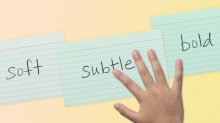
How to Turn Vocabulary Lessons Into Nuanced Conversations About Meaning
Use ‘semantic gradients’ to turn vocabulary study into a shared thinking activity that explores the subtle differences between related words.
Your content has been saved!
Go to My Saved Content.When Joshua LaFleur prepares his second and third graders to read a science text about the Voyager 2 probe, he doesn’t pre-teach key vocabulary words with a list.
Instead, LaFleur, a doctoral candidate at Western University, gets students into small groups and has them investigate their prior knowledge about deep space travel by arranging key words along a continuum on a whiteboard—from lonely to isolated—prompting students to debate and tease out the “semantic gradients,” or subtle differences in meaning, between the terms.
Soon, students insist that “solitary is lonelier than alone,” or counter that “isolated feels worse—there’s nothing around,” LaFleur writes in a recent Reading Teacher article. As words are placed and repositioned along the continuum, students compare nuances and co-create understanding in real-time: “the kind of multimodal, social knowledge building researchers champion,” LaFleur says.
The routine is highly adaptable and addresses common limitations of traditional vocabulary instruction, which often treats word learning as a private task: students look up definitions on their own, copy meanings, and memorize lists, LaFleur writes.
Semantic gradients, in contrast, “turns learning vocabulary into a negotiated social product” by asking students to think deeply about the meaning of words together and notice fine shades of difference—moves that research suggests help new words stick in long-term memory and connect to prior knowledge.
Here are some quick, engaging ways to adapt this approach to a wide-variety of disciplines, from science to social studies to English.
Surface Meaning Before Reading: Give groups of two to three students a short list of terms they’ll encounter in an upcoming science or social studies text. Ask students to rank or sort the words in a way that encourages them to tease out key differences in meaning.
For example, in an upper-elementary social studies unit on forms of government, students might arrange words like democracy, monarchy, dictatorship, and totalitarianism from least to most oppressive. The goal isn’t accuracy at the outset, but sense-making: the discussion between students can surface assumptions about power, freedom, and control, help identify misconceptions, and give students a low-stakes way to begin building understanding before they read.
Map Vocabulary Across Two Dimensions: Instead of ranking words along a single continuum, ask small groups of students to plot them on an X–Y axis. For example, in an early elementary science unit on animals, students might place each animal based on size (small to large) on the vertical axis and speed (slow to fast) on the horizontal axis.
Working together, students debate placement—Is a rabbit faster than a dog? Is a turtle bigger than a snail? These discussions push students to clarify what words like large, small, fast, and slow really mean, and to recognize that such terms are relative rather than fixed.
Turn Vocabulary Work into a Debate: According to LaFleur, semantic gradients are especially powerful when used to inspire productive debate, by asking students to rank order terms that require domain-specific knowledge, for example.
In his elementary school classroom, LaFleur asked students to arrange words like solid, liquid, gas, and evaporating along a continuum of cold to hot, which led to debates around not just definitions but processes and conditions. For example, one student argued evaporating must be colder than gases because it “is happening now, it’s not evaporated, which would be hotter.”
Test Word Choice in Literature: While reading a poem, short story, or novel excerpt, pick a critical word and ask students to develop a list of similar words—first from their own brains, and then with the help of a thesaurus. In small groups, have students discuss which alternatives strengthen or weaken the passage—and why.
For example, students might focus on one word in a much-studied poem, such as the word temperate in Shakespeare’s “Sonnet 18” (“Shall I Compare Thee to a Summer’s Day?”). Students can generate a list of alternatives such as mild, gentle, or balanced, then debate and rank the options from weakest to strongest—or least to most precise—before discussing the reason for Shakespeare's original choice. The activity allows students to see that word choice is highly intentional, not interchangeable, and demonstrates how specificity in language shapes tone, mood, and characterization in literature.
Describe Visuals With Accuracy: Project a painting, photograph, historical image, or scientific diagram and ask students to generate adjectives to describe what they see. In small groups, students then sort or rank the words along a continuum that reflects accuracy or intensity.
For example, when examining a historical photograph from the Great Depression, students might debate whether bleak, somber, or desperate best captures the scene. In an art class, students studying a portrait could rank words like soft, subtle, dramatic, or bold to describe the artist’s use of color or light. These discussions push students to move beyond vague descriptors and consider which words most precisely capture visual details.
Rank Emotional Language: Create a teacher-generated list of words that describe an emotional state—such as disappointed, heartbroken, or devastated. Ask students to work in groups to rank the words along a continuum from least to most intense, explaining their reasoning as they go. This activity works well in ELA or even social-emotional learning contexts, helping students build emotional vocabulary while practicing precision and empathy in how they describe feelings.
Once students are familiar with the routine, semantic gradients can become a flexible tool to use across subjects. In any discipline, teachers can generate a short list of related terms and ask students to rank or organize them along a meaningful dimension—such as size, speed, intensity, or complexity. Over time, the routine can become a quick way to periodically surface prior knowledge, clarify misconceptions, review key terms, and deepen understanding.
“In my classes, this routine has produced stickier word knowledge, better inferences in dense informational texts, and a shared sense that every voice moves the thinking forward,” LaFleur writes.