Forming a Literacy Task Force for Your District
To ensure literacy practices are aligned to research district-wide, you need a plan—and a team to help carry it out.
Your content has been saved!
Go to My Saved Content.
For most districts, the literacy priority is clear: ensuring that evidence-based literacy practices are, in fact, evidence-based. However, the “how” of getting this done can be murky.
While many districts have jumped to purchase new literacy resources as a means to align with research, we advocate for first taking the time to learn about what the research says about best practices. As instructional coaches, we sought to accomplish this by forming a literacy task force as part of a yearlong process within our district.
Pausing before implementing new practices may seem like a lack of urgency. But we argue that your district will not regret pouring energy into professional development first so that when curricular resources are adopted, teachers are ready to implement and adjust to your district’s unique needs.
In this article, we will walk you through the steps we took to establish the task force, the tools we used to facilitate the work, and the strategies to get over the hurdles that are sure to emerge.
Step 1: Establish Your ‘Why’
First, form a clear answer to the question, “Why does our district need a literacy task force?” Being clear on your “why” not only provides a common purpose, it also provides a baseline for making decisions when things get sticky.
In our district, we considered our state’s recently adopted literacy plan and examined our MAP data, state testing data, and information gathered from a teacher needs assessment. Using this information to clearly articulate a need for a literacy task force made it easier to recruit members.
Questions to consider:
- What literacy data do you already have or need to collect?
- What are the district’s specific literacy needs according to the data?
- Does your state have a literacy plan or guidelines to consider?
- How will you communicate the need for a task force in order to grow interest?
Step 2: Envision the Big Picture
Decide who will lead. Will it be principals? Curricular chairs? Instructional coaches? Reading specialists? Then determine what these leaders need in order to plan for and facilitate the task force, such as professional development, access to a consultant, or literacy courses. Once leaders are in place, make a big-picture plan. Begin with the end in mind. Ask yourself: If the task force is successful, what will have been accomplished? Consider creating a visual timeline of steps to get to that end goal. This will not only support you as you plan each meeting, but also help members understand what they are doing and where they are headed.
In our district, we were fortunate enough to have a lot of interest, but we also made sure to consider equity across grade levels, buildings, and positions. And we thought through what steps the task force would take and when. After setting a common vision and determining how we’d share our learning with stakeholders, we decided on the timing and number of meetings. We met six times between October and April.
Questions to consider:
- Who will lead? What do these leaders need?
- Who will join your task force? Who has capacity? What voices need to be heard? How will you strike a balance of voices?
- When will your task force meet? How often?
- What are the steps your task force will need to take?
- How and when will learning be shared with other stakeholders?
Step 3: Plan Your Meetings
Decide on a repeatable structure for each meeting. When designing activities, consider adult learning needs, such as hands-on learning, video, table talk, and choice.
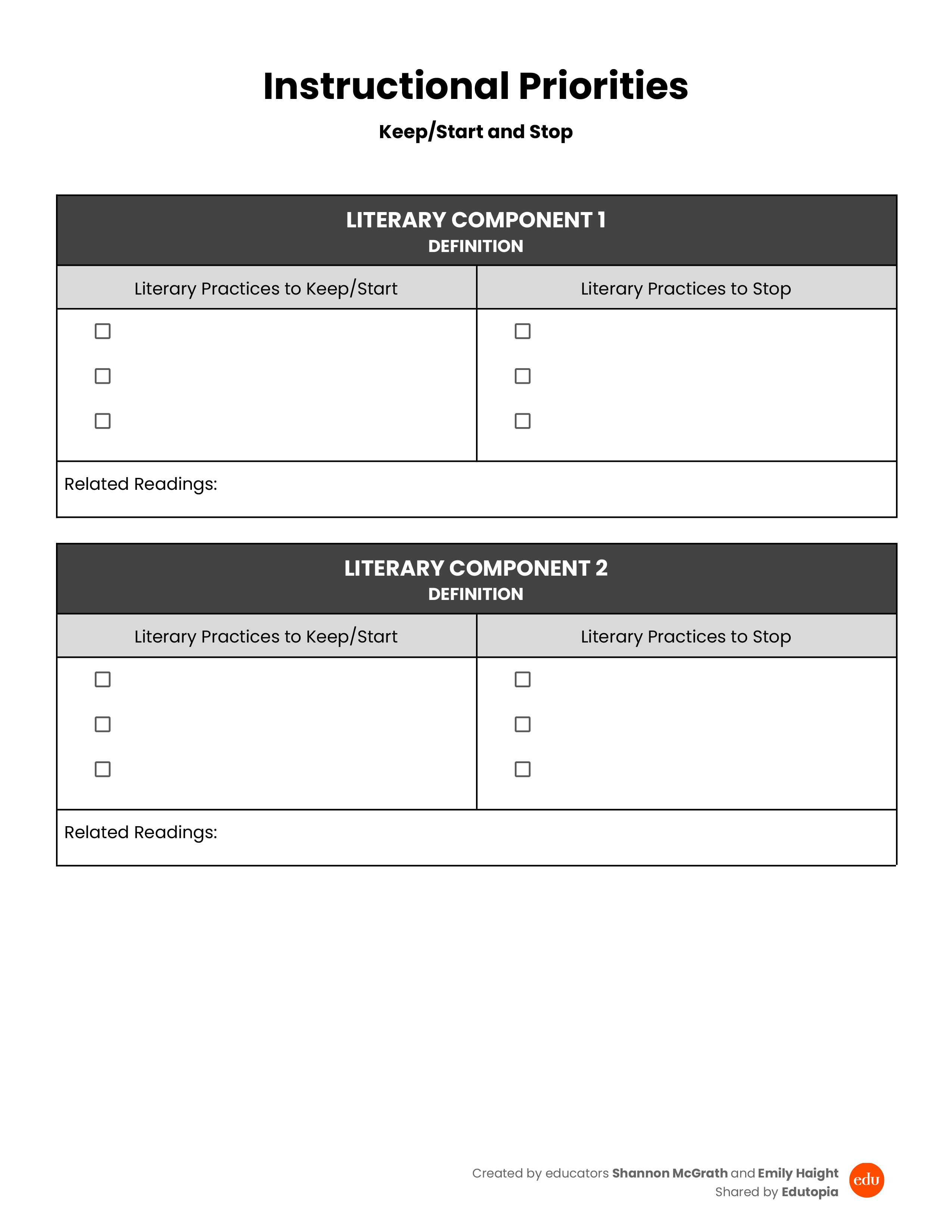
In our district, we used the seven components of literacy in our state’s plan to guide our learning, and we asked task force members to suggest a list of subtopics that they were most interested in. We designed a document to house and organize our learning as it relates to what our district should keep doing, start doing, or stop doing in literacy instruction.
Questions to consider:
- How will you structure your meetings? Which structures can you repeat in each meeting to support adult learning?
- What learning topics are most important for your district? For task force members?
- How will you ensure a variety of learning opportunities and support all learning styles?
- What will the end result be? How will the learning be collected and shared?
Step 4: Communicate and Stay Responsive
Another key to success is ensuring strong lines of communication within the task force itself and to the broader staff. This means checking in often and providing opportunities for feedback and discussion.
In our task force, members took turns emailing their colleagues and sharing at staff meetings. In addition, all task force members observed and reported on what was bubbling up in and outside of meetings, and time was built into each session for authentic discussion and feedback. For example, when we heard an urgent desire for a new resource, we paused for a deep discussion of the “why” we had established. Listening to your staff and adjusting to meet their needs is not a step to skip.
Questions to consider:
- What do you need to communicate? Who do you need to communicate with?
- How will you communicate this information in a way that is timely and digestible?
- How will you maintain open communication within the task force itself?
- How will you build in opportunities for feedback from task force members?
Step 5: Decide What’s Next
Change takes time and energy, and spending time learning as a literacy task force will likely be just the first step you take toward adopting evidence-based literacy practices for your district.
At the conclusion of our yearlong task force, we knew our teachers would need resources to implement these practices. We used what we learned to create a systematic plan for vetting and piloting resources, and then laid the foundation for professional development for the entire district.
Questions to consider:
- Does your district need to update its literacy curriculum and resources? If so, how will you incorporate the learning of your task force into your vetting process?
- How will you provide more targeted professional development to support staff as they work to implement literacy practices?
Shifting literacy practices is no small endeavor. There is value in taking the time to do the deep learning needed to produce the changes your district is striving for to benefit students.