How Themed ‘LitBoxes’ Can Make Reading Assignments More Engrossing
A library media specialist on designing affordable, interactive tools for middle and high school students.
Your content has been saved!
Go to My Saved Content.
As a library media specialist for high school students, my main goal is to get students excited about literature. That can be a challenge, especially for students who don’t enjoy reading or have had negative experiences getting through books at school.
I previously experimented with small prizes and other traditional incentives, but they didn’t have much of an impact. I wanted to come up with something tied directly to reading—something that makes books even more engrossing and interactive.
This year, I tried out a new idea that a professor mentor and I call “LitBoxes.” They’re themed boxes filled with small items that are connected to the contents of a book, plus fun extras that students love. Initially, I envisioned LitBoxes as rewards for accomplishing monthly reading challenges, but they’ve quickly evolved into versatile tools that can support novel studies, classroom incentives, and even thematic library programming.
When I create a LitBox, I carefully choose items that reflect a story’s themes and characters. Sometimes, this involves brainstorming for several days or searching for trinkets that capture the mood of the book. In my view, the planning is worth it; even just this year, I’ve noticed a significant increase in student engagement when LitBoxes are involved. Students are more likely to actively participate in reading challenges, discuss books with peers, and check out other books at the library.
Why LitBoxes Work—and How to Get Started
LitBoxes engage middle and high school students on multiple levels:
- Connection to the story: Students physically interact with symbols and themes from the book, deepening their comprehension. I also like to have conversations with students about the book. Which items resonate with them? How do the themes relate to their own experiences? Which character decisions do they find most surprising? This feedback is invaluable—it informs how I design future LitBoxes.
- Ownership and choice: Students really do go through each item in the box. They spend time considering connections and ultimately gain a more personalized understanding of the story/plot.
- Incentive: While the box itself is a reward, the items within it also motivate students to finish reading.
- Flexibility: LitBoxes have so many uses! They’re great for enhancing monthly reading challenges, classroom assignments, and novel studies. They’re also perfect library programming that can be tied back to cultural events, such as Black History Month and Hispanic Heritage Month.
If you’re designing your first LitBox, I recommend starting small. Pick one book and four or five items that overlap directly with the book’s plot. Throw in a few fun and affordable extras: Candy, pens, and other trinkets are exciting reveals for the students. I typically invest about $15 per LitBox, which covers the themed items and trinkets that accompany the book. I order gift boxes from Amazon, usually choosing sturdy cardboard or magnetic closure boxes that are durable, easy to store, and visually appealing. Sometimes, I’ll stick to a single LitBox per book. Other times, I’ll make three or four duplicate LitBoxes for an especially popular book.
Keep it manageable; boxes don’t need to be elaborate. Creativity and thoughtfulness far outweigh cost. While brainstorming, I’ll sometimes sketch ideas or explore websites, but the best inspiration comes from imagining what will excite the students themselves.
LitBox Examples
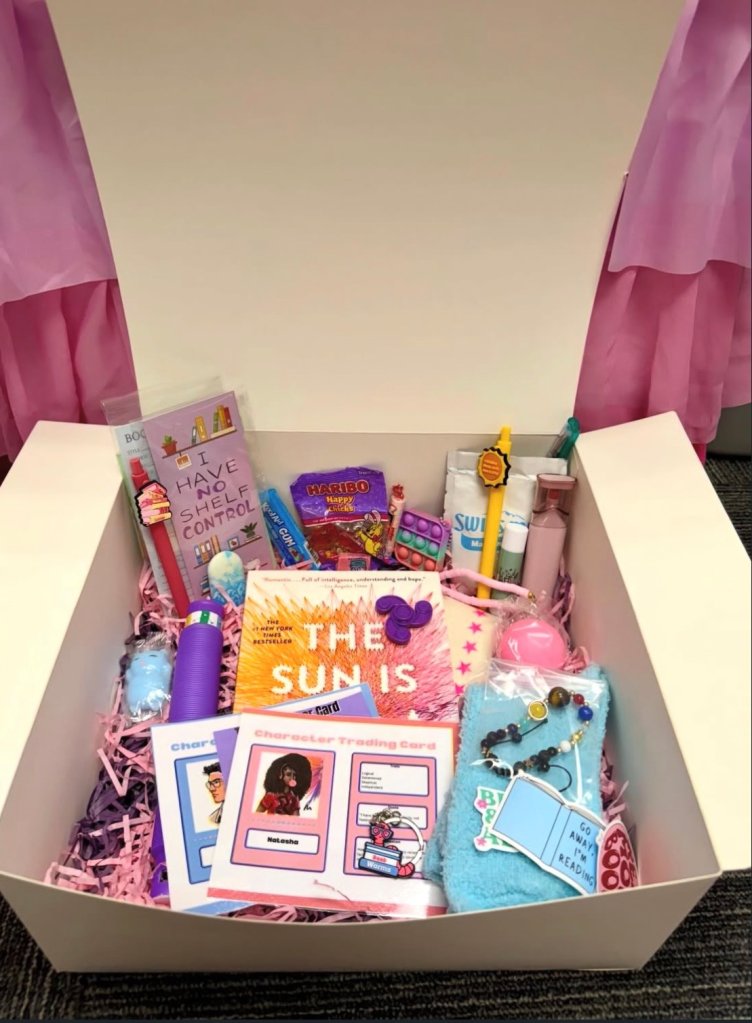
One of my favorite LitBoxes to date is based on The Sun Is Also a Star, by Nicola Yoon. I tried to capture the story’s cosmic and romantic energy and its reflective themes while rewarding students with something meaningful. The box includes:
- A copy of the novel.
- Galaxy-themed bracelets to reflect cosmic motifs.
- Star stickers and a glow stick.
- A spinner card that highlights key themes from the story.
- Character trading cards for Natasha and Daniel, the two main characters. The cards, which I designed on Canva, feature key quotes, character traits, and illustrations that capture the characters’ personalities. There are several cards per character so that students can collect, compare, and discuss as they read.
- Candy, highlighters, fuzzy socks, hot chocolate, fidgets, gel pens, bookmarks, stress balls, keychains, Chapsticks, and water bottles.
I’ve created several other LitBoxes that encapsulate a wide variety of books and themes for middle and high school students:
Hatchet, by Gary Paulsen: This box focuses on survival and problem-solving. It features survival bracelets, mini-compasses, and mini-flashlights, all of which reflect the lonely journey of 13-year-old protagonist Bryan. I also created a “survival” game, where students rank items like a hatchet, a fire starter, and a tent based on their importance, and then review explanations about how those items can prove to be vital. Additionally, the box includes “Bryan’s Wilderness Journal,” which has a quote from the book and a design-your-own-survival tool activity.
The Inheritance Games, by Jennifer Lynn Barnes: This mystery-themed box includes mini-notebooks, keys, chocolate coins, and small Rubik’s Cubes that mirror the story’s puzzles and hidden clues. Students are challenged to think critically and make connections between the items and the plot of the book—an extra dimension that can make reading The Inheritance Games feel like an interactive treasure hunt.
Dive, by Gordon Korman: This suspenseful novel inspired me to create a box with glow sticks, Swedish Fish, and mini-flashlights to echo the story’s underwater adventure and high-stakes tension. There are also risk-versus-reward cards with scenarios like “A teammate ignores safety instructions and dives deeper than planned. Do you follow them? Do you report them? Do you pretend you didn’t see?” These cards encourage students to consider character choices, consequences, and teamwork, all of which make the reading experience dynamic and immersive.