Using Tech for Better Communications With Multilingual Families
Reusable message banks, videos with captions, and smart use of translation tools help schools consistently communicate with families in their home language.
Your content has been saved!
Go to My Saved Content.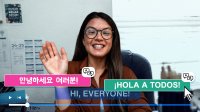
A few years ago, our administrative team sent home what we thought was a clear message about a schedule change and an upcoming assessment. The email went out in English; we also posted it on the school website, and we mentioned it during homeroom.
The next week, a visibly frustrated mother stopped me in the hallway. She said, in Spanish, that she hadn’t known anything about the schedule change. Her child, a newcomer still learning English, was embarrassed and anxious, because they felt unprepared for the assessment. From the school’s point of view, we had “communicated.” From the family’s point of view, we hadn’t.
About 40 percent of the students at our middle school are Hispanic, and many speak Spanish or another language at home. Each year, we welcome dozens of newcomers, including students with interrupted formal education. Our part-time bilingual social worker and community liaison work incredibly hard, but the math is simple: Communication needs far outpace available bilingual adults.
Individual calls, last-minute translations, and one-off emails aren’t sustainable or equitable. As an alternative, we’ve built a set of simple tech routines that help us communicate with multilingual families more consistently—and without burning out staff.
Identifying Challenges
When we asked staff what felt hardest about effectively communicating with multilingual families, a few themes came up.
The work was fragmented: One teacher used a translation app, another relied on a student to interpret, a counselor called home in Spanish after school, and none of those approaches were logged in one place.
Messages didn’t always land: We were sending long emails in English about complex topics and hoping auto-translation would carry the weight.
It’s emotionally loaded work: Conversations about attendance, behavior, or academics can be tense in any language. When language is a barrier, everyone is more anxious about being misunderstood.
We knew we couldn’t fix everything at once, and we weren’t going to magically hire a dozen bilingual staff members. So we asked a more focused question: How can we use simple tech to make communication more consistent, more accessible, and more manageable for the adults doing the work? That question led us to three guiding principles and four outreach strategies.
Guiding Principles for Multilingual Communication
Before touching the tech, we agreed on three principles:
- Consistency over heroics: We want systems and routines that any staff member can use, as opposed to relying on heroic individual efforts.
- Clarity and brevity: Short, well-structured messages translate better, regardless of whether a human or a machine is doing the translation.
- Human voice first: Technology should amplify relationships, not replace them. Families should still feel like they’re hearing from a person who knows their child.
With those principles in mind, we moved to the following four strategies.
Strategy 1: Reusable Message Banks and Templates
Our first move was to stop rewriting the same messages from scratch. We created a shared Google Drive folder with message banks for our most common situations, including these:
- Attendance: First absence patterns, chronic absenteeism, and tardiness.
- Academics: Missing work, progress concerns, and upcoming assessments.
- Behavior: Minor concerns and a follow-up after an incident.
- Schoolwide updates: Schedule changes, events, family nights, and testing windows.
Each template follows a simple, translation-friendly structure. After a greeting (“Dear Jordan’s family,” or “Querida familia de Jordan”), there’s each of the following:
- A clear purpose of the message (“I’m writing to share…”)
- Concrete details (the what, when, and where)
- How families could respond or get help
- A warm closing
We drafted everything in plain English first, avoiding idioms and long sentences. Then, with help from our bilingual staff, we created Spanish versions of the most-used templates. For other languages, we still rely on translation tools but start from a clean, simple English version to reduce errors.
Now, when a teacher or counselor needs to reach out, they do the following:
- Open the shared document.
- Copy the relevant template.
- Personalize names, dates, and specific details.
- Translate if needed, or tag a bilingual colleague if the message is sensitive.
Strategy 2: Voice and Video Messages With Captions
We also realized that not every message needs to be a long email. Listening to a 60-to-90-second message—even with imperfect translation—is often easier for busy families.
For major schoolwide updates, we’ve shifted to recording short voice messages or simple video clips from an administrator or counselor. We add captions and, when possible, provide a translated transcript. And we also send the link or audio file through the same channels we utilize for other school communication. Sometimes, we’ll use Screencastify for video clips. We’ve found that ParentSquare is able to assist with most audio and visual tasks.
These messages are scripted from our templates, so they stay concise. Families have told us that hearing a familiar voice, even if they rely on the captions or transcript, helps them feel more connected and less intimidated.
We also still send written versions of updates, because pairing text with voice and/or video gives families more than one way to access important information.
Strategy 3: Smarter Utilization of Translation Tools
Like most schools, we use machine translation tools. The question is how to use them responsibly. We typically employ ParentSquare’s built-in translation service, which we’ve found to be reliable. We’ve agreed on a few guardrails:
- Draft clearly in English first: Short sentences, concrete language, and a straightforward structure make translated versions more accurate.
- Use tools for first drafts, humans for sensitive issues: For routine updates, auto-translation is fine. For complex conversations about special education, discipline, or major academic concerns, we try to loop in a bilingual staff member or interpreter.
- Avoid asking students to interpret adult conversations: Technology doesn’t solve this entirely, but having translated templates and clear processes means we’re less likely to lean on students for high-stakes communication.
As an example, we might edit the sentence “We’re really hoping to partner with you to get things back on track” into something more direct and translatable: “We want to work with you to help your child improve in this class.”
Strategy 4: A Simple Contact Log
We don’t want to solely rely on memory to track the families we’ve contacted. We’ve created a shared contact log—a basic spreadsheet—where student-facing staff can note outreach efforts. Staff mark down the following:
- Student name and grade
- Parent/caretaker name
- Preferred language for the parent/caretaker
- Date and type of contact (call, text, email, meeting, or video message)
- A brief note about the purpose of the contact
The contact log is now a complement to our student information system—it gives us a quick, human-centered view of communication patterns. A few times each quarter, our counselors and administrators skim the log with simple questions in mind. Which families have we not heard from in a while? Are there families we only contact when something’s wrong? Do our newcomer families have at least one positive or neutral contact logged?
What Has Changed
We haven’t eliminated every barrier, but our principles and strategies have made communication much more manageable and less ad hoc. There’s a structure to lean on; instead of scrambling for translations, staff have existing templates and recorded messages at their disposal.
For families—especially those who might be new to the U.S. school system—messages are noticeably shorter, clearer, and easier to access. Families have begun to recognize the school’s “voice” in both English and Spanish. Some families have told us they feel more comfortable replying or calling back because the initial communication was respectful and understandable.
When communication becomes more consistent and accessible, families feel like true partners. And when families can actually hear us—and we can truly hear them—everything else we’re trying to improve at school becomes a little bit easier.