
Jason Reynolds on What Fires the Imagination of Young Readers
The best-selling author on why “inappropriate” topics may be exactly what teen readers need, and the importance of raising the hair on the backs of readers’ necks in the first 50 pages.
Your content has been saved!
Go to My Saved Content.Unlike most authors, who want a shot at immortality, Jason Reynolds hopes his books have an expiration date. “I don’t care if my books are timeless,” he says. “If Ghost is still being read in 2050, if there’s no contemporary literature to overtake it—to shift with the time—then we’ve failed.”
In fact, Reynolds’ primary goal is to write stories that ignite a voracious love of reading in kids right now—an experience that eluded him in his youth.
While his novels often feature Black children grappling with questions of identity and navigating real-world challenges—filling a vital gap in children’s literature—representation isn’t the only thing keeping kids engaged. A restless reader himself, Reynolds gives books “50 pages to hook him,” and his own work reflects that urgency, launching the action within the first few pages: “Kids need that,” he says. “I’m going to give you a couple of pages, but by the end of that, the hair on the back of my neck needs to be standing up.”
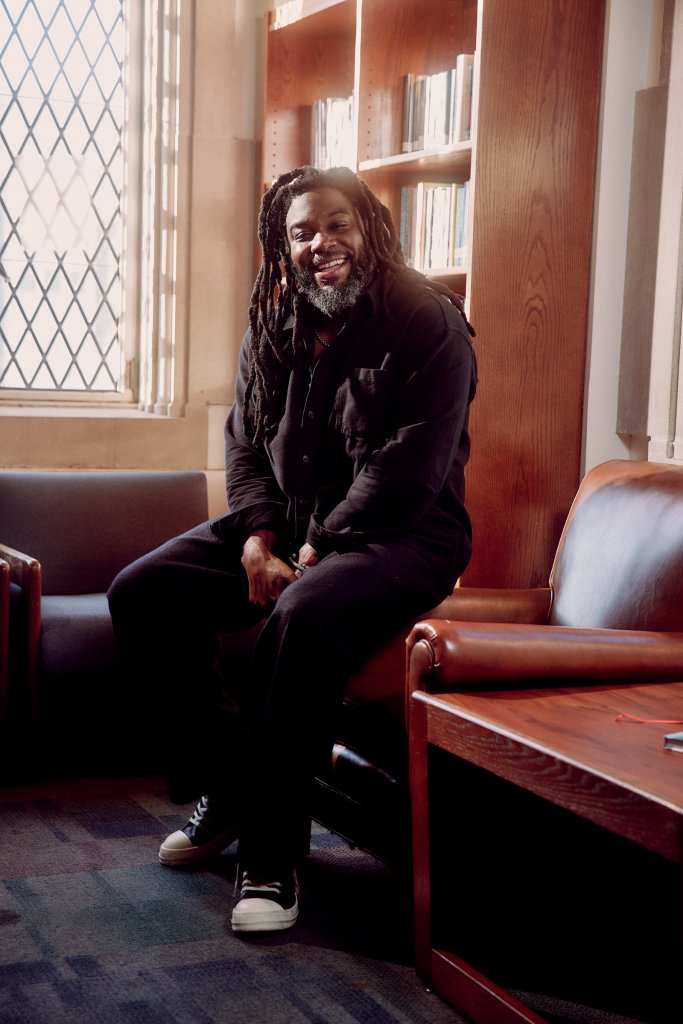
Reynolds’s electric, genre-spanning approach—he’s penned graphic novels, poetry, works of both fiction and nonfiction—has made him one of the most celebrated voices in middle grade and young adult literature, with more than 20 books to his name, including the New York Times best-sellers All American Boys, Long Way Down, and Ghost.
I recently had the pleasure of speaking with Reynolds about how writing is an act of self-preservation, why over-reliance on the classics in middle and high school English classrooms is a mistake, and what artificial intelligence might be quietly stealing from the next generation.
PAIGE TUTT: Your next book, Soundtrack, coming out in April, was originally released as an audiobook. I’m curious, why audio first?
JASON REYNOLDS: Why not? As an artist, you’re always looking for new ways to push the boundary. Soundtrack was written as a novel, but it wasn’t ever published. So I thought, let’s see how much we can dump into the pot to make a book feel—or at least sound—like a movie.
What does a movie sound like if it were being listened to only? What does a book sound like if it were cinematic? With all of the bells and whistles of cinema: sound effects, score, some of the ephemera and environmental contextual cues. Can we have a Foley artist? Why not?
TUTT: Your books clearly resonate with young readers—at the same time, we also know that kids generally are reading less. What’s your assessment of where the aversion to reading is coming from?
REYNOLDS: I’m not sure I’m the right person to ask, but do I think there’s a problem? Of course. The whole world is in a literary crisis, and more importantly, a literacy crisis. Other than the physical health of the Earth, I think literacy is the number one issue on the planet.
The question that I’m always asking is, have we gotten to a point where we need to shift the way we think of the book, the story, and literacy? Don’t get me wrong, this is no shot at teachers. Lord knows, teachers are doing their jobs the best they can under the constraints put on them. My mother was a teacher. It’s thankless, and they have to deal with the social issues: parental issues, poverty, politics, health care, food. There’s lots of things coming into play here that all trickle down, and then the kids don’t want to read.
But beyond all of that, are we really giving them the books of their time, for their time? Or are we doing what was done to us in the 1980s and early ’90s when they were like: We want you to read books that took place in the ’50s and ’60s. If the world today is moving a lot faster than it’s ever moved before, then a book that was written in 2000 already feels outdated.
TUTT: Being able to read things you connect with is so important. Snowy Day, by Ezra Jack Keats, activated my love of reading from a very early age because I got to see someone who looked like me. Do you think there’s value in requiring kids to read what many would consider the classics, even if the stories don’t resonate with them?
REYNOLDS: No, not at all. Not because I don’t find value in the classics. I do. I just don’t think they work to introduce and proliferate literacy. They work in the advancement of literature, but not in the proliferation of literacy. If the classics are truly the classics, then let’s make sure the kids can read first because the classics will be there. But an illiterate child runs the risk of being an imprisoned adult, physically and mentally. What good is it for me to finally get to Macbeth when I’m incarcerated?
I would rather a child read Macbeth at 30 than have Macbeth forced down their throat at 13 and turn them off. It turned me off at that age. And really, I am a Shakespeare person. His sonnets are masterpieces, but Macbeth is my jam. Every line could be quoted. But do I think that my excitement around those things needs to be forced on a ninth grader? No. Do I think perhaps we should show them the plays and work through it that way? Perhaps. They were meant to be seen anyway. They weren’t meant to be read.
It becomes all about what the books are teaching rather than the fact that the child is now obsessed with reading." — Jason Reynolds
TUTT: What books do you think kids need?
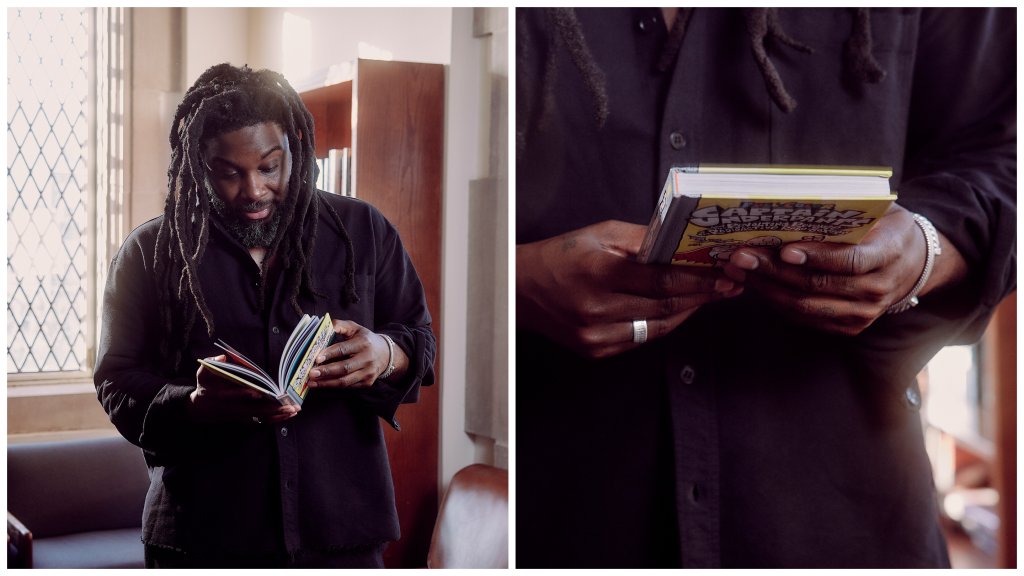
REYNOLDS: I think we need Captain Underpants. I think we can read contemporary literature. We should offer elective classes on the literature of the 1960s and the 1980s. Or take a book like Ghost and Dick Gregory’s memoir and do comparative lit. Whatever it is, we need creativity more than anything. Shout out to the classics, but a book doesn’t need to be timeless in order to be effective for the generations that are reading it.
I don’t care if Ghost is still being read in 2050. If it is—if there’s no contemporary literature to overtake it, to shift with the time—then we failed. I don’t care if my books are timeless. What I want them to be is timely enough to turn kids on now, so that by the time they’re 40, they understand the power of language, the power of narrative, the power of story.
TUTT: What makes a book boring to a child?
REYNOLDS: Exposition’s boring to me. Start your book at chapter two. No one cares about the buildup. I give every author 50 pages. If you can’t get it there in 50 pages, I’m closing it.
There’s no other storytelling medium that requires that much exposition. If you follow the traditional beats of a film: Two minutes in, we need to be introduced to something that sparks our interest—a character, a situation, an environment. Five minutes in, something has to happen that starts the ball rolling. So we’re already thinking, “Huh, what’s going on?” Fifteen minutes in, the big thing happens, “Uh-oh. Now we’re in a jam.”
Richard Wright’s Black Boy: Young Richard sets the curtains on fire and burns his grandma’s house down on page three. Octavia Butler’s literature, same thing. Right off the jump. “Yo, let’s get to it.” Kids need that. Kids want to open the book and be like, “What!” I’m going to give you a couple of pages, but by the end of that, the hair on the back of my neck needs to be standing up.
TUTT: Right. On page 17 of All American Boys, Rashad walks into the convenience store, where he’s racially profiled, brutally assaulted, then arrested.
REYNOLDS: People are like, “I don’t know how Long Way Down works.” How could it not work? By page two, you find out that this is a story about murder.
We’re always walking this delicate line between what’s appropriate and inappropriate. But I don’t know a more inappropriate group of people than children. If you know teenagers and you put your ear to the door when no adults are around, you’re going to hear the most inappropriate stuff you’ve ever heard. I don’t know why we are afraid to say things they already say.
I want to jump in the hot water from page one. I’d rather the child be scandalized and reading than to be sanctified and illiterate.
TUTT: For many kids, AI has become deeply embedded in their learning process, and they’re leaning on it to do their reading and writing. How do you make the case to them that the hard work of developing literacy skills is important?
REYNOLDS: It’s tricky. I’m always asking them, “If a computer could teach LeBron James the fundamentals of basketball, do you think LeBron would be able to handle himself when a human being decided to guard him?”
When somebody has to rent a car and for some reason this car doesn’t have a rearview backup camera, it’s the wildest thing to watch the panic of a person who does not know how to use mirrors anymore to parallel park. “What am I going to do if my camera’s not working?” You’re going to use your mirrors or turn your head. Or, “Uber’s not working. What am I going to eat?” Well, you have to learn to cook.
So my biggest fear with AI is that it’s robbing them of fortitude. We could talk about mental degradation, which is happening because of AI. But what scares me more than anything is that we’ll have a generation of kids who don’t know the value of effort. The entire world and your life depends upon your ability to enact effort.
I’d rather the child be scandalized and reading than sanctified and illiterate.
JASON REYNOLDS
TUTT: To a student who prefers video games or social media, how do you communicate the value of reading and writing?
REYNOLDS: The first thing I do is I let them know I understand why they don’t want to do it. So many of us are trying to combat this by convincing them, but preaching to me about what you want me to do doesn’t make me want to do it.
What I’m more interested in is making sure they understand I didn’t like to read either. A lot of the books they’re reading bore me. Some of these books, you got to grow into.
TUTT: Any specific titles come to mind?
REYNOLDS: I hate the fact that they’re trying to get high schoolers to read Beloved. Beloved is a pair of pants you got to grow into. You can read it, but if you do get through it, you’re going to be like, “Ugh? Ugh.” Read it again at 25, 35, 45. Each time it changes because you’re changing. But I hate that they start reading Beloved at 16. It boggles my mind. Maybe in a different generation they can handle Beloved. I’m not sure that’s where we are.
That being said, I honor where they are. I ask: What are you into? “Oh, I’m into this, this, and this.” Cool. Well, I don’t need you to read novels. I want you to read anything. So if you like video games, figure out how to get better at them. There’s books and websites for that. Why don’t we think about storytelling games? There’s tons of them. Zelda is a masterpiece. Final Fantasy is a masterpiece. There’s a narrative there where you have to read. I even think about the value of the comic section in the paper—the funnies. Charles Schulz and Peanuts. A panel’s only 10 words, but it forced me to think, “What is the joke here?” I have to decipher these 10 words to understand this much bigger joke that he’s cracking.
All of it counts. I put my ego to the side, and I try to make sure they know that all of it counts. I’m like, “Yo, what about audiobooks? You like podcasts?” I’m a little more open about what reading actually is. I try to be.
TUTT: As an author, you’re very prolific. Is there a theme that runs through your work?
REYNOLDS: That masculinity is bogus and love is all. The greatest lie ever told is that we needed to be anything other than ourselves. I want everyone who reads my books to know that the only requirement is to be you and to allow the people around us to be them. This is something that I’ve been trying to suss out for years. If you read my books, they’re all about deconstructing and upending the notion that boys have to be a certain way.
Stuntboy is about a kid with anxiety who’s afraid that his parents are splitting up. All American Boys, Rashad’s not anything other than a kid who got caught in a bad situation. He ain’t no tough guy. Long Way Down, he ain’t no killer. He’s in pain because he lost his brother. Twenty-Four Seconds, this is a beautiful romance. This kid wants to have sex for the first time, but he’s scared to death.
That’s real. He’s anxious and he’s nervous and he’s awkward and he’s bumbling and he’s loving and he’s tender, because that’s who we are. When we get to be ourselves, that is the version of ourselves that can emerge.
TUTT: You’ve spoken about how we may be underselling the value of writing to kids. Can you elaborate on that? Where do you see the real power in writing?
REYNOLDS: Listen, this is how you write yourself into the world. This is documentation. This is what stays. One of my favorite quotes is from Alfred Hitchcock; I’ll paraphrase: “A face is not a face until I put light on it.” Writing is the light.
The Constitution doesn’t count if it’s not written down. The amendments don’t count if they’re not written down. You have to name things. You have to write them down. Black folk love to talk about what would’ve happened if slavers found out that their enslaved could read. But we never talk about what happened when they found out their enslaved could write. Punishment was twice as harsh. Because to read is to know, to write is to teach. That’s scary.
Writing is a documentation of our existence, of our lives. I would argue even more so than a photograph. Writing is the only thing to express who we are on the inside. A picture doesn’t show it. But reading a note on the back of that photograph that says, “Jason Reynolds, 2025, ‘I am sad.’” That’s different. “Jason Reynolds, 2025, after the death of his father.” That’s different. You feel me? Writing is what brings us into existence. It is what puts light on us. It is imperative that we do this.
This interview has been edited for brevity, clarity, and flow.