WHAT WORKS IN EDUCATION The George Lucas Educational Foundation

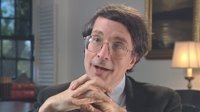
Big Thinkers: Howard Gardner on Multiple Intelligences

Edutopia revisits its 1997 interview with the Harvard University professor about multiple intelligences and new forms of assessment. More to this story.

Edutopia revisits its 1997 interview with the Harvard University professor about multiple intelligences and new forms of assessment. More to this story.
Download | Credits | Release Date: 12/01/1997

Produced for Edutopia by

  • State of the Art
  • © 1997
  • The George Lucas Educational Foundation
  • All rights reserved.

Close window

This video is available as a free download from iTunes U. Download video

If you do not have iTunes on your computer, download iTunes here.

Downloaded videos are designed to play on computers and PDAs and are most appropriate for personal or small group viewing.

Close window

Howard Gardner is the John H. and Elisabeth A. Hobbs Professor in Cognition and Education at the Harvard Graduate School of Education. He also holds positions as adjunct professor of psychology at Harvard University, adjunct professor of neurology at the Boston University School of Medicine, and chairman of the steering committee of the graduate school's Project Zero.

He has written twenty books and hundreds of articles and is best known for his theory of multiple intelligences, which holds that intelligence goes far beyond the traditional verbal/linguistic and logical/mathematical measurements. Here he discusses student-directed learning, multiple intelligences, and a different approach to assessment.

  1. On the importance of engaging students actively in what they are studying.
  2. On the characteristics of student-directed learning.
  3. On the theory of multiple intelligences.
  4. On technology and multiple intelligences.
  5. On the need for fundamental change in the curriculum.
  6. On how assessment in school differs from assessment in other arenas such as sports or music.
  7. On the need for a new approach to assessment in schools.
  8. On what needs to happen in order that long-standing change occurs in public education.

1. On the importance of engaging students actively in what they are studying.

We have schools because we hope that some day when children have left schools that they will still be able to use what it is that they've learned. And there is now a massive amount of evidence from all realms of science that unless individuals take a very active role in what it is that they're studying, unless they learn to ask questions, to do things hands on, to essentially re-create things in their own mind and transform them as is needed, the ideas just disappear. The student may have a good grade on the exam, we may think that he or she is learning, but a year or two later there's nothing left.

Back to Top

2. On the characteristics of student-directed learning.

If, on the other hand, somebody has carried out an experiment himself or herself, analyzed the data, made a prediction, and saw whether it came out correctly, if somebody is doing history and actually does some interviewing himself or herself -- oral histories -- then reads the documents, listens to it, goes back and asks further questions, writes up a paper. That's the kind of thing that's going to adhere, whereas if you simply memorize a bunch of names and a bunch of facts, even a bunch of definitions, there's nothing to hold on to.

Back to Top

3. On the theory of multiple intelligences.

The idea of multiple intelligences comes out of psychology. It's a theory that was developed to document the fact that human beings have very different kinds of intellectual strengths and that these strengths are very, very important in how kids learn and how people represent things in their minds, and then how people use them in order to show what it is that they've understood.

If we all had exactly the same kind of mind and there was only one kind of intelligence, then we could teach everybody the same thing in the same way and assess them in the same way and that would be fair. But once we realize that people have very different kinds of minds, different kinds of strengths -- some people are good in thinking spatially, some in thinking language, others are very logical, other people need to be hands on and explore actively and try things out -- then education, which treats everybody the same way, is actually the most unfair education. Because it picks out one kind of mind, which I call the law professor mind -- somebody who's very linguistic and logical -- and says, if you think like that, great, if you don't think like that, there's no room on the train for you.

Back to Top

4. On technology and multiple intelligences.

If we know that one child has a very spatial or visual-spatial way of learning, another child has a very hands-on way of learning, a third child likes to ask deep philosophical questions, the fourth child likes stories, we don't have to talk very fast as a teacher. We can actually provide software, we can provide materials, we can provide resources that present material to a child in a way in which the child will find interesting and will be able to use his or her intelligences productively and, to the extent that the technology is interactive, the child will actually be able to show his or her understanding in a way that's comfortable to the child.

We have this myth that the only way to learn something is to read it in a textbook or hear a lecture on it. And the only way to show that we've understood something is to take a short-answer test or maybe occasionally with an essay question thrown in. But that's nonsense. Everything can be taught in more than one way. And anything that's understood can be shown in more than one way. I don't believe because there are eight intelligences we have to teach things eight ways. I think that's silly. But we always ought to be asking ourselves, "Are we reaching every child, and, if not, are there other ways in which we can do it?"

Back to Top

5. On the need for fundamental change in the curriculum.

I think that we teach way too many subjects and we cover way too much material and the end result is that students have a very superficial knowledge, as we often say, a mile wide and an inch deep. Then once they leave school, almost everything's been forgotten. And I think that school needs to change to have a few priorities and to really go into those priorities very deeply.

Let's take the area of science. I actually don't care if a child studies physics or biology or geology or astronomy before he goes to college. There's plenty of time to do that kind of detailed work. I think what's really important is to begin to learn to think scientifically. To understand what a hypothesis is. How to test it out and see whether it's working or not. If it's not working, how to revise your theory about things. That takes time. There's no way you can present that in a week or indeed even in a month. You have to learn about it from doing many different kinds of experiments, seeing when the results are like what you predicted, seeing when they're different, and so on.

But if you really focus on science in that kind of way by the time you go to college -- or, if you don't go to college, by the time you go to the workplace -- you'll know the difference between a statement that is simply a matter of opinion or prejudice and one for which there's solid evidence.

Back to Top

6. On how assessment in school differs from assessment in other arenas such as sports or music.

The most important thing about assessment is knowing what it is that you should be able to do. And the best way for me to think about it is a child learning a sport or a child learning an art form, because it is completely unmysterious what you have to be to be a quarterback or a figure skater or a violin player. You see it, you try it out, you're coached, you know when you're getting better, you know how you're doing compared to other kids.

In school, assessment is mystifying. Nobody knows what's going to be on the test, and when the test results go back, neither the teacher nor the student knows what to do. So what I favor is highlighting for kids from the day they walk into school the performances and exhibitions for which they're going to be accountable.

Back to Top

7. On the need for a new approach to assessment in schools.

Let's get real. Let's look at the kinds of things that we really value in the world. Let's be as explicit as we can. Let's provide feedback to kids from as early as possible and then let them internalize the feedback so they themselves can say what's going well, what's not going so well.

I'm a writer and initially I had to have a lot of feedback from editors, including a lot of rejections, but over time I learned what was important. I learned to edit myself and now the feedback from editors is much less necessary. And I think anybody as an adult knows that as you get to be more expert in things you don't have to do so much external critiquing, you can do what we call self-assessment. And in school, assessment shouldn't be something that's done to you, it should be something where you are the most active agent.

Back to Top

8. On what needs to happen in order that long-standing change occurs in public education.

I think for there to be long-standing change in American education that is widespread rather than just on the margins, first of all people have to see examples of places that are like their own places where the new kind of education really works, where students are learning deeply, where they can exhibit their knowledge publicly, and where everybody who looks at the kids says, "That's the kind of kids I want to have." So we need to have enough good examples.

Second of all, we need to have the individuals who are involved in education, primarily teachers and administrators, believe in this, really want to do it, and get the kind of help that they need in order to be able to switch, so to speak, from a teacher-centered, let's-stuff-it-into-the-kid's-mind kind of education to one where the preparation is behind the scenes and the child himself or herself is at the center of learning.

Third of all, I think we need to have assessment schemes that really convince everybody that this kind of education is working. And it's no good to have child-centered learning and then have the same, old multiple-choice tests that were used fifty or a one-hundred years ago.

Finally, I think there has to be a political commitment that says this is the kind of education that we want to have in our country, and maybe outside this country, for the foreseeable future. And as long as people are busy bashing teachers or saying that we can't try anything new because it might fail then reform will be stifled as it has been in the past.

Back to Top

Comments (42)

Comment RSS
Host and Co-Developer of Virtual Science University

A Different Approach to Assessment & Learning

Was this helpful?
0

Thru my site, Virtual Science University, www.virtualscienceuniversity.com I have developed a model that is multi-input, kinesthetically driven, and internalized by the learner. This model uses a different approach to assessment. This model has helped students go very far versus just testing the person on a Multiple Choice Test, where all students do is memorize or associate information. During the lecture, they go thru Engage, Explore, Explain, and Elaborate behaviors in their multi-intellect groups. http://www.sendspace.com/file/95lypt After showing any of my Biology Lecture Series DVDs or on-line lecture, I ask my students to use my PHAT CAC format to access the following types of digital media like wikis, podcasts, NPR broadcasts, blogs, and other virtual sites on the subject that was lectured. PHAT CAC is another way of remembering the steps of the Scientific method. This way of remembering the steps of the Scientific Method are: P=Problem, H=Hypothesis, A=Arrange Equipment, T=Test the Hypothesis, C=Collect Data, A-Analyze Data, C=Form a Conclusion Now, after following their Lab Project or hearing their song on the subject or Power Point Presentation on the subject, I can evaluate their work. Many times I just walk around and let the student take ownership of their learning. All I do is facilitate or coach, the way you do in athletics or developing someone's musical ability. I can relate to this because I have been a Tennis Coach and a Concert Performer. Of course, I've done this in a small Texas Public School, Kermit High School, that turned around their Science TAKS Exit Scores. The last graduating class had an increase of 40% points from their Sophomore Year to their Exit year. To learn more about how I teach, visit my weekly blog at http://www.virtualscienceuniversity.com/blog.aspx and my lecture website at: www.virtualscienceuniversity.com I am not teaching at Kermit High School, but have stepped out to do Science Education Consulting across the nation.

doctoral student

Patricia, Wow this website

Was this helpful?
0

Patricia, Wow this website offers so much support for parents, and even teachers with regards to changing the way we think about learning and helping our kids recognize their strengths as learners. I believe that this concept is what it is all about, helping students, both young and adult, recognize their style of learning so that they can become lifelong learners, enjoying the enchantment and wonder education can provide. I do believe that I shall order their book within the near future! It will serve it purpose in my classroom! I am always trying to find new ways to help my students love learning in their own way.
Thank you,
Jamie

Author, speaker, former teacher/admin., school change activist

Learning Styles/Experiential Learning

Was this helpful?
0

Hi, Jamie! Regarding your question, team approaches to experiential/hands-on/constructivist learning allow each student to serve a specific function in the group, according to their preferred modality, e.g. moderator, recorder, organizer, artist, constructor, etc. Or even to take on a less comfortable role to see how it works for them, etc. The best info I have found on really using the theory of learning styles is in a book written by a couple of friends of mine right here in Ventura, CA. Here's a link to their book: http://discoveryourchildslearningstyle.com and explore the website, too, since it provides a wealth of information on this concept:
http://learningsuccessinstitute.com/index.html I hope you are enjoying your doctoral work even though I'm sure right now you're thinking "so much to learn, so little time"! Good Luck!!

Volunteer Science Educator at the Boston Museum of Science

StoryCraft Integrates Math & Verbal with Emotional Intelligence

Was this helpful?
+2

I would like to see more use of creative storycraft in our educational system.

It's obvious that storycraft helps develop language arts. And it's fairly obvious that stories, which are populated with curious characters, provide a fluid medium for developing emotional intelligence (mainly with respect to illuminating interpersonal relationships among the cast of characters).

What may not be obvious is that there is also a mathematical component to storycraft, not unlike the mathematical components of Game Theory.

Stories obey a fascinating kind of StoryBook Logic with remarkably deep mathematical roots touching on fundamental aspects of Algebra and Calculus. There is even a fundamental theorem of StoryBook Logic known as Clancy's Theorem, which establishes the basis for the continuity of an unfolding storyline.

Thus it should be possible to promote Language Arts, Emotional Intelligence and Mathematical Reasoning Skills in an integrated module on Creative StoryCraft.

Character-driven stories can also be used to generate cartoon animations, using new sites like XtraNormal.Com and GoAnimate.Com.

doctoral student

GC,I agree with your

Was this helpful?
0

GC,
I agree with your thoughts regarding the need for supplementation when utilizing Multiple Intelligence instructional strategies. Initially, as you mentioned, there needs to be some form of direct instruction, the introduction or knowledge acquisition stage. These strategies work best when coupled with other strategies, such as the Rigor, Relevance, and Relationship model. Here you must have some kind of initial knowledge acquisition taking place. Following this stage, comes application and adaptation, where students adapt their knowledge through transforming it in a different context. The Verbal Linguistic intelligence can also be utilized for the introduction stages of a lesson. This calls for students to read or listen for information and learning.
Jamie

doctoral student

4/30/11 Barry, thank you for

Was this helpful?
+1

4/30/11
Barry, thank you for the invitation. I use simulation in my classroom as much as I can as an effort to provide my students with some lifelong learning skills that they will never forget. In providing these opportunities, students develop their comprehension and can utilize their own skills in understanding and developing through content, rather than have it fed directly to them. It must be very interesting to be a Volunteer Science Educator at the Boston Museum of Science. I do say that I wish to have a similar experience. Nontraditional methods of teaching exist, just not in abundance. When these methods are in place, and fed with enthusiasm, students come away successful.

Volunteer Science Educator at the Boston Museum of Science

Experiential Learning: StoryCraft, Dramaturgy & the Bardic Arts

Was this helpful?
0

Jamie, please join us on Facebook to discuss pedagogical alternatives such as Simulations, Virtual Reality Systems, StoryCraft, Dramaturgy, and the Bardic Arts in general as a way to reach out to learners who are not well served by the traditional classroom teaching model.

doctoral student

Thank you Patricia, what an

Was this helpful?
0

Thank you Patricia, what an honor!=) I am in the process of starting some research for my doctoral program. The research will focus on the affects of training educators in instructional methods that integrate experiential learning. What are your thoughts on how Multiple Intelligences fit into the realm of experiential learning?
Jamie

Author, speaker, former teacher/admin., school change activist

Changing the System Must Be Our Goal . . .

Was this helpful?
+2

Thanks for the great quote, Jamie. I just posted it anonymously on my Facebook page for ChangeTheSchools, my own little homegrown campaign to change people's minds about the kind of schools we CAN create for our kids and our future. We've moved on from the Ning I posted last year and have recently come together on Facebook, so please come by and add your name to the list of people who want humane, creative, personalized, and collaborative schools to maximize the potential of EVERY kid, teacher, parent, and community. Find us at http://facebook.com/ChangeTheSchools !! Patricia Kokinos http://ChangeTheSchools.com

doctoral student

Focused on learning

Was this helpful?
+2

It was not until I learned in college about Howard Gardner's Theory of Multiple Intelligences that I truly appreciated my talents rather than my failures. As I learned to focus on my intelligences and strengths, I was able to use them in strengthening my learning in my own way. If we could only harness this kind of self-awareness in the school systems and invite students to pursue their own styles and freedoms as a learner, we would see higher achievement and thinkers at deeper levels.