Challenging the Model of 1:1 with BYOD
A look at how one school district is blending the bring-your-own-device and 1:1 classroom technology models to meet students’ needs.
Your content has been saved!
Go to My Saved Content.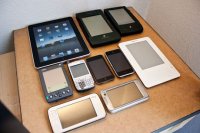
This year my school district in Vermont ventured into a sort-of BYOD/1:1 hybrid program. We realized the importance of allowing our students access to technology to enhance their learning, but the infrastructure wasn't in place to tackle a traditional BYOD. And we, like many if not all schools, were also constrained by budgets, so a traditional 1:1, where each student receives the same device, was also out of reach.
Instead, we chose to be creative with our technology and professional development. We used money from our technology budget and constructed a model to supply teachers with a mix of mobile devices, mostly laptops and iPads, and teachers applied to take part in a mixed device technology-integration pilot program.
In many aspects, the program is like BYOD because each classroom adapts to a set of different devices with varying capabilities, but in our case, students aren't actually bringing their own. And like a traditional 1:1 program, devices are spread to students throughout the room, but instead of each student receiving an assigned device, classes are left to select the appropriate tool for every assignment.
Why Mixed Devices?
Our aim for using mixed devices was to challenge teachers and students to really integrate technology into their instruction and learning. By having multiple devices available, users are challenged to determine which device best suits their learning purpose, and teachers are also challenged to rethink how they are using technology.
It is no longer optimal to have everyone do the same thing, at the same time, in the same way.
With the traditional lab or even the mobile lab model, students are usually brought in for a specific amount of time to complete a specific task. While teachers can try to differentiate and challenge their students, they are still constrained by the availability of the devices and by the capabilities of the device they are using.
By bringing the devices into the classroom, students can now access the one that will best serve their purpose. They can use the devices as e-readers during their reading groups and share their comments instantly through the Kindle app. They can check their understanding using the Socrative app, create a podcast to explain their learning, log on to Khan Academy for targeted math practice, or collaborate on a VoiceThread with others in our district and beyond.
Teachers are now free to explore innovative and creative ways to structure their time, activities, lessons and interactions with students.
In conversations with teachers who are taking part in the program this year, we've heard them express excitement at having more flexibility to organize their instruction. In addition, they have more time to work with students in small groups or individually, as they know other students in class are engaged in challenging learning opportunities with the mobile devices.
Ongoing Experimentation and Professional Development
In approaching our planning this year, we start each meeting with the curriculum goals and content, and then we brainstorm ways that we can enhance the content by using these new tools.
Our planning has come to show that we are really talking about using mixed devices in four ways:
- Continued, targeted practice of material: Using our devices to practice math facts, spelling, reading, etc.
- Information: Using devices to access materials in a variety of forms and from a variety of sources, by allowing students to explore content in age-appropriate ways with YouTube EDU, SweetSearch, Google Reader, Today's Doc App and BrainPop
- Collaboration: Brainstorming, creating and editing work together in programs like Google Docs, WallWisher, Bitly, Thinglink and Evernote
- Creation: Using the devices to capture images, audio and video to promote project-based learning with tools like Little Bird Tales, VoiceThread, Project Noah and History Pin
A few ways we have used and plan to use our mixed devices this year:
- Voice recording for reading assessment
- Voice and video recordings of learning experiences to share with wider community
- Presentations
- Contributing to the wider learning community through citizen science projects with Project Noah, and engaging in conversation with others outside the school environment through VoiceThread and blogging
- Apps like Khan Academy, Skitch, Socrative, Nearpod, iMovie, Toontastic, ShowMe and My Math App
- Kindle app for reading groups with shared notations and commenting across the text
- Facetime and Skype to discuss texts and collaborative projects with other classes across our district
Structure of Support Through Co-Teaching and Planning
Successfully adding new technology to a classroom requires extensive planning and professional development. Our model provides professional development and support throughout the school year in a consistent manner.
When looking at other 1:1 initiatives, a main concern we heard was that a lot of support was front-loaded, but once the year began, the support was not there in the same targeted way. Rather than have our teachers sit through in-service presentations on how to effectively integrate their new devices, we decided to work together to find the best ways to use the devices with their students and their curriculum.
The first step was for teachers to meet with their technology integrationist to best determine which devices would suit their curriculum goals and their students. They committed to twice-a-month planning sessions with their technology integrationist, who would also co-teaching with them twice a month.
By engaging teachers and the technology integrationist in conversations about the curriculum, specific class dynamics and capabilities of the technology, we are now able to talk about what we would like to do, the tools best suited for that purpose, ways to tweak units or lessons, and what is not working. This collaborative, co-teaching model has allowed for us to find connections across content areas, classes and our district. We all recognize how much is gained when we are allowed to really talk about our curriculum and our students, and this model allows for that creative, collaborative time to work through complex and interesting questions and ideas about integrating technology effectively.