Waldorf Methods to Use in Your Classroom

Six tips to spice up the day.

Six tips to spice up the day.
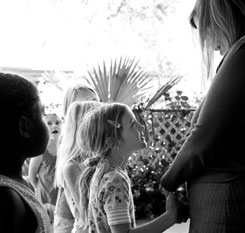
Teacher shaking hands with students at the classroom door
Credit: Bart Nagel

This how-to article accompanies the feature "Waldorf-Inspired Public Schools Are on the Rise."

Waldorf can appear to be a mystifying educational method that doesn't connect to traditional practices. Still, there are aspects of this educational philosophy, used to engage students, that can be applied to any classroom. Here are six suggestions:

  1. 1. Greet. Shake each student's hand, and make eye contact as each enters class. This strategy allows the teacher to check in on each student at the start of the day. Students will line up at the door, eager for a one-on-one moment with the teacher.

  2. 2. Relate. Create a buddy system with students in an older grade. The cross-age pals at the John Morse Waldorf Methods School meet once a month to learn about building solid relationships with both younger and older students.

  3. 3. Draw. Let students illustrate their own workbooks. Having students draw out math and reading lessons is a great way to integrate art into the curriculum. The students will take pride in their books, and learn in a new way.

  4. 4. Plant. Get students outside through nature walks and gardening. Weekly nature walks in a local park or natural area will become science lessons as the teacher answers students questions about the natural world. A school garden can allow students to connect with nature and learn how plants grow.

  5. 5. Play. Practice musical instruments during class transitions. Give each student a recorder, and have the whole class follow the teacher by playing a few notes at class breaks. The students will enjoy mixing short music lessons into everyday learning.

  6. 6. Move. Allow kids to be active during lessons. Moving can be a great way to help kinesthetic learners. Your whole class will enjoy getting out of their chairs to do physical activities such as stomping their feet and counting out numbers to begin learning multiplication.
Malaika Costello-Dougherty is a senior editor at Edutopia.

This article originally published on 8/31/2009

see more see less

Comments (13)

Comment RSS
Deborah White (not verified)

Teacher in Public School System

Was this helpful?
0

I read the article on Waldorf schools and am so excited to use some of the methods in my classroom. I am currently a first grade substitute teacher who just received a master's degree in literacy. There are so many rules placed on teachers and students in my district that stifle their individuality and creativity. I try to make my classroom feel like home to my students, however I feel like I have to adhere to certain behavior rules that eliminate that feeling. For instance, when on the playground students are told not to pick up pinecones and play with them. However I allow them to pick them up observe them, and bring them into the classroom for our science center. Any suggestions for my current situation would be welcomed.
Thank You
Deborah White
Elementary Teacher

Former senior editor at Edutopia.

Staff comment:

Was this helpful?
0

Staff comment:

Hi Patricia,

Thanks so much for taking the time to write a comment. I'm sure other users would love to know your tips on the Montessori method. Please consider writing up a few tips in the comments, or feel free to email me at malaika.costello-dougherty@edutopia.org.

Thank you,

Malaika Costello-Dougherty
Senior Editor

Patricia Lounibos (not verified)

In regards to: Waldorf Methods to Use in Your Classroom

Was this helpful?
0

I am glad to see that someone has tried to demystify some of the mystique around the Waldorf philosophy. As a Montessorian educator I have been trying to do the same for this philosophy as well. Reggio Emilio, Waldorf, and Montessori philosophies share similar qualities that many educators can benefit by integrating into their everyday methods. This small article is a wonderful start. I would love to share some insight into the Montessori methods that might help in this way.

see more see less