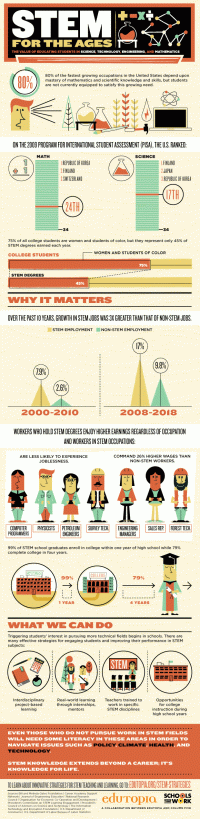
Knowledge in science, technology, engineering, and math (STEM) can be the key to a successful future. Here's why a STEM education matters and how you can inspire students to pursue STEM careers.
By Edutopia Staff
Knowledge in science, technology, engineering, and math (STEM) can be the key to a successful future. Here's why a STEM education matters and how you can inspire students to pursue STEM careers.
Hi Christi - We're delighted you find this infographic helpful. You are more than welcome to share it using any of the share buttons at the top of the page, or feel free to print it and share it the "old fashioned" way!
I teach remedial high school and night trades school math, primarily. What Christi said.
85% of G1-6 teacher are women with low proficiency in math and numbers theory. That's just a simple fact. The are wonderful teachers, but can only 'teach to the text' in math, which is colossally boring to students, who need imaginative framing and immediate correctional feedback to acquire.
By the time they get to HS, there is an elite cadre of math performers who will settle quickly and pop out calculus problems all period, however they acquired that skill, ...and the rest are 24 miles behind, just like in a marathon, just like in life. It's too late by HS for STEM.
The conclusion is undeniable and irredeemable. We don't need more STEM HS teachers! We need greater math fluency in our teachers at elementary and especially MS levels, but because students are elementary - MS in their mental development, we need imaginative STEM skills at the appropriate grade equivalent, NOT mass rote learning, not South Korea.
This poster...I need a copy! This graphic helps show what so many are trying to say. I am twenty-five years into my public school education gig and our system of trying to do/teach TOO many things...well it isn't working. If children don't have "peak" experiences with numbers in the primary years--they are essentially lost. We've got to focus people!
Edutopia's Schools That Work series profiles K-12 schools, districts, and programs that are dramatically improving the way students learn. Focusing on evidenced-based successes, we create how-to videos and actionable tip lists to help you transform your schools. We get close to the teachers, students, principals, and other administrators who have changed the future of their schools, and show you how they did it.
These educators also share their resources -- rubrics, lesson plans, assessments, and training tools that will help you build your own successes.
And one more thing: We connect you with teachers and administrators from around the country who are collaborating to make similar improvements in education.
Comments (4)
Comment RSSSign in or register to post comments
Hi Christi - We're delighted
Hi Christi - We're delighted you find this infographic helpful. You are more than welcome to share it using any of the share buttons at the top of the page, or feel free to print it and share it the "old fashioned" way!
I teach remedial high school
I teach remedial high school and night trades school math, primarily. What Christi said.
85% of G1-6 teacher are women with low proficiency in math and numbers theory. That's just a simple fact. The are wonderful teachers, but can only 'teach to the text' in math, which is colossally boring to students, who need imaginative framing and immediate correctional feedback to acquire.
By the time they get to HS, there is an elite cadre of math performers who will settle quickly and pop out calculus problems all period, however they acquired that skill, ...and the rest are 24 miles behind, just like in a marathon, just like in life. It's too late by HS for STEM.
The conclusion is undeniable and irredeemable. We don't need more STEM HS teachers! We need greater math fluency in our teachers at elementary and especially MS levels, but because students are elementary - MS in their mental development, we need imaginative STEM skills at the appropriate grade equivalent, NOT mass rote learning, not South Korea.
elementary educator, teaching mentor
This poster...I need a copy! This graphic helps show what so many are trying to say. I am twenty-five years into my public school education gig and our system of trying to do/teach TOO many things...well it isn't working. If children don't have "peak" experiences with numbers in the primary years--they are essentially lost. We've got to focus people!