Shark Tale: Learning to Treasure the Ancient, Endangered, and Misunderstood Predator
A traveling marine biologist in a snappy sharkmobile fosters stewardship for the ocean’s fragile ecosystem.
Your content has been saved!
Go to My Saved Content.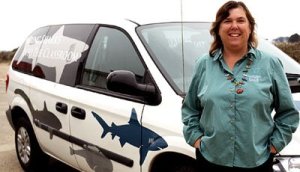
Sharks -- those ancient, widely varied, brilliantly efficient predators, rulers of the aquatic food chain eons before we voracious humans came along -- have fallen on hard times. This is especially so with the largest members of the Selachimorpha family, which have been described as "perfect eating machines." Although most sharks would rather eschew swimmers and surfers than chew them, these extra-ordinary creatures have been cast as villains, which has led to a kind of open-season victimization, so much so that even Peter Benchley -- author of Jaws (the book that, along with the movie it spawned, led to shark slaughter at an unprecedented level) spent the last days of his life vigorously defending the creatures he helped endanger.
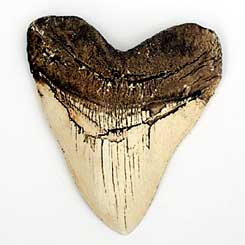
And sharks, an essential part of the oceanic ecosystem dating from 450 million years ago, need all the defending they can get. A recent book, Your Inner Fish, points out that sharks provided the blueprint for human anatomy; it's a good time to show more respect for our ancestors
Enter Jennie Nelson and the Sharkmobile. Nelson is a marine biologist who works with the Gulf of the Farallones National Marine Sanctuary, which is headquartered in San Francisco and covers 1,235 square miles west of the Golden Gate Bridge. In a white, shark-decorated van, she travels to schools all over the San Francisco Bay Area, carrying hands-on materials to show-and-tell the story of sharks to students in grades 4-6.
"I try to give them a sense of stewardship for an ecosystem that's both special and fragile," Nelson says, "and to give a sense of the sharks' importance to that ecosystem. The sanctuary has sixteen species of sharks, and the largest concentration of great whites in the world. In terms of fascination and fear, sharks rank right up there with dinosaurs, so getting their attention isn't difficult."
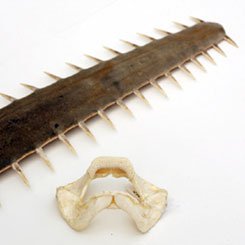
The Sharkmobile program was the brainchild of Carol Preston, education coordinator of the Farallones Sanctuary, who called Nelson in 2004 and asked her to put together a traveling science class. "I carry around a lot of hands-on things related to sharks," she says. "The kids love all that stuff, and the stories I tell about scuba diving and shark history. And they love asking questions."