WHAT WORKS IN EDUCATION The George Lucas Educational Foundation
Facebook
Edutopia on Facebook
Twitter
Edutopia on Twitter
Google+
Edutopia on Google+
Pinterest
Edutopia on Pinterest Follow Me on Pinterest

Log In

Primary links

  • Home
  • About Us
    • A Word from George Lucas
    • Mission and Vision
    • Core Strategies:
      • Overview
      • Comprehensive Assessment
      • Integrated Studies
      • Project-Based Learning
      • Social and Emotional Learning
      • Teacher Development
      • Technology Integration
    • Topics A to Z
  • Browse by Grade Level
    • Grades K-2
    • Grades 3-5
    • Grades 6-8
    • Grades 9-12
  • Schools That Work
  • Schools That Work
    • View All Recent Schools That Work
  • Blogs
    • View All Recent Blogs
    • Administrators
    • Assessment
    • Brain-Based Learning
    • Education Trends
    • Five-Minute Film Festival
    • Game-Based Learning
    • New-Teacher Support
    • Project-Based Learning
    • Social and Emotional Learning
    • Student Engagement
    • Teacher Leadership
    • Technology Integration
  • Videos
    • View All Recent Videos
  • Support Edutopia
  • Classroom Guides
    • View Classroom Guides
  • Quizzes
  • George Lucas on Teacher Appreciation
  • Developing Active Readers
Sign in Join
We share evidence-based K-12 learning strategies that empower you to improve education.

Featured:

School Transformation Through Arts Integration at Bates Middle School
Teacher leading a class in dance with arms outstretched

Featured:

Five Keys to Successful Social and Emotional Learning
  • 1
  • 2
  • 3
  • 4
  • …
  • Next
  • Last

Featured:

How to Thank a Teacher
8

New Technologies Link Ancient Cultures

The First Peoples' Project enables native children around the world to exchange lore and learning online.

By Ken Ellis
The First Peoples' Project enables native children around the world to exchange lore and learning online.

VIDEO: First Peoples' Project: Native Children Distribute Their Cultural Wealth

Running Time: 6 min.

Editor's Note: The Choctaw Tribal Schools no longer participate in the First Peoples' Project. Find out about their past work and other contributions to the project.

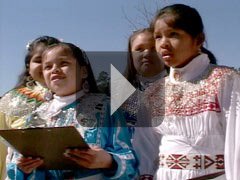
They huddle together on the playground, giggling behind clipboards, shyly rehearsing the interview questions they are about to put to their elders in a jumble of English and Choctaw. "Why did you start chanting?" "What stories did your grandmother tell you?" "What's your favorite Choctaw dance?" For this group of students from Pearl River Elementary School, in Philadelphia, Mississippi, the interviews provide information about their tribe's rich history they won't find in any textbook. Moments after their interviews, the students will present their stories and digital photographs to a global audience, as part of the International Education and Resource Network's (iEARN) First Peoples' Project.

Indigenous students on five continents share their stories, poems, photographs, and artwork, displaying them on the Internet and exchanging packages through the mail once a year. The Mississippi Band of Choctaw Indians, which runs the largest and one of the most tech-savvy tribal school systems in the country, has participated in the First Peoples' Project since its inception in 1997.

"We explored various science projects and a variety of directions to go with iEARN, and our kids felt more comfortable with working with indigenous people," says Choctaw First Peoples' Project coordinator Bob Smith. "This project prods us to research and get the kids working in areas that are significant here at home, like communicating more with their elders."

The First Peoples' Project has spawned the Indigenous Global Art Project and an ongoing humanitarian effort, which has raised thousands of dollars for everything from blankets to scholarships for a school in Thailand. Significant contributions to the fund have come from the Choctaw community, where gaming revenues and other economic initiatives have fueled a school-building boom and the proliferation of technology in the classroom. But "prosperity" presents a new set of challenges. "I don't want kids to stop playing stickball or forget about traditional dancing and cooking, or speaking their own language," says athletic instructor Jason Bell. "I hope we can influence these kids that we need to keep our culture alive for the next generation."

By putting digital stills of their classmates dancing and playing stickball on the First Peoples' Project Web site, these students have learned to use the newest technology to celebrate their timeless culture and share its wisdom with the rest of the world. Back on the playground, the elder smiles as he ponders the fifth grader's question. "My favorite dance? Snake dance. You know how a snake maneuvers around? That's how life is. Life is not always a straight road. That's what the snake dance reminds me of."

The First Peoples' Project (incorporating the Humanitarian Effort), developed by students and teachers at Australia's Bairnsdale Secondary College, is coordinated through Bairnsdale under the auspices of the nation's Department of Education, Employment, and Training, the Global Classroom Project of the Australian state of Victoria, and iEARN Australia.
Ken Ellis is executive producer of Edutopia video.

This article originally published on 6/6/2002

see more see less

Comments (8)

Comment RSS
Sign in or register to post comments
binh
veitnam
Posted on 5/22/2011 7:09pm

both technical and cultural

Was this helpful?
Sign in to vote!
0

both technical and cultural knowledge are integrated in thís method. thí combination helps sts learn both history and technology.

Packed (not verified)
Posted on 4/3/2009 10:30pm

I appreciate them for the

Was this helpful?
Sign in to vote!
0

I appreciate them for the work they are performing.The initiatives have fueled a school-building boom and the proliferation of technology in the classroom. But "prosperity" presents a new set of challenges.

Sean (not verified)
Posted on 4/2/2008 4:58am

New technologies linking indigenous cultures

Was this helpful?
Sign in to vote!
0

What a great idea. Not only does this project help teach tech. literacy, it also helps preserve culture, language, and heritage for generations to come. Moreover, projects like this allow the reader to hear the voices of the people themselves, not just a textbook author's interpretation. It also is connecting indigenous people around the world. I also appreciate the fact that it facilitates dialog between the youth and their elders.

Brenda Montroy (not verified)
Posted on 3/30/2008 11:04am

New technologies linking indigenous cultures

Was this helpful?
Sign in to vote!
0

What a wonderful way to learn more about and keep a person's heritage alive. Not only are they preserving the past, but they are making using of the present day technology and moving forward with the latest in learning methods.

Dave Molnar (not verified)
Posted on 2/24/2008 9:44am

Social studies

Was this helpful?
Sign in to vote!
0

Seems like this approach is as ancient as its subject. Oral History and the notion of storytellers reciting the past is universal and when applied through technology, more far-reaching than ever.

Charlotte Reed (not verified)
Posted on 2/21/2008 10:08am

Technology Link to Cultures

Was this helpful?
Sign in to vote!
0

I think that this was a fine way to expose the youth to technology. I like the fact that the children were learning of their culture, sharing it with others(through technology) and they showed that they care about others. My Dad, who has passed away, told us about his grandmother who was Choctaw. They were from Choctaw County, Mississippi. I would like to know more about this project.

Sherry (not verified)
Posted on 2/20/2008 5:23pm

technology linking ancient cultures

Was this helpful?
Sign in to vote!
0

I especially like the fact that these children are learning to appreciate their culture from the perspective of their grandparents and other relatives, making their realizations all the more meaningful.

Dorothy Donaby (not verified)
Posted on 2/10/2008 6:55pm

personal finance

Was this helpful?
Sign in to vote!
0

I think this was a wonderful project. It is touching when we take the time to look at our past and document those memories and more importantly pass history down. The choice of documentation was invaluable. Sharing the images with other cultures was a way that can create understanding of other cultures.

see more see less

More like this

  • First Peoples' Project: Native Children Distribute Their Cultural Wealth
  • It Takes Many Villages to Make a World: The International Education and Resource Network (iEARN)
  • Go Global Online 2008: More Resources on Educating the Children of the World
  • Edwin Gragert: Bridging Borders, Both Real and Imagined
  • Going Global: Rural Washington Students Connect With the World
Edutopia on Twitter Edutopia on Facebook Edutopia on Pinterest YouTube link Edutopia on Google+ RSS feed link

Sign Up for Our Free Weekly E-newsletter!

Sample | Privacy Policy

Back to Top
Join the movement for change

Get Inspired

  • A Word from George Lucas
  • Mission and Vision
  • Our Strategies for Learning:
    • Comprehensive Assessment
    • Integrated Studies
    • Project-Based Learning
    • Social & Emotional Learning
    • Teacher Development
    • Technology Integration

Support Our Mission

Donate

Find Solutions

  • Browse by Grade Level:
    • K-2
    • 3-5
    • Middle
    • High School
  • Schools That Work
  • Blogs
  • Videos
  • Classroom Guides
  • Quizzes
  • Topics A to Z

Get Our Free Newsletter!

Sign Up

Join the Conversation

  • Facebook
  • Twitter
  • YouTube
  • Google+
  • Pinterest
  • Edutopia Community
  • Sign up for RSS

Connect

Join/Sign In

The Foundation

  • Advertise
  • Contact Us
  • Terms of Use
  • Privacy Policy
Enter for a Chance to Win!Weekly Giveaway: $500 Corwin Press Gift Card
  • EDUTOPIA
  • WHAT WORKS IN EDUCATION
  • © 2013 The George Lucas Educational Foundation
  • All rights reserved.