Cooperative Learning Fits into the Calculation
Master teacher Chris Opitz shares resources for integrating social and emotional learning into math class.
Your content has been saved!
Go to My Saved Content.Skills and understanding in social and emotional learning don't just happen. The ultimate hope is that children come to school with healthy hearts and minds and the skills to communicate and interact effectively. But we all know that this is often not the case. Children come from wildly different backgrounds and experiences, and they bring their diverse skills and struggles to school.
As social, emotional, and academic abilities continue to span a wider spectrum and the pressures of testing and accountability continue to mount, how do teachers ensure that their students are meeting the required standards for the content areas they're covering? In my district, the Anchorage School District, we're implementing SEL standards side by side with traditional content areas.
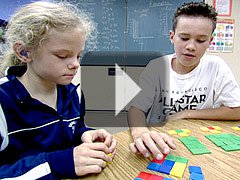
Running Time: 9 min.
When I think about this daunting task, I have to be a realist. Most people I talk with ultimately realize the importance of SEL skills and knowledge but feel overburdened with the sheer amount of content we are expected to teach in a very limited amount of time. A common statement is "If I am to get through these math lessons, or this language arts curriculum, when am I supposed to teach the SEL skills? That's the parents' job."
I understand this position and have had those thoughts myself, but my question becomes "Without SEL skills and knowledge, how can we possibly teach and have students learn effectively?" I believe that social interaction is a key ingredient to productive and efficient learning environments.
With that said, how do we incorporate SEL into our day and into our lessons?
The ideas here are from years of collaboration, professional development, books and journals, research, and experience. This is a culmination of many people's ideas, and to give credit where credit is due is simply impossible. I think it's safe to say the credit goes to teachers who share their knowledge and experience. I've listed the person responsible for specific rubrics whenever possible. This is in no way comprehensive, and it is simply the way I think about SEL.
I have organized my thinking on this topic into five constructs: professional planning and reflection, climate and community, direct instruction, infusion, and student reflection and self-assessment. Of course, these continuously overlap, and at times, it is difficult to speak of one without the other.
For each construct, I've provided a narrative that explains my thinking, along with a list of lesson ideas and possible rubrics. For a few of these ideas, I have included lesson plans, procedures, and rubrics.
This article is excerpted from Chris Opitz's SEL Overall Plan, below.
Chris Opitz is a master teacher at Bowman Elementary School, in Anchorage, Alaska.
Teaching and Self-Evaluation Tools for SEL Standards
Click on any of the titles below to download a PDF of one of Chris Opitz's many resources for incorporating social and emotional learning into academics.
Teaching Tools
Integrating Content and SEL Standards (Blank)
Integrating Content and SEL Standards (Example)
How to Talk to Your Teacher Lesson Plan
The Importance of Noticing Your Students
Developing Our Working Agreements Lesson Plan
Implementing Working Agreements
Teamwork Reflection Evaluation