Teaching with Passion: Advice for Young Educators

Jonathon Kozol talks about building relationships, fostering creativity, and standing up for students.

by Lisa Morehouse

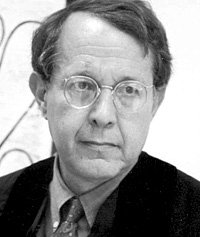
Jonathan Kozol

Jonathan Kozol

Credit: Courtesy of Jonathan Kozol

"'Start out tough and stick to the prescribed curriculum,' new teachers are too frequently advised. This, in my belief, is the worst possible advice. Establishing a chemistry of trust between the children and ourselves is a great deal more important than to charge into the next three chapters of the social studies text or packaged reading system we have been provided: the same one that was used without success by previous instructors and to which the children are anesthetized by now. Entrap them first in fascination. Entrap them in a sense of merriment and hopeful expectations." -- Jonathan Kozol, Letters to a Young Teacher

For more than forty years, Jonathan Kozol has taught in, worked with, and written about America's inner city public schools. His straight talk in best-selling books such as Savage Inequalities and Amazing Grace has made him a hero of many teachers, and he fiercely opposes government policies he believes perpetuate educational inequities.

In his newest book, Letters to a Young Teacher, Kozol takes aim at the test-driven curriculum proliferating our educational system. Through a series of personal letters to Francesca, a fledgling first-grade teacher in Boston who invited him into her classroom, Kozol delivers sage advice, sharp criticism of the status quo, and stories of his own early teaching experiences. As Publishers Weekly remarked, it is "an impassioned book, not only for what it imparts of classroom doings, but even more so for the obstacles increasingly being laid at teachers' hands."

These obstacles provided the platform for Kozol's talks at the New Teacher Center Symposium, held in San Jose, California, in February 2008. In his keynote speech and a follow-up session, Kozol frequently touched on the "mystical chemistry between students and teacher" he witnessed in Francesca's classroom. He also seized the opportunity to opine on what he considers two of the biggest problems facing public schools today: staggering attrition rates among new teachers and the rigid instructional methods many schools employ because of federal No Child Left Behind legislation. Passionate, committed educators can attack inequity, he said, and he offered his audience of nearly 1,100 teachers, mentors, school leaders, and researchers advice for building relationships, fostering creativity, and standing up for their students.

"Fifty percent of young teachers in inner city schools leave within the first three years. That's twice the rate of the nation," Kozol pointed out, revealing last year's findings from the National Education Association, which warned of a nationwide shortage of 3.9 million teachers by 2014. But Kozol noted that most of these new teachers don't blame students or scapegoat parents for why they leave the job: "They love the kids. They cry when they say good-bye."

Why Teachers Leave

Why do new teachers, especially those in high-needs schools, leave? Kozol cited two familiar reasons: working conditions and a test-crazed education culture: "They speak of the lack of structure, of emotional support from real teachers in their own profession." He dismissed the reliance of many school districts on so-called "experts dispensing professional development from the outside."

Kozol underscored the importance of collegial relationships among teachers at the same school, which corresponds with the advice he gives in his book that new teachers seek out experienced educators on the staff, even if their pedagogy seems to differ. In , he chastises first-year teachers who "look upon the veteran teachers in their schools as unsophisticated or not innovative."

Kozol adds this about the best veteran teachers: "[They] bring a sense of personal stability and of assimilated selflessness into a faculty, as well as all the nuts and bolts of classroom management and of the good instructional approaches they've acquired. Many also can help first-year teachers in developing relationships with parents in the neighborhood. Sometimes they've known three generations of the families who've passed through the school and can enrich young teachers with an understanding of the history of lived experience in the communities they serve."

The second reason new teachers leave the system, Kozol reported, is that they're "driven nuts" by the "miserable mania of obsessive testing being forced on these kids from No Child Left Behind." Kozol is urging U.S. senator Edward Kennedy to write a new education bill that holds states accountable for providing teachers and students with the real resources it takes to educate poor children.

In his San Jose talks, he argued vigorously against rote tests he deems "not diagnostic, not useful," and "a retroactive label of success or failure." Kozol warned against scripted curricula, which have predetermined the questions teachers are meant to ask and the answers students are supposed to give. "Pity the one maverick student with a different answer!" he quipped. He also dismissed curriculum-pacing guides, which leave no room for students to ask questions or tell stories in the meandering sentences that mark childhood. "Good teachers know that sometimes at the end of these sentences are treasures," Kozol observed. And such educators use those treasures to engage and teach. "But in today's climate, the teacher is under pressure. There's no time," he lamented, adding that students' stories are too often cut short.

Teaching well, he claimed, takes "moral and ethical bravado." But Kozol did not suggest that educators ignore testing and run their classes with no compass. Instead, he offered specific advice to new teachers who want to work outside a test-driven curriculum: Make sure students achieve, and maintain a calm classroom.

"If you're going to defy some of this Adequate Yearly Progress madness, you've got to be really good at what you're doing," Kozol said, insisting that principals and superintendents want to keep teachers who ensure that their students achieve. "If you're going to introduce healthy, irreverent merriment, you've got to deliver the goods some way," he pointed out. "If you reject phonics, you have to make sure you teach kids to read. It's not enough to say they're happy. You have to have really high expectations of them."

The Best Defense

Kozol argued that new teachers need to protect principals such as Francesca's, who supported her creativity, by not creating disorder in the classroom. "The best teachers do this not by shouting but by winning the affection of the kids so they don't want to make things hard," he said. "Then parents say good things to the principal, and that's the best defense."

Kozol suggested that teachers can use the time they save by leaving behind the scripted curriculum to delve deeply into great literature and encourage young learners' love of language. That's what he witnessed with Francesca. This woman, Kozol makes clear, is a wonderful new teacher. When he arrived in her classroom, she immediately put him to work. He spoke with a certain reverence about her class, which he described as "a piece of poetry, lyrical and lovely."

Francesca, he said, hadn't bought into the evangelism of certain reading instructional camps, but taught her first graders phonics through classic children's literature, such as The Hungry Caterpillar and Goodnight Moon, plus contemporary writing that reflected the ethnic backgrounds of her students, as well as adult poems from William Butler Yeats and Rainer Maria Rilke.

"Politicians believe that ruthless phonics will cure all ills of society," Kozol said. Because of this, educators will not universally accept Francesca's way of teaching. Kozol knows first-hand about teaching against the grain. In the mid-1960s, he was fired from his job in Boston's Roxbury neighborhood for reading a Langston Hughes poem in class. His dismissal, and the state of the city's segregated schools, inspired civil rights groups and normal citizens to protest.

"You're going to need a big dose of mischievous irreverence if you want to survive with your soul intact," Kozol said. "It takes bravery to do what Francesca did." According to Kozol, it's this type of bravery, plus attention to rigor and joy in the classroom, that new teachers and our public schools need.

For the development of new teachers, Kozol suggested showing them models of high-quality, exciting learning environments. "I would try to see if it's possible logistically to bring new teachers at high-needs schools to observe in the most successful, enlightened, nonscripted, non-test-driven, wealthy school districts," he said. "Let them see a different world." Having witnessed the contrasting environment of well-supported schools, Kozol believes these new teachers will be emboldened to "see themselves not just as skilled practitioners but also as warriors for justice. If they won't speak out for their kids, who will?"

Lisa Morehouse taught secondary English for twelve years in San Francisco and rural Georgia. She is now a public-radio journalist and an education consultant.

This article originally published on 3/25/2008


The craft of teaching

Submitted by Andrea Williams (not verified) on May 8, 2008 - 23:13.

Being a former student of Lisa Morehouse, in which I too will become a High School teacher soon I strongly believe that variety of different tactics to engage your students to be more passionate about learning is the way to go. I've been told that teachers are required to stick to a strict teaching plan (I'm not sure of the truth to this) but I have witnessed instances where there is little room for teachers to free style, to teach in more modern, interesting ways that may appeal to the students.
I just hope that when I become a teacher, I can have space to do my job. that is, not only to teach but to broaden my kids thinking and to give them tools to become passionate or in the less interested.

Utopia Fades: Young Teachers Decide One Job is Enough

Submitted by John Michener, San Diego (not verified) on April 30, 2008 - 22:48.

Having been educators, both Kozol and Morehouse know what it takes to be successful in the classroom. So, why is it shocking that teachers in inner cities are leaving? While I agree that added stress (“just get through the curriculum for the test”) caused by factors such as NCLB is probably a major factor in teacher attrition, it is the OVERALL climate of inner city schools that makes 50 percent throw in the towel.

Most aspiring, rookie, and veteran teachers have the same vision (even more so in the inner city); to educate thus empower youth to break various family and societal cycles. Call it a realistic Utopia. Yes, we love our kids, but witnessing the other life obstacles our 150-200 students have each year can become overwhelming. Now, add “a test-crazed education culture” and stir.

Beginning teachers that leave decide that they can only mentally handle one job or role. They decide being a Social Worker, Teacher, Father, Brother, Friend, Credit Counselor, Lawyer, Banker, Loan Officer, Nurse, Counselor, Secretary, Police Officer, and Transportation Manager is a little bit more than they bargained for.

Thankfully, many of us are still realistically striving for an edutopia.

Chemistry of trust is very important

Submitted by Leo Lopez (not verified) on April 30, 2008 - 17:51.

I cannot agree more with this article than I already do. We are told as students at our university and as new teachers “stick to the curriculum!” We are forced to take classes on lesson planning and more lesson planning. It wasn’t until I had a psychology course for teachers that the professor explained that “if you think 50 Cent is 2 quarters, M&M (Eminem) is a candy coated chocolate, and Pink is a color then you will not have their attention.” These individuals, positive or negative, play an important role in the lives of kids today. If we want them to respect what we believe in, we need to respect their choice in music, sport, television, etc. It is the steps towards making a connection with a student. This is how we begin establishing a “chemistry of trust.” Going to the Friday night football game to watch your students play in the big game against the rival school; going to the play that a student is starring in; going to the Division basketball championship game that some of your students play in; these are very important events in the lives of students and if they see that it is important to you as well, the teacher is now seen as a person. I also work at a small school that is part of a big complex. The complex student population size is 3,000, but each small school has approximately 500 students. I believe that, because of the smaller school size and smaller class sizes’, building a more personable bond with students was easier which in turn has raised our test scores and attendance rates.

Important changes for education

Submitted by Jon Rex (not verified) on April 29, 2008 - 10:41.

I believe some of the methods used in education are working and some are not. I work in a small school (450 students) that was once part of a large school (2000 students). I feel what we are accomplishing with our students has overall been very positive. Our list of seniors going to a four-year university and community college grows every year. We get to have close relationships with our students at our school, which I feel has helped students become successful by the time they graduate – along with the fact that we help the struggling students make it to graduation where at larger schools, they may drop out. I feel most schools in the nation need to make a couple of key changes in the future: I would like to see most class sizes reduced to about 20 students – if K-12 students could have smaller class sizes, I believe the learning would be much better for students. I find large classes very difficult to manage and teach to every student – I know a number of my students need more one-on-one assistance, but with a large class, this is difficult to accomplish. The second thing I feel schools could benefit from is having the best teachers in lower performing schools. If we can have the best of the best teaching struggling students (and getting paid well for doing it) then there would likely be more students making it to their high school graduation. Our country needs to keep exploring new ways of teaching to reach our youth if we want to stay competitive in our global world.

Student/Teacher Communication

Submitted by Flynn (not verified) on April 28, 2008 - 10:34.

The, “Mystical connection between students and teacher,” is the one phrase that really stood out to me. How do we make this happen? I think we as teachers need to show confidence in our students the first day of class. Before any walls are built, we need to tell them that they are talented and that they can do what is asked of them.

I like to find out what students interests are and find a way to apply them in projects. I think by including their interests, the students take ownership of any assigned project. This is very important to me because the students’ work improves. If they feel that it is theirs pride begins to take over. No one likes to present something poor in quality.

Finally, I need to get to know each student. By doing this the students get to know me and my expectations of them.

Significant Relationships: Advice for School Boards

Submitted by Raymond Mello/s\San Diego Unitified School District (not verified) on April 27, 2008 - 17:54.

I have to ask (Ms. Morehouse) what was the point of her article? Was it to answer Jonathan Kozol’s rhetorical question, why do new teachers leave our schools in his newest book, "Letters to a Young Teacher," or was it to bash the NCLB legislation and “test-driven” curriculum? I do not think new teacher attrition rates are high because of legislated rigid instructional methods and contrary to Ms. Morehouse’s thinking my research leads me to believe new teachers leave because of the lack of commitment by school boards who are unwilling to award new teachers long-term school-specific contracts.

School boards across the country on one hand cry out for new teachers then summarily discard them every June with no promise to rehire them in September. What do you do in the summer without a contract for the fall? How do you commit to a community if the community cannot commit to you? You can’t sign a long term rental lease or loan application because your employer cannot commit to hiring you back in the fall? One teacher writes, "I feel like I am beaten down and I have to keep getting up over and over again. But the bottom line is that I made a commitment to the city and to this program. I adore these children, and I love this enough that I am in it for the long haul." How can you begin to “establish a chemistry of trust between the children and ourselves,” as Jonathan Kozol preaches, if you don’t know if you will return to your school in the fall or if you will even return at all? If new teachers are in it for the long haul why aren’t school districts awarding long-term school-specific contracts to new teachers? Tell me, how can significant learning occur if there are no significant relationships?

Make sure students achieve

Submitted by Patte (not verified) on April 23, 2008 - 15:48.

Kozol advice: “Make sure students achieve, and maintain a calm classroom.” Interesting advice to be sure. How does one insure that students are achieving except via an assessment? Standardized tests have a very bad reputation with educators. Is it because our tests are poor assessments of learning, are they assessing the wrong things or assessing students in the wrong way? To ‘make sure students achieve’ there must be some form of assessment. Society is telling us that our students do not have the skills necessary to succeed in the workplace. Skills such as basic reading, writing and math. We must ‘make sure students achieve’ these skills and figure out some way to assess those skills so our schools will once again be respected as institutions of learning.

New Teachers New Experiences

Submitted by Winnona Dancy (not verified) on April 23, 2008 - 10:52.

I agree with Jonathon Kozol. Be different. This concept gives a license for teachers to show students that the traditional can be evaluated and updated. Who wants to be in a class or school where the main purpose is taking test? What exactly do test measure besides regurgitating information that has been forced on students for comprehension? It is possible to know valuable information without the need of being tested to the extremes.

New teachers need to understand that students need to have a relationship with them. Students are at school at least 180 days a year. They need the teacher to make learning a pleasant and exciting experience.

New teachers need to understand that their input is important. They must learn to tolerate what they think is antiquated and respond with solutions to make the experience more appealing to the climate of the school.

Being limited by a curriculum

Submitted by Jacob m. (not verified) on April 13, 2008 - 12:16.

As an education major, this is one of my concerns. Being limited by a curriculum is not how I would like to start my career, and I constantly hear how NCLB affects the spirits of educators. This article should be motivation to bend the rules a bit, for the benefit of the students.

I support standardized testing

Submitted by Anonymous (not verified) on March 27, 2008 - 15:13.

I support standardized testing. I left teaching because I was fed up with the frustrations of working in a school system where almost no one seems to care if the students learn anything.
Standardized testing may be the only way to make administrators and certain teachers give education the prioritiy it deserves.

Post new comment

Share your thoughts on this story. Please increase the credibility of your post by including your name and city, and by demonstrating respect for others' opinions. Comments will not appear immediately; all comments are moderated and will be posted in order of submission.

The content of this field is kept private and will not be shown publicly.
  • Allowed HTML tags: <a> <em> <strong> <cite> <code> <ul> <ol> <li> <dl> <dt> <dd>
  • Lines and paragraphs break automatically.

More information about formatting options