Forget the Facts. Can You Learn?: Preparing Students for Future Learning

Grasping big concepts first leads to understanding the facts.

by Grace Rubenstein

Assessment: Reinventing the Big Test

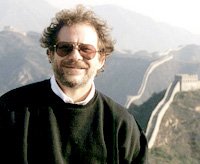
John Bransford

Researchers at Seattle's University of Washington are creating a new kind of assessment that would turn our age-old ideas about learning on their head.

Contrary to popular belief, says project leader John Bransford, learning basic facts is not a prerequisite for creative thinking and problem solving -- it's the other way around. Once you grasp the big concepts around a subject, good thinking will lead you to the important facts. So, along with colleagues at the university's Learning in Informal and Formal Environments (LIFE) Center, a laboratory sponsored by the National Science Foundation, Bransford is building assessments of what he calls "preparation for future learning."

"What we want to assess is how well prepared people are to learn new things in a nonsequestered environment where they have access to technology tools and social networks," says Bransford. Compared to typical standardized tests, for which seeking new information would be considered cheating, he says this model is "way more motivating, much more interesting for students, and much more valid in terms of what people really need to do when they get out of school."

Assessment: Reinventing the Big Test

Virtual Evaluation:

These avatars represent a virtual couple for whom students will provide genetic counseling in Bransford's Preparation for Future Learning assessment. Test-takers will deal with a series of increasingly difficult cases that allow dynamic assessments along the way.

Credit: Courtesy of John Bransford

In the computer-based tests, students are presented with complex problems that might have more than one good solution. One test challenges students to assume the role of animal-endangerment expert, fielding questions from fictitious clients around the world about how to protect local species. Another makes them virtual genetic counselors, dispensing advice to couples about potential risks to their children. They need enough conceptual knowledge to decide what kinds of questions to ask, then they search the Web for information and create whatever charts or diagrams will help them meet the challenge. Scoring is done with rubrics.

Fully realized, this kind of assessment would be linked with curriculum. Rather than moving along a metaphorical conveyor belt from one lesson to the next, Bransford says, students would spend time developing expertise in a subject. Through repeated challenges, they'd build up strategies and resources over time, just as a worker would on the job.

The researchers are trying out the test now with students in North Carolina and Washington State; they aim to have a prototype science test ready by the end of this school year.

This article was also published in Edutopia Magazine, April 2008


Misleading title--Forget the Facts

Submitted by Vanessa Svihla (not verified) on April 18, 2008 - 09:35.

As one of the researchers involved in the initiative, I was dismayed by the title. We are in NO WAY saying that factual knowledge is unimportant. Historically, factual knowledge has been privileged above other knowledge and skills because it is the easiest thing to measure. However, we are now at a point in time that we may realize the affordances of technology; namely, we may measure more complex uses of factual and conceptual knowledge and skills, and we may begin integrating learning and assessment. This allows us to critique the “inventory model” of assessment. Stores used to close for one or two days to complete inventory, losing valuable time, but technology has largely made such practices a thing of the past. Currently, assessment follows this old model: students lose valuable learning time so that they may be measured.

It is critical to point out that we do not think that facts are unimportant! However, we do think that getting information about what students can do with facts is more informative to their educators and future employers.

Forget the Facts, Can You Learn?

Submitted by John Bransford (not verified) on April 18, 2008 - 07:30.

The writer did a wonderful job on these articles. In the one about work at UW entitled "forget the facts", I hope people interpret "forget the facts" as tongue in cheek. Research in the learning sciences shows that people need rich bodies of connected knowledge as a foundation for thinking and new learning. I think the writer meant to convey that having foundational knowledge of various disciplines is not the same as knowing all the specific and often-changing facts connected with those disciplines. In a fast changing world, foundational knowledge allows us to ask the right kinds of questions and do the relevant inquiry that enable us to find the newest facts (e.g. about genetics, ecosystems, etc.).

The preparation for future learning assessments are design to see how prepared people are to continue to learn throughout their lifetimes. The ability to continue to learn is in no way "knowledge free". It requires a deep understanding of disciplines so that the right questions can be asked and new knowledge can be found.

Post new comment

Share your thoughts on this story. Please increase the credibility of your post by including your name and city, and by demonstrating respect for others' opinions. Comments will not appear immediately; all comments are moderated and will be posted in order of submission.

The content of this field is kept private and will not be shown publicly.
  • Allowed HTML tags: <a> <em> <strong> <cite> <code> <ul> <ol> <li> <dl> <dt> <dd>
  • Lines and paragraphs break automatically.

More information about formatting options