- Critical Thinking
Scaffolding the Process of Moving From Reading a Text to Analyzing It
This three-step process uses thinking routines from Project Zero to guide high school students to begin writing an argumentative or analytical essay.119Your content has been saved!
Go to My Saved Content. - Literacy
Podcast: Why You Should Still Read Aloud to Middle and High School Students
A high school English teacher makes the case for how reading aloud can be a transformative academic practice for older students.
Your content has been saved!
Go to My Saved Content. - Technology Integration
Preserving Tech’s Benefits in a Paper-Forward Classroom
Returning to paper doesn’t have to mean abandoning the digital supports that can help your students thrive.138Your content has been saved!
Go to My Saved Content. - Brain-Based Learning
4 Simple Ways to Bring the Science of Learning Into Your Classroom
Everyday routines do more to support learning when they’re aligned with how the brain works—from reducing cognitive load to strengthening memory.Your content has been saved!
Go to My Saved Content. - Project-Based Learning (PBL)
Using Project-Based Learning to Teach Students How Local Government Works
High school students can develop their own community policies to learn how the legislative branch of government functions.136Your content has been saved!
Go to My Saved Content. - Media Literacy
5 Ways to Teach Students How to Read Diagrams—Not Just Look at Them
Visual literacy isn’t an innate skill. It must be explicitly taught and reinforced, according to teachers and researchers.196Your content has been saved!
Go to My Saved Content. - Teaching Strategies
How to Teach Better Executive Function Skills to Middle School Students
Navigating the middle grades requires organizational and planning skills that most young teens haven’t mastered yet. Here’s how teachers can help. - School Culture
5 Ways to Make Gratitude a Classroom Habit
These simple classroom activities can help students practice gratitude year-round, strengthen relationships, and build a more supportive classroom community.1.2kYour content has been saved!
Go to My Saved Content. - Teaching Strategies
8 Ways to Get Better at Managing Classroom Timing
Every minute of instructional time counts. Here are eight ways to maximize classroom timing without rushing through or skipping material. - Student Engagement
When ‘This Is Hard’ Becomes ‘I Can’t Do It’
If students internalize the idea that difficulty means they aren’t capable of doing work, it can impact their motivation. This three-step process encourages them to persist.










- Social & Emotional Learning (SEL)
3 Ways to Make Your Secondary Classroom a Place Where Students Can Thrive
After asking, ‘How do I get this student to engage?’ teachers can go on to ask, ‘What kind of classroom would make them want to?’ - Research
The Surprising Power of Brain Breaks (in 5 Charts)
Well-timed breaks aren’t a detour from learning. Research shows they can restore focus, curb off-task behavior, and help new learning stick. - Classroom Management
Podcast: Move Like You Mean It: How to Circulate Through Your Classroom
Amir Taron Ayres explores how moving through your classroom can uncover misunderstandings, guide instruction, and bring promising student ideas to light.
28.2kYour content has been saved!
Go to My Saved Content. - Student Engagement
4 Techniques That Engage the Entire Classroom
The authors of the book ‘Total Participation Techniques’ share activities that can make 100 percent participation possible. - Student Engagement
Teaching Students to Reset Their Brains for Independent Reading
Even when phones are removed from classrooms, students may feel restless and fidgety, so a teacher developed this simple reading-readiness routine.




- Technology Integration
Adapting Instruction as 1:1 Technology Access Shrinks
When students have less access to individual devices, teachers can combine print and digital resources to keep learning engaging. - Student Engagement
Teaching Students to Reset Their Brains for Independent Reading
Even when phones are removed from classrooms, students may feel restless and fidgety, so a teacher developed this simple reading-readiness routine. - AI in Education
Using AI to Generate Multiple Means of Representation From One Resource
Providing multiple paths for students to access course content is a tenet of Universal Design for Learning, and AI tools make that possible in a short amount of time.820Your content has been saved!
Go to My Saved Content. - Technology Integration
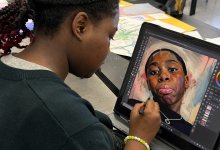
Facilitating Students’ Artistic Expression With Digital Self-Portraits
This project guides high school students to explore artists’ use of texture, color, and abstract forms.4.1kYour content has been saved!
Go to My Saved Content. - Media Literacy
3 Habits Students Can Develop to Find Credible Online Resources
As students become more acquainted with social media and AI, these habits can help them distinguish credible sources from misinformation.15.4kYour content has been saved!
Go to My Saved Content.



- English Language Learners
Looking Beyond Grades for Signs of Multilingual Students’ Progress
Taking participation, oral language expansion, and academic risk-taking into consideration can give teachers a broad sense of students’ growth. - English Language Learners
How to Determine a Multilingual Student’s Proficiency With Academic English
English learners who understand an academic concept may still struggle to articulate their understanding, and these scaffolds can help.11.8kYour content has been saved!
Go to My Saved Content. - English Language Learners
Schoolwide Support for Multilingual Learners
School leaders have a key role to play in ensuring that all teachers are able to deliver instruction that promotes multilingual students’ growth.3.2kYour content has been saved!
Go to My Saved Content. - English Language Learners
Helping Multilingual Students Adjust to a New High School
Teachers can positively impact five factors that contribute to students’ sense of belonging: support networks, language, participation opportunities, safety, and recognition.2.9kYour content has been saved!
Go to My Saved Content. - English Language Learners
8 Ways to Help English Learners Improve Their Digital Fluency
The fact that software applications have common functions in different formats may not be obvious to students also navigating a new language, and these scaffolds can help.2.7kYour content has been saved!
Go to My Saved Content.





- Administration & Leadership
What Can School Leaders Do to Support a Struggling Teacher?
Teachers often feel alone facing an issue in the classroom, and maintaining lots of points of contact can help them open the door to offers of support.8.7kYour content has been saved!
Go to My Saved Content. - Administration & Leadership
Adjusting Your Evaluation Framework to Nurture Teachers’ Growth
Evaluations often act as a rearview mirror, but teachers need a GPS: feedback that focuses on next steps and guides instructional adjustments.3kYour content has been saved!
Go to My Saved Content. - Instructional Coaching
Supporting Teacher Growth Through Trusting Relationships
An assistant principal considers two things when coaching a teacher—the visible elements of the lesson and the invisible element of the teacher’s mindset.7kYour content has been saved!
Go to My Saved Content. - Literacy
How to Successfully Implement High-Quality Instructional Materials
As more schools adopt the science of reading, it’s important for teachers to be supported in working to improve students’ literacy skills.3.8kYour content has been saved!
Go to My Saved Content. - Instructional Coaching
Streamlining Instructional Coaching With Tech for Systemwide Change
With the right tools, you can elevate coaching from an individual practice and turn it into a school improvement engine.1.8kYour content has been saved!
Go to My Saved Content.