What Works in Public Education

Telling Tales: Pakistani Students Share Their Culture's Lore Online

Students create a collaborative, international network of fables and folktales that celebrates and shares cultural heritage.

by Saleem Ibrahim

Print Forward Share Comments(33) Comment RSS
Pakistan

As the World Learns | Austria | Bulgaria | Canada | Chile | India | Japan | New Zealand | Pakistan | Room to Read | Russia | Sweden | Uganda | More Edutopia Resources
Global Learning: Telling Tales
Credit: Saleem Ibrahim

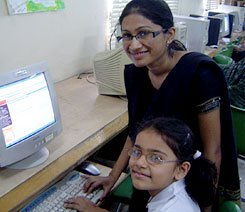
Ayesah, a seven-year-old student in Karachi, Pakistan, clicks a link with her computer mouse and enters her username and password to open a page. She clicks Projects, then Language Arts, then Folk Tale, and finally the discussion window: Folk Tales from Pakistan. On the screen appear short folktales posted by Ayesah and her fellow students, who look on. Their faces brighten as they read responses to the folktale they posted the day before. From the other side of the globe, a student has sent a note of appreciation for their writing and shared her views on the story. In many schools in many countries, similar scenes play out.

These Pakistani students and their teachers are participating in the online collaborative project called Folk Tales, organized by iEARN (the International Education and Resource Network), a nonprofit organization of 25,000 schools and youth organizations and 1 million students in more than 120 countries. The group helps teachers and young people work together online using the Internet and other communication technologies.

One-hundred-fifty iEARN projects, designed and facilitated by teachers and students to fit their curriculum and classroom needs, create an extraordinary international network. To join, participants select an online project and look at how they can integrate it into their schools. Teachers and students enter online forum spaces to meet one another and get involved in ongoing projects with classrooms around the world.

global education resources

The Folk Tales project is an exchange of the lore and fables that are a part of every culture, a sharing of the storytelling that is a centuries-old tradition in many societies. In a sense, the idea is a digital re-creation of the way stories were passed along by caravans and travelers taking goods to and from India and Central Asia along the old Silk Road. (In the real, analog world, in Peshawar, Pakistan, a city on the Afghan border, there still exists a place called Qisa Khawani Bazaar, a name that means "market of storytelling.")

Reviving Riches

In a modern childhood world, populated by Barbie and Harry Potter (not together, of course), schoolkids often know very little about the folktales of their own country and almost nothing about those from other parts of the world. And yet these old stories remain a rich source of learning about life's problems, customs, traditions, and beliefs. The iEARN Folk Tales project creates a new market of storytelling to revive not only the stories but also the shared experiences and learning they offer.

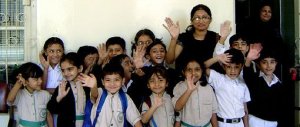
Osama, a student in Ayesah's class, talks about a crucial by-product of the project. "I like listening to the tales and then rewriting them," Osama says. "I also share them with my mother. Before this, I'd never written these kinds of stories."
Global Learning: Telling Tales
Credit: Saleem Ibrahim

Active involvement in the project offers a chance for real communication with a real audience that results in better understanding of other cultures, respect for others' ideas, tolerance, awareness of global issues, and improvement in language proficiency. Resources for teachers, including lesson plans, are provided on the project's online forum. Teachers can use these resources, share their experiences with other teachers, and discuss related issues.

The iEARN Folk Tales project enables students to go global using the Internet, sharing their ideas with students from around the world. Just as important, it gives opportunities for reflection on the lessons and morals of local and national folktales, stories told down through the generations as a way to pass along lessons that still have much to teach students today.

Saleem Ibrahim is senior program officer for iEARN-Pakistan, in Karachi.

As the World Learns > Room to Read

This article was also published in the Feb 2008: Global Education issue of Edutopia magazine .

Advertisement

@edutopia on Twitter Edutopia on Facebook YouTube link RSS feed link

Advertisement

Reader Comments

0
was this helpful?
Farah Kamal
Posted on 1/21/2008 9:29am

Great Article

Dear Saleem,

Great article and the reference to the local culture.
I hope more and more classroom around the world joins this project and exchange the rich culture everyone have to share.

Good luck

Farah

0
was this helpful?
Adeeqa Nazir
Posted on 1/21/2008 9:37pm

comments..

Hi..
I have gone through this article ..it is a great work and a very good article..
i really liked it..

0
was this helpful?
Saima Shauket
Posted on 1/21/2008 10:19pm

Dear Mr. Saleem
The idea of the project is really great and attractive for the students as well as teachers. I initiated the project in a school this week and found my students pretty excited about this. They are busy working on their stories to share in the forum. I found this helpful in integrating language, Computer Studies and Arts. It is an effective way of conserving our beautiful and diverse culture.

0
was this helpful?
Durdana
Posted on 1/21/2008 10:51pm

Congratulation

Dear Saleem,
Congratulations
It is a wonderful article. My student had also posted in FolkTales and I wish that in future more students will participate in this Project.
Regards
Durdana

0
was this helpful?
Durdana Shaheen
Posted on 1/21/2008 11:03pm

Congratulations

Dear Saleem,
Congratulations
It is a wonderful article. My student had also posted in Folk Tales. I wish you best of luck. In Future more students will participate in this project.
Durdana Shaheen ,
Fauji Foundation School System.

0
was this helpful?
Naimat Ullah Khan
Posted on 1/21/2008 11:36pm

Congratualation on reviving the old tradition with new media

Dear Saleem Sahib,

It is a fantastic project, well done. iEARN should be proud of you!. This exceptional article tells us how we can use the new media to revive our cultural values and share these values in our little Global Village.

congratulations to farah for having such excellent staff.

0
was this helpful?
Amani Amer
Posted on 1/22/2008 12:24am

Dear Saleem,
I enjoyed reading your article, it's wonderful! Hope to join this lovely project soon.

Regards,
Amani Amer
iEARN Bahrain

0
was this helpful?
Sobia Alam
Posted on 1/22/2008 12:28am

Good work!

I am so glad to read a true picture portrayed in the article of a Pakistani classroom. The twinkle in the eyes of these young learners is something that a teacher may cherish for a long time.

It is an effective mode of sharing about different cultures and traditions.

Keep up the good work!

Sobia Alam

0
was this helpful?
afroz bashir
Posted on 1/22/2008 2:07am

appreciation on this unique idea

Hello saleem!
really you brought a amazing idea.this is a fact that everychild likes folktales. I must apply it in my classroom.congratulation on this article.
best of luck
AFROZ BASHIR
ABSA SCHOOL & COLLEGE FOR H.I.
KARACHI
PAKISTAN

0
was this helpful?
Rozina Jumani
Posted on 1/22/2008 2:08am

Great work indeed

Great Work Mr. Saleem,

Celebrating diversity certainly enable young learners more confident about their heritage, culture, tradition even their languages.

This is indeed a brave attempt as many children are deprived of their mother tongue(s) hence lost their identity.

Cheers

Rozina Jumani

Sign In

Please sign in here
Not yet a member of the Edutopia community? Create an Account

Create an Account

Almost there! As soon as your account is created, your new comment will be posted.
Mollom CAPTCHA (play audio CAPTCHA)
By creating an account, you agree to Edutopia's terms of use.