WHAT WORKS IN EDUCATION The George Lucas Educational Foundation
Facebook
Edutopia on Facebook
Twitter
Edutopia on Twitter
Google+
Edutopia on Google+
Pinterest
Edutopia on Pinterest Follow Me on Pinterest

Log In

Primary links

  • Home
  • About Us
    • A Word from George Lucas
    • Mission and Vision
    • Core Strategies:
      • Overview
      • Comprehensive Assessment
      • Integrated Studies
      • Project-Based Learning
      • Social and Emotional Learning
      • Teacher Development
      • Technology Integration
    • Topics A to Z
  • Browse by Grade Level
    • Grades K-2
    • Grades 3-5
    • Grades 6-8
    • Grades 9-12
  • Schools That Work
  • Schools That Work
    • View All Recent Schools That Work
  • Blogs
    • View All Recent Blogs
    • Administrators
    • Assessment
    • Brain-Based Learning
    • Education Trends
    • Five-Minute Film Festival
    • Game-Based Learning
    • New-Teacher Support
    • Project-Based Learning
    • Social and Emotional Learning
    • Student Engagement
    • Teacher Leadership
    • Technology Integration
  • Videos
  • Videos
    • View All Recent Videos
  • Support Edutopia
  • Classroom Guides
  • Classroom Guides
    • View Classroom Guides
  • Quizzes
  • 8 Apps for Teachers
  • Summer Reading for Educators
Sign in Join
We share evidence-based K-12 learning strategies that empower you to improve education.

Featured:

School Transformation Through Arts Integration at Bates Middle School
Teacher leading a class in dance with arms outstretched
  • First
  • Previous
  • 1
  • 2
  • 3
  • 4
  • …
  • Next
  • Last

Featured:

Constance Steinkuehler on Interest-Driven Learning (Big Thinkers Series)
  • First
  • Previous
  • 1
  • 2
  • 3
  • 4
  • …
  • Next
  • Last

Featured:

A Parent's Guide to 21st-Century Learning
1
Administrators Subscribe to RSS

The Principal Rule: Safety First

January 15, 2013 | Matt Levinson
Image credit: iStockphoto

I had a conversation a few months ago with a parent about being a school principal. We were talking about the various demands of the job, from the different constituents that a school principal has to work with to the environment of a school. The parent asked me how I would define the job if I had only one word to use.

The word I chose was safety. The parent expressed some surprise and intrigue at my answer. We proceeded to talk about safety on multiple levels, beginning with physical safety, moving to emotional safety and finishing with academic safety.

As we are all reeling from last month's tragic events in Connecticut, school principals across the country are wrestling with how to ensure student safety, allay parent fears and empower teachers to continue with the daily work of teaching and learning. It's not an easy job.

Three Kinds of Safety

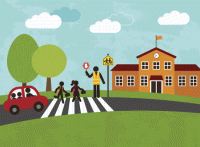
The first and most fundamental place for principals to start is with physical safety. Schools need to get students in the door safely. They need to create safe on-campus spaces in classrooms, hallways, lunch rooms and outdoor areas by providing supervision and communicating clearly to students about staying in bounds while at school. Schools also need to make sure students get home safely, whether it's on the bus or through carpool pickup. Tight, carefully coordinated and practiced systems need to be in place for this to happen smoothly. Communication to parents about safety procedures and protocols lets families know that the school cares about and values the physical safety of its students.

The second element of safety involves emotional safety. Students need to feel they are in an environment that nurtures and preserves relationships among students and with teachers. Every child in a school should have at least one adult with whom he or she feels a connection, or the ability to reach out to in a time of need. This adult can be a teacher, staff member or coach, but the school has a responsibility and obligation to systematically make sure that each child feels that connection, something beyond relationships with his or her peers. And schools need to communicate the importance of that relationship to students and families.

The third component of safety centers on academic safety. Teachers inside their classrooms are advocates for student learning and are charged with providing students with the academic tools for success. Students must feel safe taking risks, asking questions and tackling challenge. Academic safety can come in the form of working with a student at recess, before or after school, or clarifying a question over email in a tone and manner that leaves the student feeling inspired and heard. Also, teachers can send the message that the struggle of learning is a key part of growth and progress so that students are prepared to work hard, put forth effort and persevere through challenges, all of which ensures academic safety.

What Students Need to Hear

Schools across the country are taking pause, reflecting and working to find the appropriate message to share with students, who need to hear from the adults. Schools also need to keep students in the learning routine and rhythm, and maintain focus on classes and schoolwork. Routine provides comfort in uncertain times.

Little did I know that a conversation with a parent that happened a while ago would prove to be so prescient and timely and serve to remind me of the importance of working with everyone in a school community to create, nurture and sustain physical, emotional and academic safety for children. The bottom line is that students need to know and hear that their schools care deeply about them, and are available to help, support and guide them each day.

see more see less
  • Matt Levinson's Blog
1

Administrators

Matt Levinson Head of the Upper Division, Marin Country Day School

follow this blogger
Twitter
Tags
  • Mental Health
  • Principals
  • All Grades
  • Social & Emotional Learning
Related Resources
  • One Week Later: Healing Sandy Hook
  • Readers' Survey 2007: Greatest Concern Expressed By Parents
  • To Enable Learning, Put (Emotional) Safety First
  • Arts Integration: Fundamentals for Getting Started
  • Social and Emotional Learning Research Review
  • Unspeakable Tragedy at Sandy Hook Elementary School
see more see less

Edutopia Blog Topics

See all Blogs
  • Administrators
  • Assessment
  • Brain-Based Learning
  • Education Trends
  • Five-Minute Film Festival
  • Game-Based Learning
  • New-Teacher Support
  • Project-Based Learning
  • Social and Emotional Learning
  • Student Engagement
  • Teacher Leadership
  • Technology Integration

Popular Tags

  • 1. Student Engagement
  • 2. Middle (6-8)
  • 3. High (9-12)
  • 4. Professional Development
  • 5. Upper Elementary (3-5)
  • 6. Curriculum
  • 7. Classroom Technology
  • 8. Primary (K-2)
  • 9. Differentiated Instruction
  • 10. Lesson Plans
  • 11. After-School Learning
  • 12. Performance Assessment

blog sidebar popular

  • Popular
  • Commented
  • Shared

Popular

Summer Reading for Educators: My Favorites
by Mark Phillips
Posted May. 30, 2013. 12:01 pm GMT
Teach with Your iPhone: Apps to Use in the Classroom
by Monica Burns
Posted Jun. 10, 2013. 11:08 am GMT
Teaching Students to Dig Deeper
by Ben Johnson
Posted May. 20, 2013. 11:51 am GMT
Using E-Portfolios in the Classroom
by Mary Beth Hertz
Posted May. 30, 2013. 9:08 am GMT
Teacher Burnout: Four Warning Signs
by Nicholas Provenzano
Posted May. 22, 2013. 7:17 am GMT
Nine Strategies for Reaching All Learners in English Language Arts
by Hassan Mansaray
Posted May. 22, 2013. 11:55 am GMT
Transformation Begins With Reflection: How Was Your Year?
by Elena Aguilar
Posted Jun. 4, 2013. 7:23 am GMT
Beyond the Book: Infographics of Students' Reading History
by Sarah Mulhern Gross
Posted Jun. 6, 2013. 7:43 am GMT
Hitting the Books: Summer Reading Recommends
by Elena Aguilar
Posted May. 21, 2013. 7:18 am GMT
Implementing Expanded Learning Time: Six Factors for Success
by Amrita Sahni
Posted May. 21, 2013. 10:15 am GMT
Back to Top
Join the movement for change

Get Inspired

  • A Word from George Lucas
  • Mission and Vision
  • Our Strategies for Learning:
    • Comprehensive Assessment
    • Integrated Studies
    • Project-Based Learning
    • Social & Emotional Learning
    • Teacher Development
    • Technology Integration

Support Our Mission

Donate

Find Solutions

  • Browse by Grade Level:
    • K-2
    • 3-5
    • Middle
    • High School
  • Schools That Work
  • Blogs
  • Videos
  • Classroom Guides
  • Quizzes
  • Topics A to Z

Get Our Free Newsletter!

Sign Up

Join the Conversation

  • Facebook
  • Twitter
  • YouTube
  • Google+
  • Pinterest
  • Edutopia Community
  • Sign up for RSS

Connect

Join/Sign In

The Foundation

  • Advertise
  • Contact Us
  • Terms of Use
  • Privacy Policy
Enter for a Chance to Win!Weekly Giveaway: Summer Reading & iPod Music Bundle
  • EDUTOPIA
  • WHAT WORKS IN EDUCATION
  • © 2013 The George Lucas Educational Foundation
  • All rights reserved.