Appreciating Local History: A Place-Based-Learning Project Brings the Past Alive
In August 2003, we published Logging History: Students as Archivists, an article (with complementary multimedia components) that showcases Libby, Montana, high school students documenting their cultural heritage using an inquiry-based approach, ultimately sharing their findings with their local community.
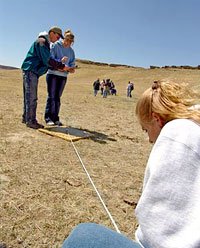
This story is still one of my favorite Edutopia.org pieces, because it includes examples of student work, a road map of rubrics and tools, and links to outside resources.
I recently had a conversation with the Montana Heritage Project's education director, Marcella Sherfy, and she was kind enough to send me some updates on how others can follow in their footsteps:
"We continue with vigor eleven years after our creation. The Liz Claiborne and Art Ortenberg Foundation continues to fund the project; the Montana Historical Society administers it. During its eleven years of operation, more than 6,000 students in twenty-eight communities have participated.
"The Montana Heritage Project engages high school students in the scholarly study of their communities, using oral history and primary documents. The strongest emphasis is on research-based, nonfiction writing, but we also require and assess multimedia presentations and exhibit displays. Teachers choose research topics annually: The changing role of quilting, the evolution of ranching, the impact of transportation improvements, the importance of water and water laws, and the transformation of a community's economic base have all served as research frameworks. Many students also interview community military veterans.
"Students give gifts of scholarship to their communities, ranging from research essays to oral history interviews to public programs to interpretive signs to databases. All project materials are archived at the Montana Historical Society.
"The project still begins each summer with a teacher institute and culminates at an annual spring Youth Heritage Festival, during which scholars from each school present their research to their peers, the public, and the State of Montana.
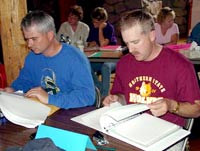
"We try to use the Web a good deal to communicate with our own teachers and to make project ideas and examples widely available. Folks can check Heritage Online: Essays from the Youth Heritage Festival and the Montana Heritage Project. The Web sites feature practical teaching assistance that includes lesson plans, entire teaching units, selected writings by teachers and students, and pertinent education research and philosophy for place-based and project-based teaching, community studies, service learning, civic engagement, and nonfiction writing.
We are especially glad for this opportunity to invite teachers from around the region and the country to our 2006 Summer Conference on Place-Based Teaching. We'll be "Exploring Where We Are Through Literature and Writing" and offering graduate credit from the Heritage Institute through Antioch University Seattle for these two intense days. Participants will be able to learn from mentor teachers who have participated in the project.
"Educators in Arizona, Louisiana, Nevada, New Hampshire, Oregon, Utah, and Wyoming have used the Montana Heritage Project as a model. In each instance, a state organization, a school district, or a folk-life, arts, history, or writing organization has built a concept similar to what we do that fits their circumstances. People interested in these general ideas might enjoy visiting the Web site for the Arizona Heritage Project or the New Hampshire Heritage Project. It is worth remembering, though, that elements of what we have tried to do in Montana exist and can be created through a variety of organizations.
"Visit the Montana Heritage Project Web site for information about the Montana Heritage Project or about our upcoming summer conference."